Download the Applications



The 60-Second Test That Could Reveal Your Death Risk – Pakistan News
فئة: صحة
مشاركة
الأرشيف
إعجاب
A simple test that takes little more than one minute could offer surprising clues about your overall health—and potentially your risk of dying prematurely.
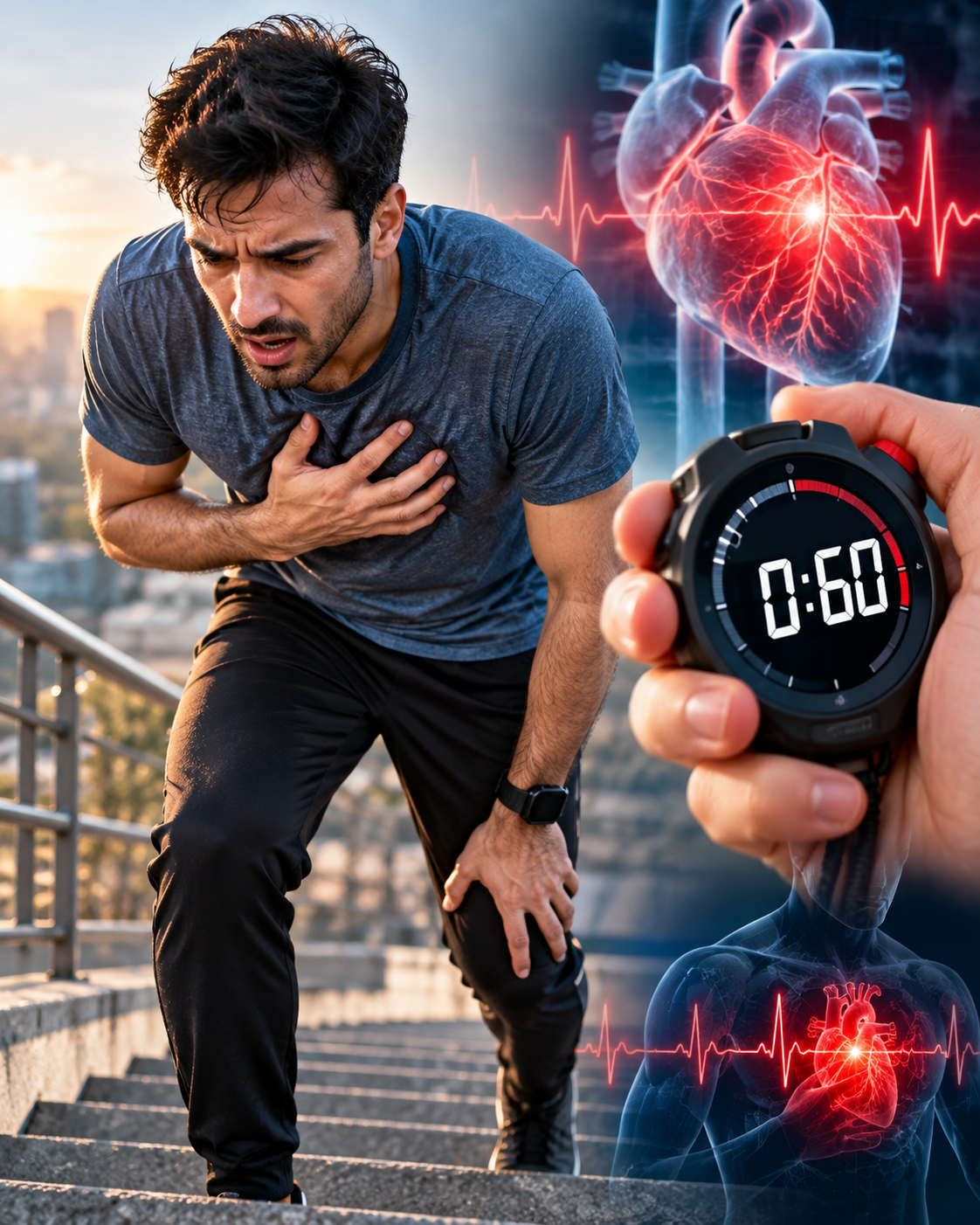
The test focuses on heart rate recovery, which measures how quickly your heartbeat drops after you stop exercising. While it is normal for the heart to beat faster during physical activity, experts say the speed at which it returns toward normal may reveal important information about cardiovascular fitness.
For example, if your heart is still beating rapidly long after you stop climbing stairs, running or exercising, it could indicate that your body is taking longer than expected to recover.
Heart rate recovery is calculated by comparing your heart rate at the end of exercise with your heart rate roughly one minute later.
A faster decline generally indicates better cardiovascular fitness and a more efficient response from the body's nervous system. A slower recovery, meanwhile, has been associated with several health risks, including cardiovascular problems and high blood pressure.
But researchers have found that its significance may extend beyond heart health.
In a landmark study conducted in 1999, researchers at the Cleveland Clinic in Ohio followed around 2,400 adults for six years.
The study found that people whose heart rates recovered more slowly after exercise had a substantially higher risk of death than those whose heart rates recovered more quickly.
Subsequent research from different parts of the world has reported similar associations, suggesting that heart rate recovery may serve as a useful indicator of overall health—even among people who do not appear to have heart disease.
Some studies have also found that the relationship between poor heart rate recovery and mortality may be particularly significant among younger and middle-aged adults.
The intriguing part is that checking heart rate recovery does not necessarily require sophisticated medical equipment. With basic items commonly available at home, people can get a rough indication of how quickly their heart rate falls after physical activity.
However, the result should not be treated as a diagnosis or a prediction of an individual's exact lifespan. Fitness level, medications, age and underlying health conditions can all affect heart rate recovery.
Still, experts say this simple measure could provide an early warning sign worth discussing with a healthcare professional—especially when combined with other symptoms or risk factors.
ملاحظة حول ملفات تعريف الارتباط
يستخدم نيوزهنت ملفات تعريف ارتباط ضرورية لإبقائك مسجلاً للدخول ولتذكر لغتك ودولتك، حتى يعمل الموقع كما تتوقع. بإذنك، نود أيضاً استخدام ملفات تعريف ارتباط تحليلية لفهم كيفية استخدام الأشخاص لنيوزهنت وتحسينه بمرور الوقت.
الموافقة تؤثر فقط على التحليلات. لمعرفة المزيد، اطّلع على سياسة الخصوصية or الشروط والأحكام.
(0)تعليقات