Download the Applications



Govt may deduct Rs110b from NFC
فئة: عمل
مشاركة
الأرشيف
إعجاب
Power-sector dues to be recovered from provincial shares
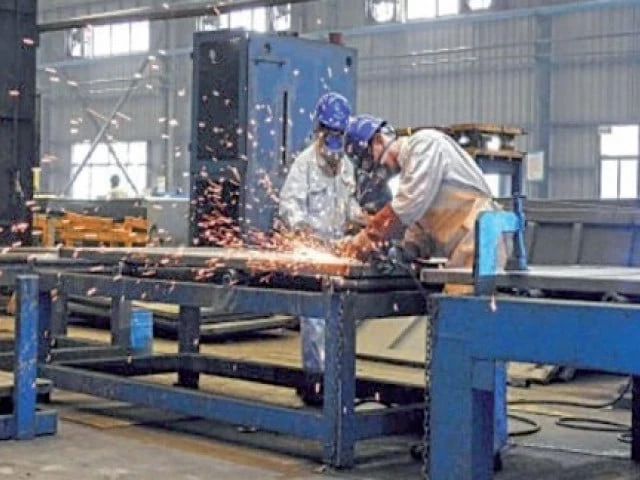
The IMF inquired about delay in reviewing the industrial incremental support package. After the lender's concerns, a hearing has been scheduled for October 5. There is a possibility that incremental tariff prices will go up as a result of the review. Photo: File
The federal government has informed the International Monetary Fund (IMF) about its plan to recover over Rs110 billion power-sector arrears from provincial shares in the National Finance Commission (NFC) award amid the lender's concerns over fiscal implications of the move.
During the ongoing talks, the IMF has also inquired whether the federal government will abolish uniform electricity tariffs after the privatisation of companies. But the government did not give a straight reply, according to sources privy to the discussions. Under the uniform tariffs, consumers of inefficient and efficient power distribution companies are charged the same price.
These matters came under discussion with the IMF during a recently held meeting, sources told The Express Tribune. They said that the IMF got a detailed briefing from the Power Division on the circular debt trend, particularly an increase of Rs61 billion in the debt in the last fiscal year. The circular debt had jumped to Rs1.675 trillion, which the Power Division blamed on the reduction in budgeted subsidies and payment dispute with K-Electric – the integrated power distribution and generation company.
The IMF was of the view that it was getting difficult to defend the position before the IMF board and the debt stock could have been reduced by using savings, said the sources. The IMF was informed that to recover over Rs110 billion in provincial electricity arrears, a mechanism had been agreed between the Power and Finance Divisions to deduct the amount out of NFC shares, the sources added.
The IMF was further apprised that at least Rs110 billion had been reconciled and there was a plan to recover nearly Rs50 billion soon. The federal government has in the past attempted to adjust these dues out of the NFC shares but the provincial governments opposed it.
The spokesman for the Power Division did not address the question about whether the provincial governments had given their consent to the move and provided debit authority to the central bank. Without the written provincial consent, it will be impossible for the central bank to make these deductions.
"The federal adjuster is in the Finance Division and the Power Division only issues bills and conveys reconciliation to the Finance Division; therefore, they are in the best position to comment," replied the Power Division spokesman. The finance ministry spokesman did not reply.
Sources said that the federal finance ministry had also attempted to cut over Rs6 billion per month from the Khyber-Pakhtunkhwa share on account of a reverse cash grant under the National Economic Initiative of Rs1.036 trillion. However, due to the provincial government's refusal to give the debit authority to the central bank, the money could not be deducted from the provincial share.
Sources said that the IMF had concerns that the move could further strain the provincial revenue receipts, which were already under stress due to the requirements of generating Rs1.7 trillion in cash surplus and giving Rs1.036 trillion in cash grants. The provincial governments have rationalised their development plans to make space for giving grants to the federal government. The IMF was told that the Power Division was also in the process of installing smart meters to resolve billing disputes with the provincial governments.
In response to the IMF's view on deducting money from provincial shares, the spokesman said that the Power Division was constrained from commenting on anything related to the IMF review proceedings and it would be appropriate that comments be taken through the Finance Division. However, the finance ministry spokesman did not reply.
Sources said that discussions were also held regarding the timeframe for privatisation of power distribution companies and post-privatisation policies. They said that the Pakistani authorities appeared reluctant to give a clear response on whether the current uniform tariff policy would come to an end.
Without ending the uniform tariff policy, the subsidies' burden on the budget cannot be reduced, as has happened in the case of privatisation of K-Electric. Sources said that detailed discussions were also held over the dispute between K-E and the federal government and its implications for the overall power-sector financial viability.
K-Electric is not making timely payments for the electricity purchased from the federal government due to a dispute over tariffs and subsidy claims. Sources said that the federal government was willing to clear over Rs100 billion claims of K-Electric, subject to the settlement of tariff-related issues.
The National Electric Power Regulatory Authority and the Nepra tribunal have dismissed K-Electric's plea for a tariff of Rs40 per unit and approved a tariff of Rs32.37. The government expects that K-Electric will challenge the decision in courts.
Sources said that the IMF also inquired about the delay in reviewing the industrial incremental support package. After the IMF's concerns, a hearing has been scheduled for October 5. There was a possibility that the incremental tariff prices would go up as a result of the review, the sources added.
The incremental package, envisaging Rs22.96 per unit as a special tariff rate for select industries, was promised to be reviewed after six months of its introduction in December 2025 but it remained unchanged for the ninth month. Power costs for the industry have gone up by 10% due to tariff rebasing.
ملاحظة حول ملفات تعريف الارتباط
يستخدم نيوزهنت ملفات تعريف ارتباط ضرورية لإبقائك مسجلاً للدخول ولتذكر لغتك ودولتك، حتى يعمل الموقع كما تتوقع. بإذنك، نود أيضاً استخدام ملفات تعريف ارتباط تحليلية لفهم كيفية استخدام الأشخاص لنيوزهنت وتحسينه بمرور الوقت.
الموافقة تؤثر فقط على التحليلات. لمعرفة المزيد، اطّلع على سياسة الخصوصية or الشروط والأحكام.
(0)تعليقات