Download the Applications



Pakistan's Solar Boom Is Moving Faster Than Its Power Grid
فئة: عمل
مشاركة
الأرشيف
إعجاب
The solar revolution in the country has transformed from a limited phenomenon to one of the most significant developments in Pakistan's power generating sector. Only in the first seven months of 2026, Pakistan has imported approximately 7.2 gigawatts of Chinese solar panels, making it the second-largest recipient of Chinese solar exports, after the Netherlands. The Netherlands is also an important European hub for solar imports, with modules re-exported to a number of countries on the continent. Pakistan is thus ranked among the largest markets for solar panels in the world.
This impressive development came after years of vigorous growth in the solar sector. In 2023, Pakistan imported about 7.6 GW of solar panels, followed by 16.4 GW in 2024 and 16.9 GW in 2025. By 2026, around 55 GW of solar panels were estimated to come into the country. Most of this growth has not been driven by solar parks built by the government, but by households, factories, farms, shops, and private landowners. People have purchased the systems and started generating electricity on their own.
This is what sets Pakistan's solar tale apart. Unlike other countries that go through a government-led energy transition, Pakistan's solar story is driven primarily by the needs of its people. Thanks to a series of events such as ever-increasing energy tariffs, lack of dependability, and the continuously decreasing price of solar panels, solar energy was able to go from the periphery to the centre of the energy landscape within only a few years.
Why Pakistan Turned to Solar
The boom's origins can be traced back to the overarching energy and economic issues affecting Pakistan at large. Following Russia's invasion of Ukraine, global energy prices increased while the Pakistani rupee depreciated. Thus, imported fuel grew pricier while the price of electricity significantly increased. Statistical data presented in the latest analysis show that the effective tariff used to be around Rs 12.5 per unit back in 2015 and is expected to exceed Rs 34 in 2025.
Simultaneously, the costs of Chinese solar equipment were decreasing. Thus, for consumers, the choice was obvious: whether to continue buying expensive electricity from the utility or to invest in solar energy and pay less monthly. This idea was most appealing to those who had previously been experiencing years of load-shedding and, therefore, could appreciate both the advantages of solar energy installation. Naveed Arshad, the director of the Energy Institute at the Lahore University of Management Sciences, argues that this process is what he describes as a 'bottom-up revolution.' From his perspective, economic change is facilitated through solar energy installations that are not part of any national rooftop programme but rather financed through savings, investments, and bank loans.
Only in the first seven months of 2026, Pakistan has imported approximately 7.2 gigawatts of Chinese solar panels, making it the second-largest recipient of Chinese solar exports
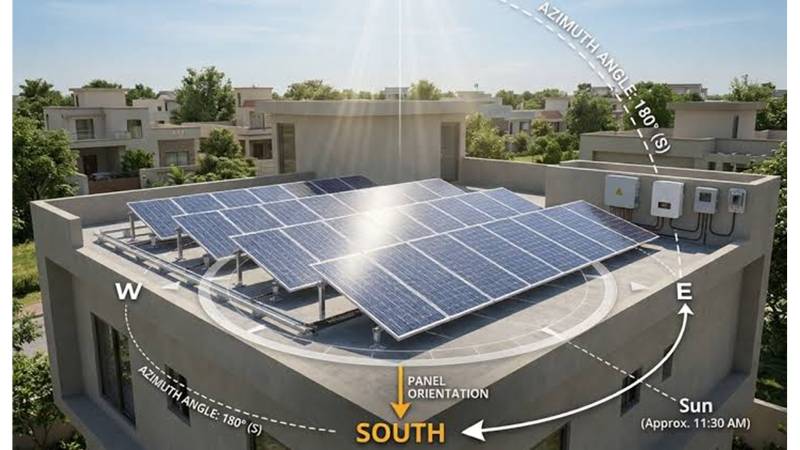
Pakistan had a number of real advantages. Many roofs are flat, which makes it simpler to install solar equipment. A wide network of installers was established quickly, even in small towns and rural areas. Solar has great adaptability. Households can install small installations, while industrial production firms can install thousands of panels. The authorities were not the ones to provide a plan for the installation boom. However, they helped to achieve that with duty and tax exemptions and subsidised loans provided, as well as with the solarisation of some public institutions. It was, therefore, the market driven by consumers, but the provided incentives helped to develop it too.
Moreover, this trend can be observed in the province of Sindh. Karachi has a huge electricity market and at the same time, many rural regions of the province face the issues of affordability and reliability. The same factors that facilitate the use of solar energy in Pakistan—the high cost of electricity, cheap solar panels, and the desire to get energy independence—certainly exist in Sindh as well.
Solar Is Reshaping the Power System
The financial consequences can be even more severe than the technical aspects. Over the past ten years, Pakistan has invested considerable funds in the construction of new electricity generation and transmission facilities. The majority of electricity generation contracts involve capacity payments, which is the payment to electricity producers for having their plants operational, even if they do not produce considerable volumes of electricity. But as more and more consumers install solar power systems, the overall amount of electricity supplied from the grid continues decreasing.
However, the fixed costs as well as the costs of electricity generation, transmission, and distribution do not decrease at the same pace. These costs still need to be recovered. This is where the problem begins. Due to the decreasing volumes of electricity consumed from the grid, the fixed costs are distributed between fewer consumers, which will result in higher tariffs. Higher tariffs will induce the consumers to switch to solar energy, thus reducing electricity consumption from the grid again.
The Next Challenge Is the Grid
Pakistan has already demonstrated the rapid deployment of solar energy. The more complex issue is whether the electricity system can keep pace. This has now become a policy issue. The previous net metering system gave solar power users a good credit for the electricity fed into the grid. In 2026, regulators moved to a net-billing model whereby electricity supplied to the grid is priced differently than the power consumers buy from the grid later on.
This policy has been unpopular as it lowers the financial value of feeding surplus solar energy to the grid. Some may say that these changes are aimed at preserving an inefficient centralised electricity system, while others point out that the government must deal with a genuine problem: it cannot simply pass onto the consumers who cannot install solar panels the costs of maintaining the electricity grid. Both issues are genuine.
The increased use of batteries could raise the problem to a different level. In fact, a solar user who does not utilise batteries remains dependent on the grid outside the daylight hours. In contrast, if a household or an enterprise uses solar and batteries, this dependency can be decreased a lot. As batteries become more popular, solar users' dependence on the grid may alter again.
There is also a problem of stranded investments. Pakistan invested a lot of money in electricity generation capacity and transmission infrastructure in the past ten years or so. If the demand for electricity from the grid decreases, some power plants and other assets may be underutilised. Therefore, the goal is not just the increase in the number of solar installations but the search for ways of interaction between solar energy and existing infrastructure in order not to lose the previous investments.
The solar revolution in Pakistan has already provided an answer to one crucial question. When the cost of grid electricity becomes higher than solar electricity, consumers tend to revolutionise the energy sector faster than governments may predict.
A Challenging Phase Underway
Yet another challenging phase is underway. Solar panel installations take only a few days or weeks, but implementing tariff systems, electricity contracts, and distribution networks will take much more time. Pakistan must now figure out how to make rooftop solar technology, battery systems, power generation stations, and the entire grid efficient in their interaction as opposed to being limited in their efforts to becoming competitors.
The latest reports about the imports of electricity equipment effectively show that there is no time for waiting. Pakistan imported about 7.2 GW of solar modules from China from January to July 2026. The transition to the new system is underway.
It is no longer a question of whether the solar revolution will continue in Pakistan. The issue is how the overall electricity system will keep up with the developments.
ملاحظة حول ملفات تعريف الارتباط
يستخدم نيوزهنت ملفات تعريف ارتباط ضرورية لإبقائك مسجلاً للدخول ولتذكر لغتك ودولتك، حتى يعمل الموقع كما تتوقع. بإذنك، نود أيضاً استخدام ملفات تعريف ارتباط تحليلية لفهم كيفية استخدام الأشخاص لنيوزهنت وتحسينه بمرور الوقت.
الموافقة تؤثر فقط على التحليلات. لمعرفة المزيد، اطّلع على سياسة الخصوصية or الشروط والأحكام.
(0)تعليقات