Download the Applications



Geomagnetic storm Aurora visibility Northern US: Forecast, states, viewing tips
فئة: السياحة
مشاركة
الأرشيف
إعجاب
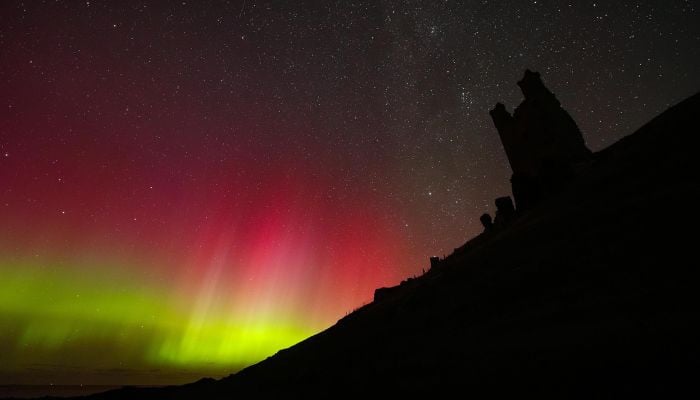
The northern lights may be visible across various parts of the northern USA Monday evening after the Earth had undergone higher levels of geomagnetic activity due to an unusual G3 storm over the weekend.
The NOAA Space Weather Prediction Centre predicted a Kp index of five out of nine Monday night; thus, there may be more brightness and activity of the northern lights than normal.
The reason for G3 storm conditions on Saturday is due to a coronal mass ejection that hit the Earth on October 10, after eruptions from the Sun on October 7 and 8. Monday will probably not witness any geomagnetic storm, although according to the NOAA forecast for the next three days, mild G1 storm activity may occur early Tuesday morning.
Which states could see the Aurora
The NOAA forecast map shows that the aurora visibility will extend across US-Canada border states such as northern Washington, northern Idaho, Montana, North Dakota, most of Minnesota, northern Wisconsin and the Upper Peninsula of Michigan. Parts of far northern South Dakota and Wyoming may also have chances. The northern lights have a high probability of occurrence across most of Alaska.
Travelling as far north as possible and securing a viewpoint that has a view facing towards the north is also recommended by experts. The Aurora is easier to see during dark nights and not during full moon nights. Generally, the best times to see the Aurora are around midnight, both before and after midnight.
Viewing Tips
In terms of photography, according to an expert who spoke to National Geographic, the best method to capture photographs would be using the night mode on a smartphone, without any flash and in RAW image format.
ملاحظة حول ملفات تعريف الارتباط
يستخدم نيوزهنت ملفات تعريف ارتباط ضرورية لإبقائك مسجلاً للدخول ولتذكر لغتك ودولتك، حتى يعمل الموقع كما تتوقع. بإذنك، نود أيضاً استخدام ملفات تعريف ارتباط تحليلية لفهم كيفية استخدام الأشخاص لنيوزهنت وتحسينه بمرور الوقت.
الموافقة تؤثر فقط على التحليلات. لمعرفة المزيد، اطّلع على سياسة الخصوصية or الشروط والأحكام.
(0)تعليقات