


GSP+ hinges on meeting EU standards
Categoría: Business
Compartir
Archivo
Me gusta
KARACHI:
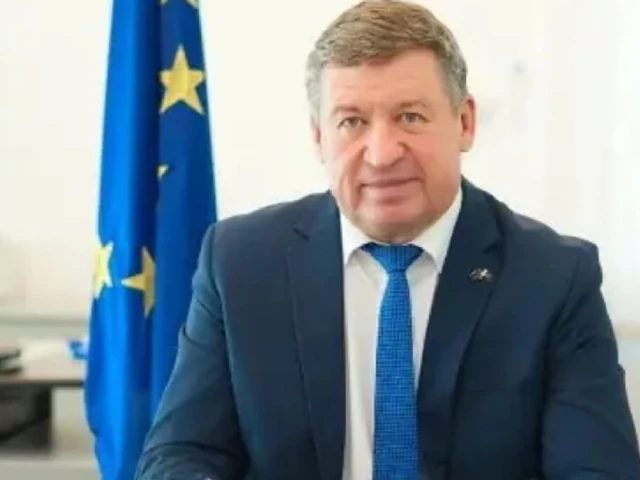
European Union Ambassador Raimundas Karoblis, while referring to the Generalised Scheme of Preferences Plus (GSP+) assessment of Pakistan covering the period 2023-2025, published on July 16, has emphasised that improvements in areas relating to human rights and rule of law commitments are essential for securing benefits under the new GSP+.
He met with the Pakistan Textile Council (PTC) leadership to discuss Pakistan's position under the EU's GSP+ facility, the process ahead for the next phase of arrangement and the strategic importance of textile and apparel exports in Pakistan's trade relationship with the EU.
According to the EU's assessment, the European Union remains Pakistan's largest export destination, with textiles and clothing making up roughly 70-76% of Pakistan's exports to the EU. The current GSP+ arrangement has been in place for over a decade.
The ambassador clarified that the EU was not introducing new standards. Rather, the expectation was effective implementation at an acceptable level of commitments Pakistan had already made under the relevant United Nations conventions.
He emphasised that the European Commission would enhance engagement with the government of Pakistan, adding that the immediate priority would be demonstrable short-term improvements in areas of major concern, followed by a credible action plan with concrete measures, timelines and measurable performance indicators. "The new framework places greater emphasis on effective implementation rather than ratification of conventions or adoption of legislation." The ambassador acknowledged Pakistan's readiness to cooperate at the highest level and stressed that sustained coordination and implementation would also be required at ministerial and working levels.
PTC Chairman Fawad Anwar said that member companies of the council were predominantly value-added exporters with significant dependence on the EU market. He stressed that the continuation of GSP+ was critical not only for Pakistan's textile and apparel exports but also for employment, tax contribution and the broader ecosystem of businesses and livelihoods associated with the sector. He observed that the EU-India Free Trade Agreement would put significant additional competitive pressure on Pakistani exporters, even if Pakistan's GSP+ status remained in place.
Council Vice Chairman Anees Khawaja noted that the report acknowledged progress across all four clusters covering human rights, labour, environment and governance. He invited the ambassador to visit Multan to witness firsthand how GSP+ had contributed to improving livelihoods and economic opportunities in Pakistan's smaller cities.
Gul Ahmed CEO Zaki Bashir requested that conditions within Pakistan's textile and apparel export sector be assessed separately from national-level findings. He pointed out that the concerns presented were national findings rather than sector-specific assessments.
Una nota sobre las cookies
Newshunt utiliza cookies esenciales para mantener tu sesión iniciada y recordar tu idioma y país, para que el sitio funcione como esperas. Con tu permiso, también nos gustaría utilizar cookies de análisis para comprender cómo las personas utilizan Newshunt y mejorarlo con el tiempo.
Aceptar solo afecta a las cookies de análisis. Para obtener más información, consulta nuestra Política de privacidad or Términos y condiciones.
(0)Comentarios