


Self-cleaning public toilet video draws praise and questions online
Categoría: SciTech
Compartir
Archivo
Me gusta
Self-cleaning public toilet video draws praise and questions online
A viral clip shows a metallic toilet that retracts into a compartment for automatic cleaning.
Viewers have praised the technology while raising questions about costs, water use and maintenance.
The location and manufacturer remain unclear, despite online claims linking the system to China.
A video of a high-tech public toilet has attracted attention online, showing an automated cleaning system that could help keep shared facilities cleaner between users.
🇨🇳 China never disappoints Just look at this self-cleaning bathroom. Writer: Sol https://t.co/bm5vSSpql8 — Mario Nawfal (@MarioNawfal) October 8, 2026
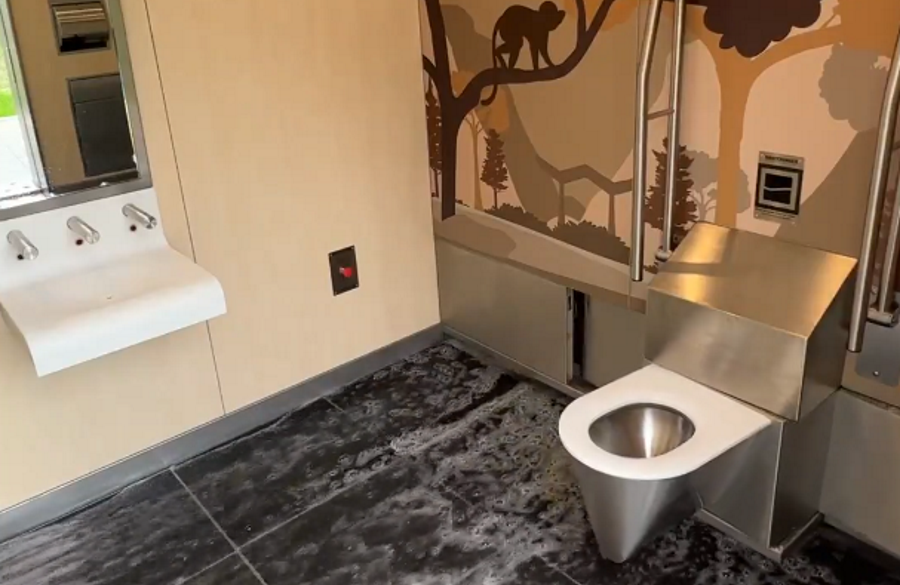
The clip features a metallic toilet that retracts into a compartment for cleaning. Grab bars are fitted inside the stall, while jungle-themed artwork covers the walls, giving the facility a distinctive appearance.
Some versions of the video have been shared alongside footage of worn, older bathrooms, highlighting the difference between conventional public facilities and automated designs.
Many social media users have attributed the toilet to China, associating it with the country's 'Toilet Revolution' initiative, launched in 2015 to improve public sanitation. However, the information accompanying the clip does not establish where it was filmed or identify its manufacturer.
Others have pointed to similar systems developed by Dutch company Sanitronics, which use high-pressure water and cleaning agents followed by air drying. The resemblance has prompted debate over whether the footage shows a Chinese installation or technology supplied by another manufacturer.
Online reactions have ranged from praise for the system's convenience and cleanliness to jokes about whether users in the United States would need a subscription to access such facilities.
Viewers have also questioned how much water the cleaning process consumes, what the toilets cost to install and maintain, and whether automated systems could affect cleaning jobs. Others have asked how widely the technology is available and whether similar facilities could be introduced in more countries.
Una nota sobre las cookies
Newshunt utiliza cookies esenciales para mantener tu sesión iniciada y recordar tu idioma y país, para que el sitio funcione como esperas. Con tu permiso, también nos gustaría utilizar cookies de análisis para comprender cómo las personas utilizan Newshunt y mejorarlo con el tiempo.
Aceptar solo afecta a las cookies de análisis. Para obtener más información, consulta nuestra Política de privacidad or Términos y condiciones.
(0)Comentarios