Download the Applications



Government websites go dark across Europe after AI uncovers critical PHP flaws
Catégorie: Technologie scientifique
Partager
Archive
J’aime
Government websites across Europe and elsewhere went offline Wednesday after the disclosure of critical vulnerabilities in a widely used programming language sent website operators around the world scrambling to protect their systems, Reuters reported .
Developers of the PHP programming language released urgent new fixes Wednesday for vulnerabilities that had lurked in their software for years until they were uncovered using artificial intelligence. They said all users were "encouraged to update immediately."
With tech firms warning that some hackers were already exploiting the flaws, government agencies across Europe were among those that took sites offline as a precaution.
Because a fix is now public and AI tools are able to reverse engineer the bug with little effort, experts said they were bracing for a wave of intrusions as hackers rushed to get ahead of the updates.
AI was powering a "race to exploit," said Costin Raiu, co-founder of cybersecurity research and incident response firm TLP:Black. He said the next step was the "mass compromise of every vulnerable web server on the internet."
PHP, a language that dates to the early 1990s and initially stood for "Personal Home Page," underpins huge parts of the public-facing web and is baked into WordPress, Drupal, Joomla and Magento sites, meaning any critical vulnerability potentially has enormous knock-on consequences.
"All servers using any version of PHP released in the last 20 years will be vulnerable," said Tiffany Farriss, interim chief executive of the Drupal Association. "This issue impacts the majority of the internet."
Cybersecurity agencies around the world have urged PHP users to update immediately or take websites offline until patches can be applied.
According to data from Censys, an internet intelligence firm, about 1.5 million out of 2.6 million hosts report running a version of PHP for which there is no fix.
The Dutch cybersecurity agency itself went offline, saying it had done so as a precaution because of the vulnerabilities. The operator of the online encyclopedia Wikipedia also said it had taken down an unspecified number of systems until they could be safely patched, while the Internet Archive, the sprawling online library, said it also briefly went offline to deal with the issue.
Even some world leaders weighed in. The Dutch prime minister said he was closely monitoring the situation. Japanese Prime Minister Sanae Takaichi said in a post on X that website owners should "check whether your live site uses PHP and prepare to apply the new fix."
BUG FOUND WITH AI
The flaw in PHP was discovered using artificial intelligence, two cybersecurity companies said in independent reports. Calif said in a blog post that it found the flaws with the help of a large language model on Aug. 1 and had been working on a fix ever since. Alphabet-owned cybersecurity company Wiz said in a blog post that it too had discovered the flaw with the help of Wiz Atlas, its autonomous AI vulnerability research tool, as well as Google's Gemini 4 Argon and OpenAI's GPT-5.6 Sol.
The vulnerabilities remained hidden in the PHP codebase for more than a decade and would have been extraordinarily complicated for a human hacker to exploit, Wiz's post said.
"Pre-AI, this manual work would be difficult to implement and even harder to scale," it said. "With AI, this is no longer a barrier."
Calif and Wiz said they coordinated with one another and the PHP team and OpenAI on the discovery.
In a statement, the White House said it was made aware of the flaw on Friday.
In a blog post late Wednesday, Amazon security chief CJ Moses said the tech giant's security team detected an attempt to exploit the vulnerabilities against one of its decoy "honeypot" systems on Oct. 17, four days before public disclosure.
The attempt on the system came from an anonymous internet address, suggesting the activity was conducted by a threat actor, Moses said, adding it was unclear how the actor learned of the flaws while they were under embargo.
More attempts followed Wednesday by multiple actors before the embargo lifted. Amazon said it was still unclear whether any of the attempts would have worked against real websites, adding the flaws were "now being broadly exploited in the wild."
CRITICAL SOFTWARE
PHP is a programming language used to run websites. When a visitor loads a page, a server running PHP assembles the content and sends it to the browser. It is free, open-source software maintained by volunteers.
Its ubiquity — PHP runs roughly 75% of websites whose programming language can be identified, according to web technology tracker W3Techs — has made experts anxious. AI-assisted hacking campaigns, which have proliferated in recent weeks, could wreak havoc on unpatched servers, said Lukasz Olejnik, a visiting senior research fellow at King's College London.
"The scale is huge, and with AI, exploitation may happen instantly," Olejnik said.
WordPress operator Automattic said users of its hosted solutions and Tumblr were safe from the bug. Risks were higher for small PHP-powered websites run by individuals or organizations with limited technical resources, often on shared hosting services where customers do not directly manage the underlying servers.
MASS OUTAGES
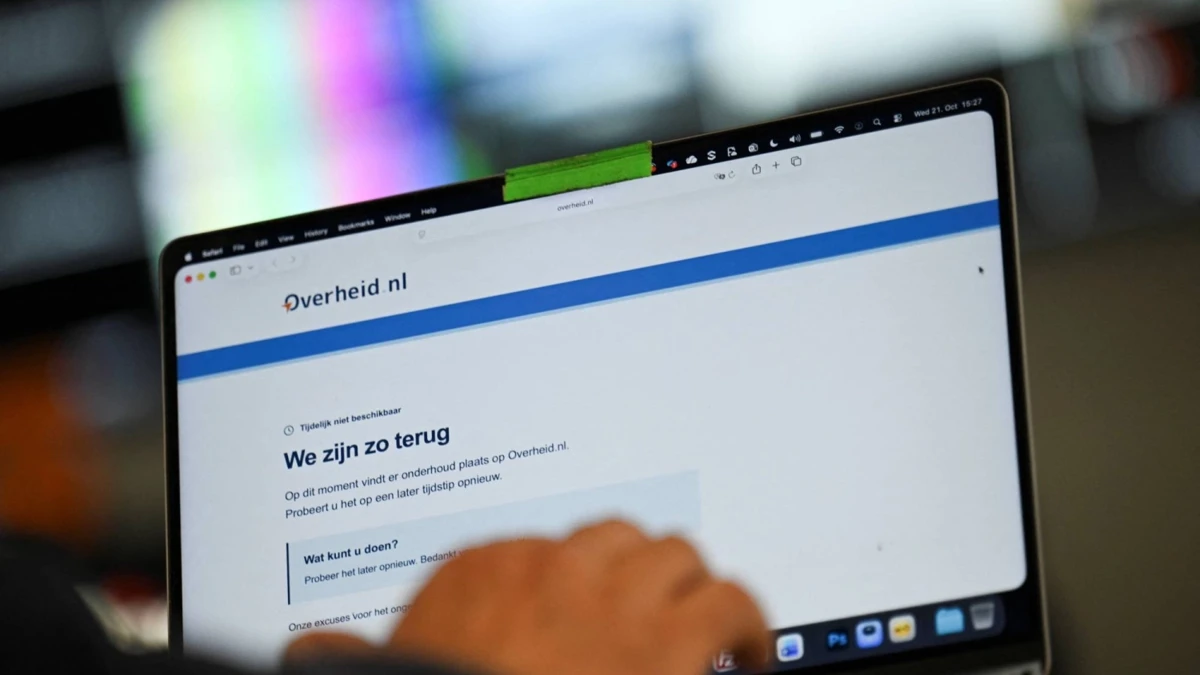
In the Netherlands, several organizations followed the example of the National Cyber Security Centre and took public-facing websites offline, including the Port of Rotterdam, government portal Overheid.nl, the national soccer association KNVB, the websites for the country's five largest political parties and several hospital websites.
Danish municipal IT company Kombit said it had shut down several services, including the national school communication platform.
Disruption was even more widespread in Finland, where state IT services provider Valtori said government public network services had been taken offline "as a precautionary measure."
France's Interior Ministry said it had placed all of its websites into preventive maintenance.
À propos des cookies
Newshunt utilise des cookies essentiels pour vous garder connecté et mémoriser votre langue et votre pays, afin que le site fonctionne comme prévu. Avec votre permission, nous aimerions également utiliser des cookies analytiques pour comprendre comment les utilisateurs utilisent Newshunt et l'améliorer au fil du temps.
Accepter n'affecte que les analyses. Pour en savoir plus, consultez notre Politique de confidentialité or Conditions générales.
(0)Commentaires