Download the Applications



Govt seeks 15-year Saudi oil facility
Catégorie: Entreprise
Partager
Archive
J’aime
Aurangzeb raises $1.2b deferred payment facility with SFD chief
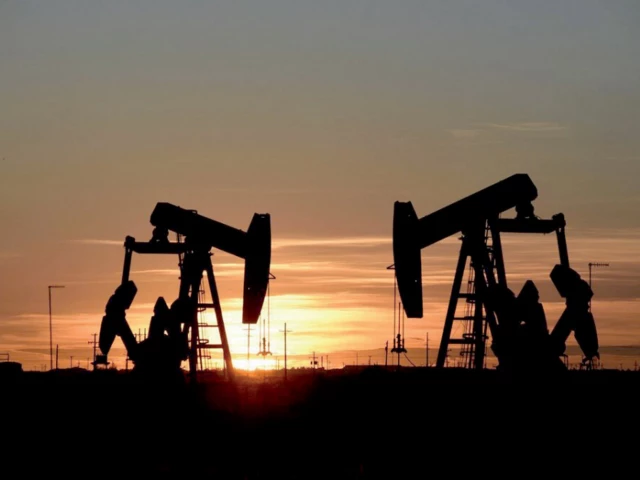
The IMF has not included the Saudi oil facility in its projected inflows for Pakistan for the financial years 2026-27 and 2027-28, according to the third stafflevel report. PHOTO: REUTERS
Pakistan on Tuesday took up the issue of revival of the $1.2 billion annual oil facility on deferred payments with the Saudi Fund for Development (SFD), as both sides discussed ways to deepen energy cooperation.
Finance Minister Muhammad Aurangzeb raised the matter with SFD Chief Executive Officer Sultan Abdulrahman Al-Marshad on the sidelines of the World Bank and International Monetary Fund (IMF) annual meetings taking place in Thailand.
The Ministry of Finance released the details of the meeting but did not comment on the oil facility. Adviser to the Finance Minister Khurram Schehzad also did not respond to a question regarding the Saudi response to the Pakistani request. People privy to the discussions said Saudi Arabia was examining the matter.
According to an official handout, Aurangzeb highlighted Pakistan's improving macroeconomic position and renewed access to international capital markets.
"Discussions focused on expanding trade and investment, strengthening private-sector engagement, following up on the bilateral investment protection agreement and exploring opportunities for refinery upgrades," according to the finance ministry.
The official handout noted that both sides recorded satisfactory progress on SFD-supported projects and emphasised the importance of developing a fresh pipeline of projects. "The SFD reaffirmed its continued support to Pakistan within its mandate," it added.
Saudi Arabia has also extended $3 billion short-term debt through the SFD, which the Kingdom further rolled over for three months in July.
Since 2019, Saudi Arabia has been providing oil on one-year deferred payments. The last facility was signed in February 2025, which expired in April. Instead of seeking short-term financing, the government is now seeking a long-term pipeline to lower immediate external financing requirements.
For the fiscal year 2027-28, the IMF has assessed the country's annual gross financing needs at nearly $30 billion, which the government is planning to cut by securing long-term rollovers of the existing external debt.
The interest rate on the previous facility, finalised before the Pak-Saudi Strategic Partnership Agreement, was 6%, according to economic affairs ministry officials. The last agreement was part of Saudi Arabia's broader financial assistance to Pakistan through the SFD, which had provided approximately $6.7 billion for oil derivatives since 2019.
Pakistan is now seeking a $6.7 billion concessional oil financing facility from Saudi Arabia for a period of 15 years, aimed at ensuring energy security amid heightened Middle East conflict that may keep global prices high and put additional stress on the country's foreign exchange reserves.
The country's annual petroleum group import bill surged to $16.8 billion in the last fiscal year – 5.8% higher. There was a 32% increase in crude oil import cost, which jumped to $7.2 billion in the last fiscal year. The trend is continuing in the current fiscal year and the cost of crude oil import further increased 40% during the July-August period of this fiscal year.
In July this year, a spokesperson of the Ministry of Economic Affairs had told The Express Tribune that the matter of the Saudi oil facility on deferred payments was under discussion with Saudi authorities.
Saudi Arabia has emerged as Pakistan's major bilateral lender after China and lately provided $3 billion in short-term deposit through the SFD for helping the country make debt repayment to the United Arab Emirates.
The IMF has not included the Saudi oil facility in its projected inflows for Pakistan for the financial years 2026-27 and 2027-28, according to the third staff-level report. Any such deal between both governments would offset the impact of any addition in the cost of fuel imports, said government officials. The finance minister also met IFC Regional Vice President for the Middle East and Central Asia Imad Fakhoury.
The finance ministry said the discussions focused on strengthening IFC support for private-sector-led growth and jobs, and translating macroeconomic stability into sustainable growth.
The meeting reviewed IFC's expanding portfolio, small-business financing, entrepreneurship, capital markets, and green and digital bonds. The finance minister reaffirmed commitment to Reko Diq and appreciated IFC's financing leadership, it added.
Discussions also covered mining infrastructure and value addition, affordable housing and developer financing, and agricultural development through improved storage, cold chains and electronic warehouse receipt financing.
The finance ministry said both sides explored greater private-sector participation in livestock development and support for pharmaceutical exports through stronger regulatory standards and investment.
À propos des cookies
Newshunt utilise des cookies essentiels pour vous garder connecté et mémoriser votre langue et votre pays, afin que le site fonctionne comme prévu. Avec votre permission, nous aimerions également utiliser des cookies analytiques pour comprendre comment les utilisateurs utilisent Newshunt et l'améliorer au fil du temps.
Accepter n'affecte que les analyses. Pour en savoir plus, consultez notre Politique de confidentialité or Conditions générales.
(0)Commentaires