Download the Applications



Neyland Effect hit 130.3 decibels against Alabama
Catégorie: Technologie scientifique
Partager
Archive
J’aime
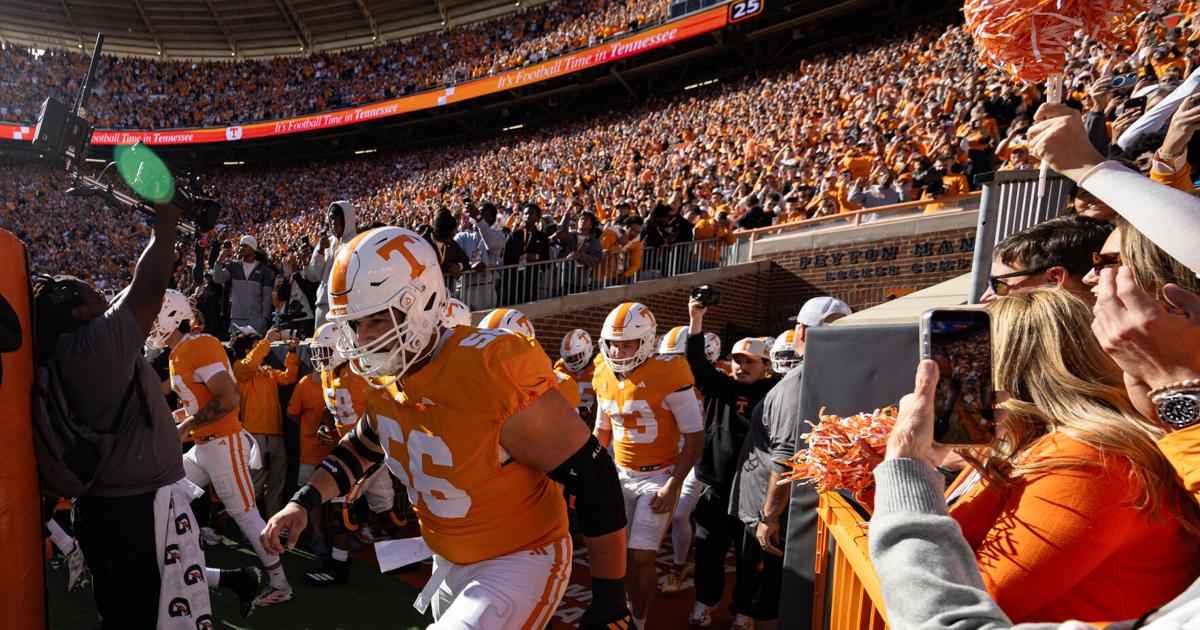
Neyland Stadium is home to the loudest fans in history. The Neyland Effect hit a new record during Tennessee's 26-10 victory over Alabama on Oct. 17.
There were 105 unique events scientifically measured that exceeded 120 decibels from field level of Neyland Stadium during the game according to data taken by the University of Tennessee Health Sciences Department of Audiology and Speech Pathology. The department utilizes a Larson Davis sound level meter in the south endzone.
No crowd pops were louder than during a huge sequence in the third quarter with the Vols leading, 19-10. Defensive end Tyree Weathersby recorded a sack on second down with 3:56 remaining in the stanza. The next play Alabama committed a delay of game penalty that made it third-and-16. Neyland Stadium experienced 130.3 decibels (dBA peak) on field level for a noise event that lasted seven seconds during that sequence, which was the highest scientifically verified decibel crowd event in college football history. Alabama was called for a false start immediately afterward.'Louder than it's been all day, and that's saying something,' commented ABC play-by-play announcer Sean McDonough during the broadcast.
The previous highest scientifically verified decibel crowd noise event at a college football game was measured on Oct. 27, 2007, when Penn State hosted Ohio State in Beaver Stadium. That contest featured a mark of 127 decibels that lasted for two seconds.
'You (Greg McElroy) and I have both been in a lot of stadiums, none louder than this,' McDonough said during the first quarter of the ABC broadcast.
À propos des cookies
Newshunt utilise des cookies essentiels pour vous garder connecté et mémoriser votre langue et votre pays, afin que le site fonctionne comme prévu. Avec votre permission, nous aimerions également utiliser des cookies analytiques pour comprendre comment les utilisateurs utilisent Newshunt et l'améliorer au fil du temps.
Accepter n'affecte que les analyses. Pour en savoir plus, consultez notre Politique de confidentialité or Conditions générales.
(0)Commentaires