


Return of hope to Skardu
카테고리: 혼합하다
공유
보관함
좋아요
THREE years ago, I wrote in these pages about the growing water crisis confronting Skardu. At the time, the valley was witnessing an unprecedented tourism boom. Thousands of visitors were arriving every season and hotels were springing up everywhere. Yet beneath the optimism lay a looming crisis. The water supply system on which Skardu depended had already been under strain. Climate change had begun altering weather patterns — winters were becoming unpredictable, streams were freezing for longer periods, and hydropower generation was suffering. For the first time in living memory, drinking water had to be distributed through water tankers.
More than four centuries earlier, Gul Khatoon, the visionary Mughal princess and wife of Baltistan ruler Ali Sher Khan Anchan, had transformed the high-altitude desert of Skardu into a fertile valley through the construction of the Sadpara Dam and a canal network. Her achievement remains one of the greatest examples of public works undertaken in Baltistan's history. In 2001, Wapda launched the upgradation of the Sadpara Dam project to enhance water storage, irrigation and power generation. Among its most important components was the diversion of water from the Shatung Nullah into the Sadpara reservoir. Reportedly to save the construction company from possible losses through an administrative decision, this critical component was abandoned.
As the years passed, repeated assurances were given to Skardu residents that the diversion project would be completed. Presentations were made, promises repeated and hopes raised. But the valley continued to face water shortages, while population growth, urban expansion and tourism steadily increased demand. It was against this backdrop that an alternative idea began to take shape.
The recently inaugurated water diversion project in GB reflects the strength of community-led action.
The concept was developed through discussions among engineers, development professionals and members of civil society. A key role was played by Nazir Ahmed, whose long experience in community development and rural infrastructure projects not only identified the site but also provided the technical and organisational foundation for the initiative. The question was simple, if governments and institutions could not solve the problem, could the people solve it themselves?
The answer came from an unexpected source. Agha Syed Muhammad Baqir al-Hussaini, widely respected as a religious leader, announced that the people of Baltistan would construct the channel themselves. Many were sceptical. Some considered the idea unrealistic. Others questioned whether a religious scholar could manage a technically demanding engineering project. In fact, Agha Baqir's education and training extended far beyond religious instruction. Years of rigorous study in the renowned institutions of Iran had exposed him to questions of governance, public welfare and community organisation. More importantly, he possessed the one quality essential to leadership: the ability to inspire trust. He assembled a team of engineers and technical experts. Alongside them stood respected members of civil society who volunteered their services. Prominent among them were experienced engineers Mohammad Yusuf, Hassan, Shujaat and Irshad. A broader committee of prominent citizens was created to oversee finances, monitor implementation and ensure transparency.
For decades, they had heard announcements and promises. Now they could see excavators moving, workers labouring and engineers surveying difficult terrain. The initiative started with modest donations but as the work began everyone started contributing including overseas Baltis. The people donated Rs130 million. Support also came from state institutions, including the Pakistan Army, which provided assistance at critical stages. The decisive breakthrough, however, came when chief minister Haji Gulbar Khan committed substantial financial support. Coming from Diamer, one of the most underdeveloped regions of Gilgit-Baltistan, he understood the hardship caused by water scarcity and recognised the transformative potential of the project. The GB government sanctioned Rs150m. The total cost of the project is Rs320m.
The terrain through which the channel had to pass was unforgiving. The construction season in Baltistan is short. Long winters halt work for several months a year. Mountainous landscapes create engineering challenges. Over a period of three years, the actual work took one year, with the completed project benefiting a population of 250,000. It provided the people an average 115 cusecs of water from a channel almost five metres wide and11 kilometres long — built with love and care.
What makes this project particularly noteworthy is that it was completed at a fraction of the cost normally associated with public-sector infrastructure schemes. The combination of community participation, transparent oversight and technical competence demonstrated that development need not always be accompanied by excessive expenditure. Most importantly, the project was far more than an engineering undertaking. It united the people of Baltistan. Religious leaders belonging to different schools of thought supported it. Communities divided by sectarian affiliations contributed to it. Businessmen, labourers, professionals, government servants and ordinary citizens all regarded the project as their own. In a region often portrayed through the lens of division, the canal became a symbol of collective purpose. On Aug 10, 2026, its inauguration ceremony was held on the spectacular Deosai Plateau. For many participants, watching water flow towards the Sadpara reservoir was the fulfilment of a dream.
GB's people have repeatedly demonstrated their capacity to undertake difficult public works through collective effort. From ancient irrigation channels carved into mountainsides to community-built roads linking remote valleys, self-help has long been part of the region's culture. The Phailong Stream to the Sadpara Diversion project lies firmly within that tradition.
Encouraged by the success, the project's supporters have established an organisation named after Ali Sher Khan Anchan. The objective is to preserve the experience gained from this initiative and provide a platform for future community-driven development projects. Wapda failed to divert the Shatung Nullah; it can now utilise this new institution to accomplish the task more efficiently with greater community support.
The canal is a statement of confidence, resilience and empowerment. It demonstrates what can be achieved when visionary leadership combines with technical expertise, public trust and community participation. For the federation, there is an important lesson as well. GB's people are not passive recipients of development and possess the determination, organisational capacity and social cohesion necessary to solve their own problems. What they require is recognition and support. This amazing feat belongs not to any one individual but to an entire society that refused to surrender or despair.
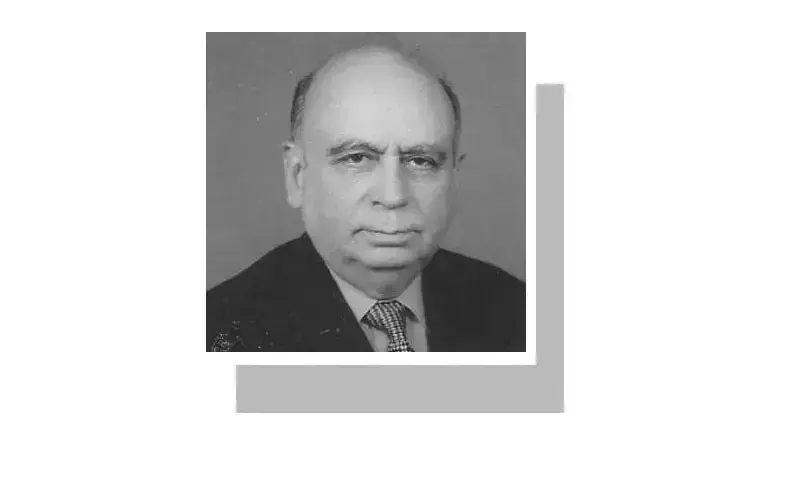
The writer, a former IGP Sindh, belongs to Gilgit-Baltistan.
Published in Dawn, October 3rd, 2026
(0)댓글