


Arab Views: Saudi restraint is no longer operable, says Prince Turki Al-Faisal
카테고리: 정치
공유
보관함
좋아요
RIYADH: Crown Prince Mohammed bin Salman made clear during his annual address to Saudi Arabia's Shura Council on Wednesday that Riyadh remained committed to diplomacy and de-escalation, but would respond firmly to threats against the Kingdom.
'We are making every possible effort to reduce escalation and support diplomatic solutions, without the slightest compromise when it comes to safeguarding our security,' the crown prince said, warning that Saudi Arabia 'will not hesitate to respond firmly to any threat or attack aimed at undermining it.'
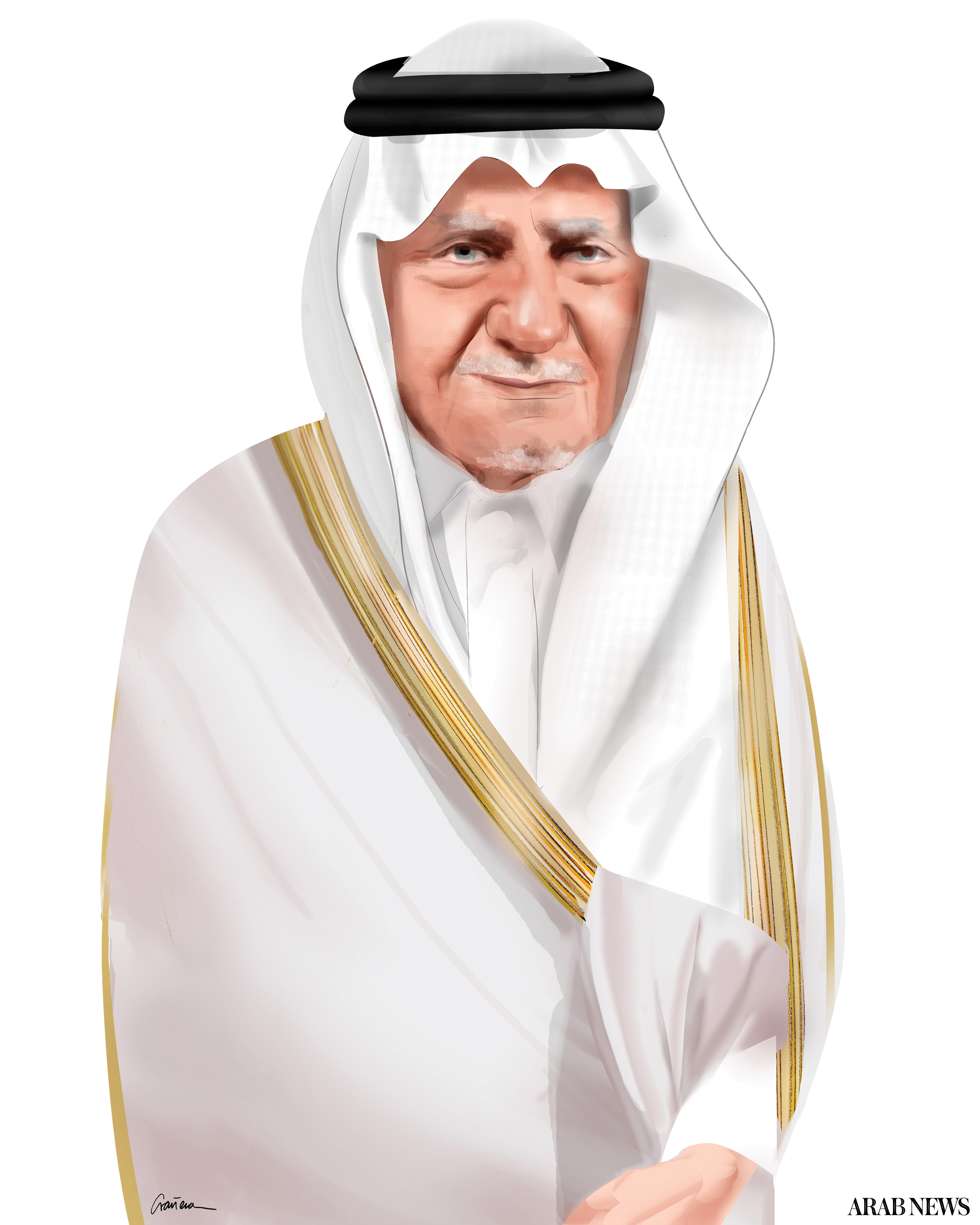
In the first episode of 'Arab Views,' a new flagship show hosted by Arab News Editor-in-Chief Faisal J. Abbas, offering unreserved conversations with world leaders and key decision-makers, Prince Turki Al-Faisal, the former Saudi intelligence chief, elaborated on the comments by the crown prince.
He explained that restraint had been a hallmark of Saudi policy but that this restraint was no longer operable.
'Restraint has always been a hallmark of Saudi policy and action, historically, from the days of King Abdulaziz,' Prince Turki said, pointing to two episodes in Saudi history to illustrate the principle.
Prince Turki Al-Faisal speaks with Arab News Editor-in-Chief Faisal J. Abbas during the inaugural episode of 'Arab Views.' AN photo
'In the early 1930s, the late Imam Yahya of Yemen attacked Saudi Arabia, in Najran, Jazan and Asir, claiming that those were territories belonging to Yemen,' he said.
'King Abdulaziz kept his cool and allowed for the mediators to carry on with their mediation efforts. And he told his colleagues, I am willing to be seen as a coward … in order to protect my fellow citizens and their properties.
'But when it comes to the sovereignty of the nation, there is a limit to my patience.'
When negotiations failed, Prince Turki said, King Abdulaziz eventually responded militarily before reaching a peaceful settlement in 1934 that delineated the Saudi-Yemeni border.
He cited a second example from the 1960s, when Saudi Arabia faced the fallout from the revolution in Yemen and Egypt's military intervention under Gamal Abdel Nasser.
Something needs to be demonstrated by China to show that it is a fair broker between Saudi Arabia and Iran.
'The late King Faisal also negotiated with Gamal Abdel Nasser for five years on reaching a settlement in Yemen, which finally ended in the retreat of Egyptian forces from Yemen, and the recognition by Saudi Arabia of the sovereign Republic of Yemen,' Prince Turki said.
'So restraint is a historic hallmark and principle that the Kingdom upholds.'
He said that the same approach had been followed in the current confrontation.
'Before the American-Israeli-Iranian conflict started, His Royal Highness Prince Mohammed bin Salman contacted the American presidency and recommended that there be no military action taken in order to avoid not only unforeseen consequences, but also any death or destruction that might happen not just in Iran but across the Gulf into the Arabian countries of the GCC as a response by the Iranians,' he said.
'Unfortunately, that advice was not taken by our American friends, and we see what is happening today.'
But, he added, the circumstances had now changed.
'The Kingdom's commitment to restraint is inherent in all of its policy. But now that the Houthis have advanced their military action into Saudi territory, and also the so-called Hashd Al-Shaabi from Iraq also has bombarded Saudi Arabia, and there were previously attacks from Iran, that restraint is no longer operable.'
The latest escalation in Yemen has centered on Houthi advances along the Red Sea coast and renewed concerns over the security of the Bab Al-Mandab, one of the region's critical maritime chokepoints.
But Prince Turki rejected the idea that the Houthis had secured an enduring military advantage. 'It is still a continuing conflict,' he said.
He recalled that similar assessments had been made after the Houthis seized Sanaa in 2014.
'But with the support of the Kingdom and the coalition that was built by the Kingdom at the time, the legitimate government managed to maintain a presence not just in the north of Yemen … but also throughout the eastern part of Yemen from Adan all the way through Hadramout to the borders of Oman.'
Prince Turki Al-Faisal discusses Saudi Arabia's evolving security policy with Arab News Editor-in-Chief Faisal J. Abbas. AN photo
He said that the Houthis had subsequently broken the earlier ceasefire and expanded their presence along the Red Sea coast, but that the conflict remained unresolved.
'I don't think that we can merely say that they have achieved superiority in their advance yet,' Prince Turki said. 'The story is still unending.'
Asked why the Houthis had escalated after remaining relatively quiet for much of the year, he linked their actions directly to the wider confrontation involving Iran. 'I'm sure it is connected to the events on the Strait of Hormuz, on the Gulf,' he said.
'The Iranian ambitions there have been well expressed by Iran. They want to have sovereign rights over the Strait of Hormuz and to consider it as Iranian territory, which is unacceptable, not just from the point of view of Saudi Arabia, but through international law.'
He said the two waterways were strategically connected.
'All straits in the area, Hormuz and Bab Al-Mandab, are international waterways. And so no one country has sovereignty over them.
'So we see the linkage here with Iran trying to expand its sovereignty over the Hormuz strait. And they're pushing the Houthis to also establish some sort of control over the Bab Al-Mandab on the other side of the Arabian Sea.
'The two are definitely connected,' he said, adding: 'I am sure that without Iranian support and encouragement that the Houthis would not have undertaken this action.'
International involvement in Yemen has also increased, with the US and European governments stepping up cooperation with Gulf states amid concerns over the wider economic and security consequences of instability around Hormuz and Bab Al-Mandab.
Prince Turki welcomed the shift.
'Well, I can say it's about time,' he said.
Israel was funneling Qatari funds in the billions of dollars to Hamas. And from that perspective, it seems to me that the present government of Netanyahu is complicit in supporting Hamas.
He argued that the international community had initially underestimated the importance of Yemen's conflict, but that the consequences of disruption to maritime trade had changed the calculation.
'With the closure of the Hormuz strait and the economic results of that, not just in terms of energy supplies and other crucial elements of supply from the Gulf, but also potential closure of the Bab Al-Mandab, what that will have on the economic situation throughout the world, definitely these countries, whether the US or the European countries, Britain and so on, are aware of the importance of that action.'
He added: 'I don't think it is too little, too late. I think it is important and it will expand as the value and the importance of the reaction to these events becomes apparent.'
The conflict also raises questions about the future of the 2023 Saudi-Iranian rapprochement brokered by China.
The Beijing agreement committed Riyadh and Tehran to principles including noninterference and respect for sovereignty. Prince Turki said that any future trust would have to be based on Iranian actions.
'Trusting Iran will have to be based on demonstrable actions by Iran that they can be trusted,' he said.
'It is up to Iran to be forthcoming in showing that it can be trusted to keep its word.'
Former Saudi intelligence chief Prince Turki Al-Faisal speaks about regional security and diplomacy among other issues. AN photo
China, meanwhile, has a role to play as the broker that brought the two sides together.
'I was in Beijing ten days ago, and I spoke to the effect that China has a duty to play the role that it played when it brought together Saudi Arabia and Iran to sign this agreement of respect for each other itself,' Prince Turki said.
'So we have to wait and see what China is going to do.'
Prince Turki also questioned whether the traditional model of US military deterrence in the Gulf remained sufficient in an era dominated by drones and missiles.
'It's a work in progress,' he said. 'The value of the American presence in these states has to be re-imagined.'
He said that the presence of US forces had not prevented recent attacks, and argued that warfare itself had changed.
'The introduction of the drones and the missiles has upset or has changed the terms of what warfare is,' he said. 'It's not just simply sending troops and ships and so on, but attacks from the sky.'
Asked whether a US withdrawal from the Middle East would therefore resolve tensions with Iran, Prince Turki rejected the proposition.
'I haven't seen any indication that such a withdrawal will limit Iran's ambitions,' he said. Iran, he argued, would continue to seek influence through regional partners.
'The presence or lack of presence of American or other forces in the area is no guarantee that Iran will be a peaceful and peace-loving neighbor, not just to us, but to the other countries in the area.'
He said that Iran would need to abandon its ambition to become the region's predominant power.
Saudi Arabia wants to see the whole Middle East free of weapons of mass destruction.
Amid efforts to prevent Iran obtaining a nuclear bomb, Saudi Arabia's expanding civil nuclear program has also prompted questions about whether Riyadh could eventually seek a weapons capability, as alluded to in a recent Washington Post article which remains to be verified.
'Saudi officials at the highest level, like Prince Mohammed bin Salman, have talked with President Trump on that issue, and they have reached an agreement to expand nuclear energy cooperation between the two countries,' Prince Turki said.
'My assumption, of course, is that the American side has been reassured by where Saudi Arabia stands on the acquisition of nuclear weapons.'
He said that Saudi Arabia's stated position was instead linked to the long-standing proposal for a Middle East free of weapons of mass destruction.
'The main policy for the Kingdom on the issue of nuclear weaponry and so on is the proposal for establishing a zone free of weapons of mass destruction in the Middle East,' he said. 'That idea has been in the works since 1974.'
He added: 'This is where Saudi Arabia's commitment is. It wants to see the whole Middle East, expanding from Iran all the way across to Mauritania, free of weapons of mass destruction. If that can be achieved, we would all be equal under those terms.'
Asked whether he still considered Israel the region's biggest threat, as he had said previously in a column for Arab News, Prince Turki offered a changed assessment.
'Israel is a malignant force that thrives on military conquest as a means to establish its premiership in the area, and it also has territorial ambitions,' he said.
Prince Turki and Faisal J. Abbas discuss Iran, Yemen and the future of Gulf security in the first episode of 'Arab Views.' AN photo
Now, he has concluded, 'both Israel and Iran are equally threatening to the security and stability of the area. As you know, eight months ago or ten months ago, the situation was different. Now, Iran definitely is a threat to the rest of us.'
On media reports of Israeli failing to process warnings handed over to them by former Egyptian intelligence chief Abbas Kamel prior to the attacks of Oct. 7, 2023, Prince Turki said that he could not independently verify reports that regional intelligence officials had warned Israel.
'I am not aware of these things, of course, nor would I be able to judge whether these things happened or not,' he said.
But he then pointed to Israel's policy toward Hamas before the attack.
'What I do know, in fact, if you look at the facts as they were before Oct. 7, Israel was funneling Qatari funds in the billions of dollars to Hamas,' he said.
'And from that perspective, it seems to me that the present government of Netanyahu is complicit in supporting Hamas and allowing it to build up whatever resources it had in order to take the action that it did on Oct. 7, 2023.
'So Israel and Netanyahu cannot be absolved of responsibility for the capability of Hamas to do what it did.'
Whether that constituted intelligence failure or something more deliberate, he said, was ultimately for Israelis to determine.
(0)댓글