


Mark Zuckerberg plans 4,300-mile underwater internet cable with unbelievable speeds
카테고리: 사이테크
공유
보관함
좋아요
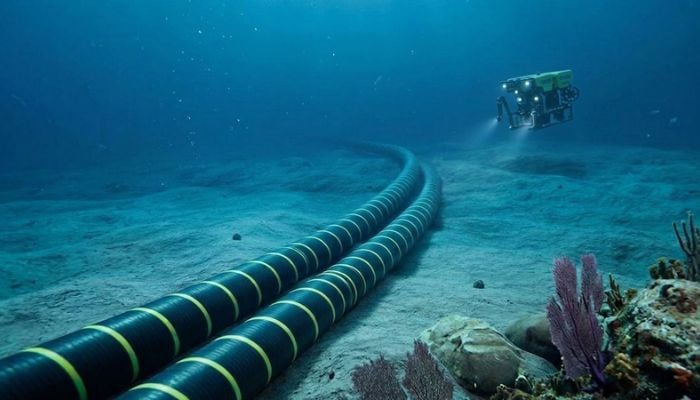
Mark Zuckerberg's Meta is planning to build a 4,300-mile-long internet cable beneath the Atlantic Ocean that could carry enough data to allow nearly three-quarters of the world's population to stream music simultaneously.
The cable, named Petal, will connect the United States and France, with a capacity of one million gigabits per second, making it the first transoceanic cable designed to reach such speeds.
According to Live Science, the cable could transfer approximately 125 terabytes of data every second, equivalent to around 25,000 high-definition movies, each measuring five gigabytes.
However, the project is still under development and is expected to become operational in 2029.
Meta claims Petal will carry twice as much data as the most advanced existing transoceanic cables without requiring a proportional increase in power consumption.
The company plans to achieve this using multi-core fibre technology, which allows two separate streams of light to travel through a single fibre strand instead of one.
Each strand will be approximately as thin as a human hair.
Japanese technology company NEC will oversee the cable's design and construction, while Sumitomo Electric will supply the optical fibre.
Interestingly, despite the growing popularity of satellite internet services, undersea cables still carry approximately 99% of intercontinental internet traffic.
Meta has already invested in several submarine cable projects, including Marea, Amitie and Anjana, to support its expanding digital infrastructure.
The company is also increasing its network capacity as artificial intelligence services require enormous amounts of data to move between data centres.
Petal's advertised speed represents its planned total capacity rather than the internet speed individual users would receive at home.
(0)댓글