


Why Flavio Bolsonaro outperformed the polls in Brazil's election
카테고리: 정치
공유
보관함
좋아요
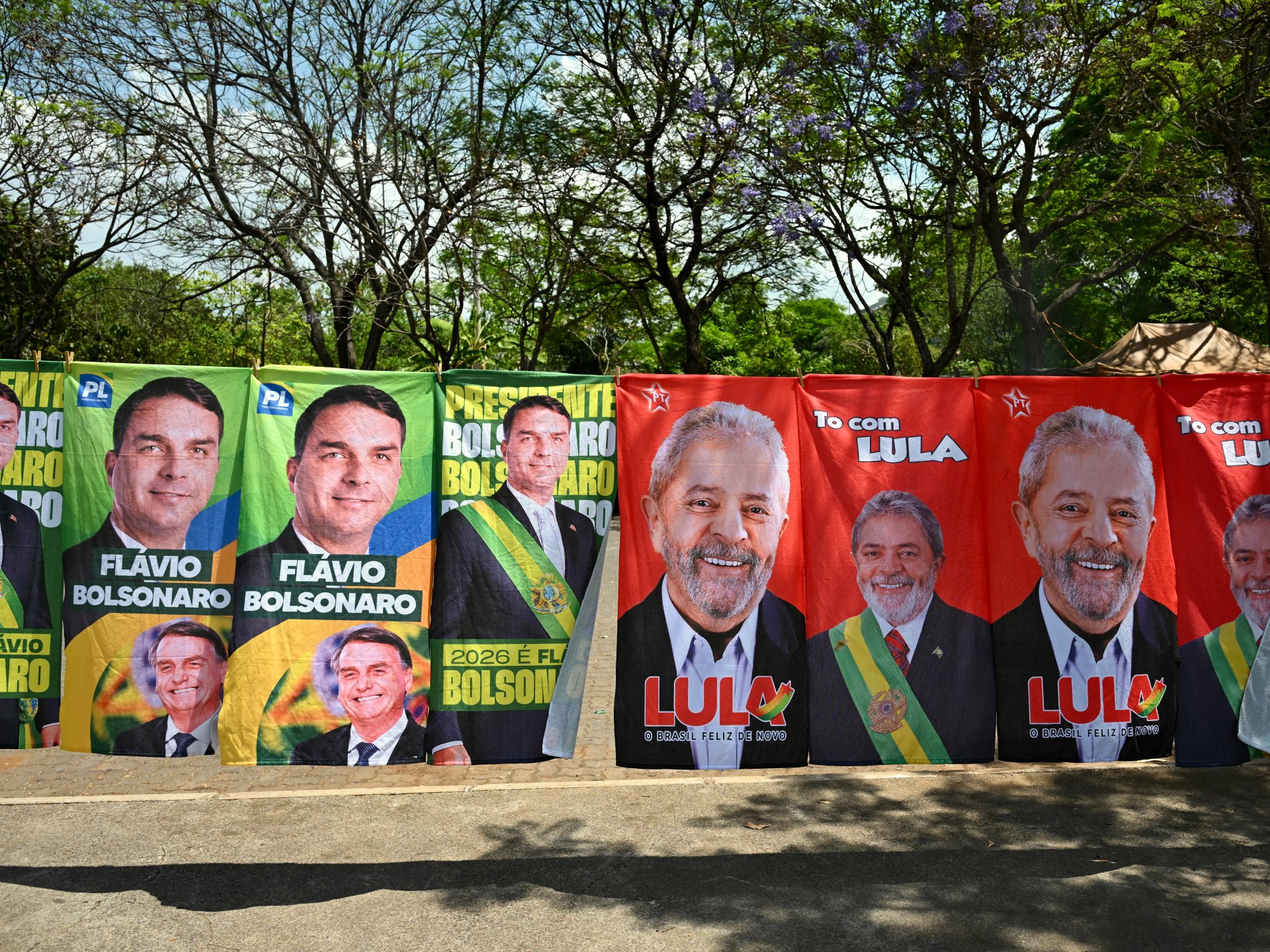
With three weeks to go until Brazil's presidential runoff, President Luiz Inacio Lula da Silva finds himself in a weaker position than he — or most pollsters — had expected.
A second round of voting was widely predicted. But most recent polls had Lula entering a runoff from first place, putting him about three percentage points ahead of rival Senator Flavio Bolsonaro.
Instead, Bolsonaro took about 47 percent of the vote on Sunday to Lula's 45 percent, a reversal that surprised analysts and raised questions about what happened in the final days of the campaign, and what the polls may have missed.
What changed in the final days
Carlos Pereira, a political scientist at the Getulio Vargas Foundation think-tank in Brazil, believes part of the answer lies in a late shift among voters who had planned to support smaller right-wing candidates.
Bolsonaro himself had said he was banking on exactly that, telling reporters on election day that he expected a 'protest vote' from people who might have otherwise backed another candidate but were united in their opposition to Lula.
'Usually, voters, they vote [sincerely] in the first round, and they vote strategically in the second round,' Pereira told Al Jazeera.
This time, he said, some voters who were planning to cast their ballot for candidates like the former governor of the central state of Goias, Ronaldo Caiado, and businessman and founder of the right-wing Free Brazil Movement, Renan Santos, appear to have made the strategic choice earlier.
'They thought, 'Let's try to resolve this election right now,'' Pereira said. 'If you're gonna vote for Flavio anyway in the second round, why not vote for him right now?'
Advertisement
That early consolidation could also matter in the runoff. Political analyst Rafael Favetti told Reuters news agency that some of the support Bolsonaro would have usually picked up only in a second round had already been 'front-loaded,' potentially leaving him less room to expand his coalition.
Another factor, Pereira said, was the Banco Master scandal, a sprawling alleged banking fraud that rattled both campaigns in the final weeks, touching figures across the political spectrum.
Among them was Supreme Court Justice Alexandre de Moraes, who oversaw the case that sent Bolsonaro's father, former President Jair Bolsonaro, to prison. De Moraes was accused of improper ties to Banco Master owner Daniel Vorcaro after documents emerged appearing to show the banker seeking legal advice from him. De Moraes has denied the allegations.
Pereira believes that connection may have acted as a late 'trigger' for some voters. Bolsonaro's supporters have seen Moraes as a political ally of Lula, with Flavio making a direct link between the two on the campaign trail earlier this year, saying, 'Anyone voting for Lula is voting for Alexandre de Moraes.'
A September Datafolha poll found 34 percent of Brazilians associated the Banco Master scandal more with the left, compared with 27 percent who associated it more with the right.
Andre Pagliarini, a professor of history and international studies at Louisiana State University and author of Lula: A People's President and the Fight for Brazil's Future, agreed the scandal may have hurt the president. A campaign dominated by 'spectacular, unceasing scandal involving seemingly the entire political class', he said, played to Bolsonaro's strengths as an 'anti-institutional insurgent'.
'The irony, of course, is that Flavio himself was directly implicated in the Banco Master scandal in a way that Lula is not,' he said in an email.
The younger Bolsonaro is under investigation over allegations that he sought money from Vorcaro to finance a film about his father. He denies wrongdoing.
A broader shift to the right
Neither analyst saw the result as a wholesale failure of the polls.
For Pagliarini, the bigger surprise was the scale of support for the right, which extended well beyond the presidential race.
Bolsonaro won nearly four percentage points more than his father did in the first round in 2022, while his Liberal Party emerged with the largest bloc in Brazil's Senate. The right also came out strong in gubernatorial races and made significant gains in the southeast of the country.
Advertisement
'There clearly was a powerful information environment around Flavio that allowed his campaign to keep its message in front of voters even as the mainstream press exposed scandal after scandal,' said Pagliarini. 'If anything, the polls underestimated the commitment of voters already leaning right.'
But the results also point to a deeper challenge for Lula and the Brazilian left: a sense among many voters that the government is not delivering enough, particularly on the economy and public security.
On paper, Lula can point to a number of positive economic indicators, like record-low unemployment, falling inequality and easing inflation. But that hasn't necessarily translated into a sense that life is getting easier, as Brazilians have continued to feel squeezed by high food prices and household debt.
A September Quaest poll found nearly half of those surveyed believed the economy had gotten worse over the previous year, compared with just 19 percent who thought it had improved.
'Voters can acknowledge that poverty is down and unemployment is low and still feel overworked, indebted, unsafe and fed up with political conflict,' Pagliarini said. 'The right has figured out how to turn those frustrations into a very clear political identity.'
An uphill battle for Lula
Lula now has three weeks to close a gap of about 2.2 million votes. And there are millions potentially up for grabs.
About nine million votes went to other candidates in the first round, while more than 33.4 million Brazilians didn't vote – 28 percent of registered voters.
'It's possible, but the arithmetic is tough,' Pagliarini said.
For Lula to turn things around, he'd need to win voters who backed minor candidates, reach some of those who abstained and find more support in the northeast, which is already his strongest region.
His campaign is preparing a new communications team. Pargliarini said he'll be watching the debates, where Lula could make a case directly against Bolsonaro rather than against his brand.
'The odds are steep, but Lula remains an extremely powerful communicator,' he said. 'Going hard at Flavio in this round is his only hope.'
(0)댓글