


Bill Gates warns against unchecked AI use
Категория: SciTech
Поделиться
Архив
Нравится
Bill Gates warns against unchecked AI use
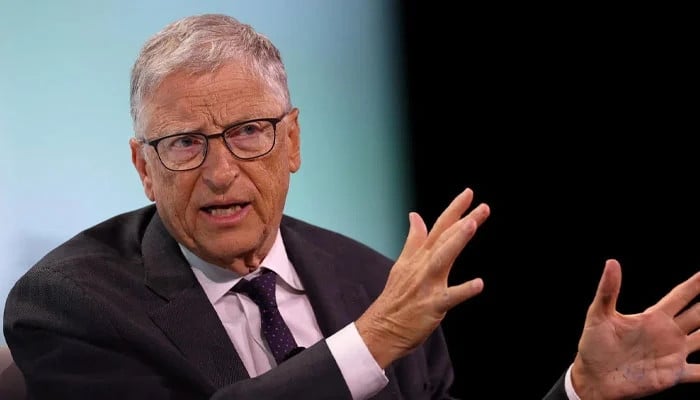
Bill Gates delivered one of his starkest public warnings yet on artificial intelligence.
Telling NBC's Meet the Press, he said that the technology is powerful enough to enable catastrophic harm if left without meaningful government oversight.
"AI is certainly powerful enough to drive events that, you know, cause a billion deaths," Gates told moderator Kristen Welker.
"There's never been a weapon as powerful as the combination of people with ill intent using the latest AI tools."
Gates argued that voluntary industry self-regulation isn't sufficient to manage the risk, calling instead for binding government intervention.
"No one thinks self-regulation is enough," he said.
"You need law enforcement and the politicians to get into the discussion about what safeguards and monitoring look like. And that has to be a required thing. And it will be a little bit of overhead for the industry, but not a dramatic slowing of what they're doing."
Rather than treating AI as an autonomous threat capable of acting on its own, Gates framed the greater danger as a "force multiplier" that lowers the barrier for bad actors to cause harm at scale, pointing specifically to accelerated biological research risks and large-scale automated cyberattacks against infrastructure like power grids, financial systems and hospitals.
Gates's comments follow a period of intensifying public debate around AI safety.
Earlier this month, a former Anthropic employee publicly warned that people building frontier AI systems privately believe the technology could pose existential risk within the decade, a claim later echoed by an Anthropic safety researcher.
Senator Bernie Sanders introduced legislation on September 23 proposing a temporary pause on advanced AI development pending stronger safety guardrails, and a separate bipartisan House bill, the AI Kill Switch Act, would require developers of the most advanced systems to maintain the ability to slow, suspend or shut them down.
President Trump has continued resisting calls for broad AI restrictions, arguing the U.S. must maintain its competitive edge against China.
Примечание о файлах cookie
Newshunt использует необходимые файлы cookie, чтобы вы оставались авторизованными и чтобы запоминать ваш язык и страну, благодаря чему сайт работает так, как вы ожидаете. С вашего разрешения мы также хотели бы использовать аналитические файлы cookie, чтобы понимать, как люди используют Newshunt, и со временем улучшать его.
Принятие влияет только на аналитику. Подробнее см. в нашей Политике конфиденциальности or Условиях использования.
(0)Комментарии