


Bill Gates has a plan for AI taking human jobs: Tax robots
Категория: SciTech
Поделиться
Архив
Нравится
Bill Gates has a plan for AI taking human jobs: Tax robots
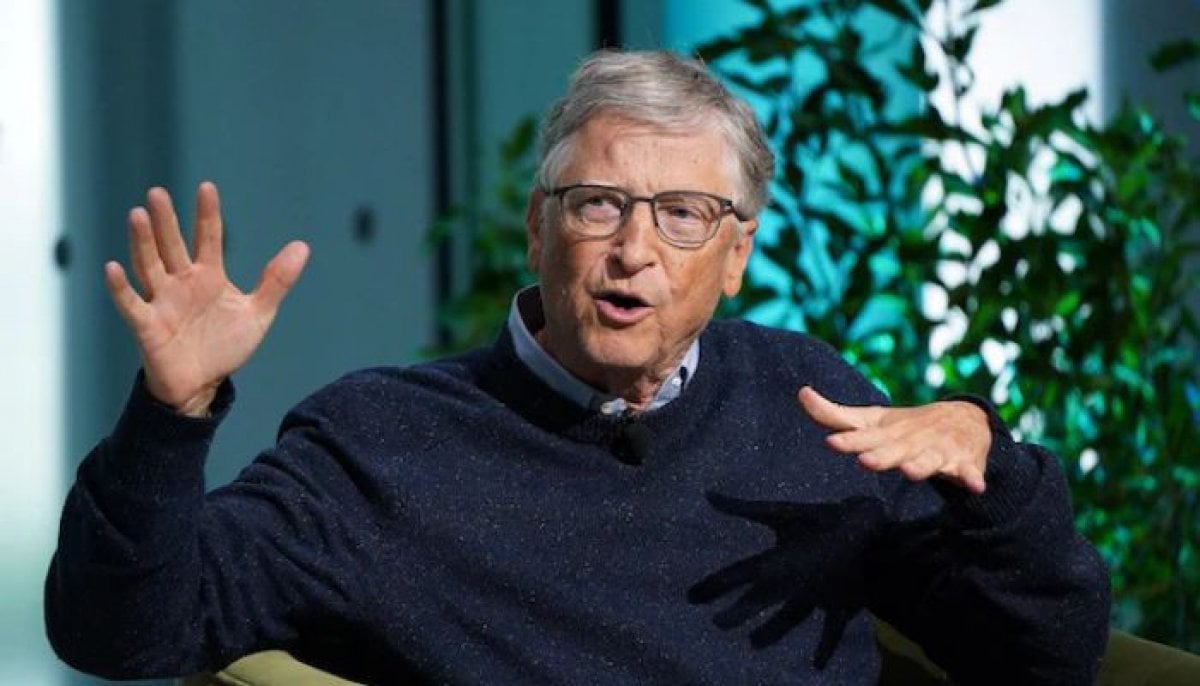
As artificial intelligence and robots take on more work traditionally done by people, Bill Gates says companies replacing human labour should pay an equivalent payroll tax on that automated work.
Speaking with New York Times journalist Ezra Klein in an interview that aired Tuesday, the Microsoft co-founder argued that governments could treat a unit of labour similarly whether it is performed by a person or a machine.
"You define a unit of labour and say, independent of whether that's delivered by a human or robot, you are paying the same FICA tax that a human worker would pay," Gates said.
Taxes such as FICA finance US programmes like Social Security and Medicare through payroll contributions by employees and employers.
The proposal of Gates can be interpreted to mean that there will be an imposition of the same kind of tax when the corporation chooses to use AI or robots to substitute human labour. The proposal aims to keep the revenues for the government and also create more funding for the safety net and worker support due to automation.
The reasoning of Gates was that cost savings brought about by automation cannot dictate how fast organisations automate.
"Just because the economic signals say that it'd be lower cost to use an AI doesn't mean society has to do that," Gates said.
Gates has warned about AI job losses
Over the years, Gates has often pointed out the potential effect of AI on jobs. In a long essay spanning almost 6,000 words written last August, he noted that office jobs had been affected by this technology and that blue-collar jobs might be increasingly threatened as robotics evolves.
Gates has also pointed out that taxation of AI use can help to reduce the trend towards moving away from manual labour and generating money for retraining schemes.
The proposal of imposing a tax on robots was first introduced by Gates in 2017. Almost ten years on, he still supports the proposal, though he sees it as just one part of the solution.
Gates is not the only prominent technology figure calling for changes to taxation as AI expands.
Anthropic CEO Dario Amodei has argued for stronger tax policies that could help distribute the economic gains from AI more broadly. OpenAI has also proposed taxes connected to automated labour as part of a wider policy framework addressing AI-driven disruption.
Примечание о файлах cookie
Newshunt использует необходимые файлы cookie, чтобы вы оставались авторизованными и чтобы запоминать ваш язык и страну, благодаря чему сайт работает так, как вы ожидаете. С вашего разрешения мы также хотели бы использовать аналитические файлы cookie, чтобы понимать, как люди используют Newshunt, и со временем улучшать его.
Принятие влияет только на аналитику. Подробнее см. в нашей Политике конфиденциальности or Условиях использования.
(0)Комментарии