


Deregulating wheat, sugar markets
分类: Financial
分享
归档
点赞
Can Pakistan deliver IMF-mandated reforms without triggering food, political crisis?
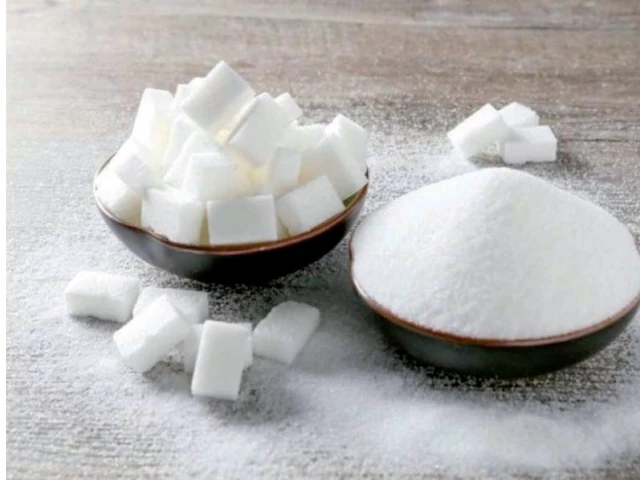
PRICE RELIEF: Sugar prices are now 18% lower than a year ago due to better production this year, with the commodity selling at an average price of Rs148 per kg. Millers have been trying to convince the government to allow exports to jack up local prices. PHOTO:FILE
Pakistan's recurring wheat and sugar crises are not simply the result of poor harvests. They stem from weak planning, flawed policies, administrative failures, market manipulation and political influence of vested interests that have shaped these sectors for decades. Successive governments have spent trillions of rupees on subsidies, procurement and market interventions, yet farmers hue and cry that they remain underpaid, and consumers continue to face price spikes.
Wheat has been heavily regulated since the 1960s and sugar since the 1970s. These policies were meant to protect growers, increase production, and benefit consumers, but in practice they have often benefited flour millers, sugar barons, middlemen and politically connected groups. Several influential political families hold significant interests in the sugar industry, while many flour mills are linked to politicians, their relatives or cronies. The result is a system that socialises losses while allowing private players to capture profits.
Prime Minister Shehbaz Sharif assumed office first in April 2022 and again in March 2024. Throughout both tenures, the government repeatedly assured the public that wheat and sugar stocks were sufficient and that prices would remain stable. Yet market realities frequently contradicted these claims. Artificial shortages, abrupt shifts from exports to imports, weak oversight and speculative hoarding have repeatedly disrupted supply over the past four years.
Official data show that wheat production increased by 4.3% to 29.605 million tons, rice by 2.8% to 9.998 million tons, and sugarcane by 6.2% to 89.45 million tons. Despite these increases, flour prices have continued to rise, suggesting that the latest wheat shortage is driven less by production constraints and more by market manipulation and speculative behaviours of hoarders. Pakistanis are not consuming wheat only; they eat rice, nearly 4 million tons, corn, millet and sorghum too; hence per capita consumption of 124 kg is exaggerated.
Pakistan has also paid a heavy price for inefficient wheat imports in the recent past. The government spent more than $1 billion importing wheat, much of which remained in warehouses, got rotten and/or was stolen, and huge stocks were stolen over time, burdening the national exchequer. The country has repeatedly imported wheat and sugar when global prices were historically high and exported them when international prices were relatively low; an approach that reflects poor timing and inefficient policy.
The IMF has long argued that Pakistan's agricultural markets suffer from excessive protectionism, distorted pricing mechanisms, costly subsidies and inefficient state intervention. In September 2024, Pakistan agreed with the IMF to phase out government market intervention and support prices in agriculture – wheat during fiscal year 2024-25 and sugar by June 2026.
The government moved quickly on wheat by announcing the discontinuation of official procurement and support prices. It also formally committed to deregulating the sugar sector by June 2026, including the removal of minimum support prices of sugarcane and trading restrictions. On paper, these reforms promise greater efficiency, fiscal savings, private investment and more competitive markets. In reality, however, deregulating Pakistan's two most politically sensitive food commodities may prove "mission impossible" for the current coalition government's political partners.
The central question is not whether deregulation is economically desirable. It is whether Pakistan's political economy is capable of implementing it in its true spirit. For decades, the government controlled nearly every aspect of the wheat economy: support prices, procurement targets, public storage and strategic reserves. These measures were intended to ensure food security, but they also created inefficiencies, corruption and opportunities for rent-seeking.
The sugar sector has been similarly regulated since the 1970s. Governments fixed sugarcane prices, restricted the production of jaggery and raw sugar, approved imports and exports, imposed stock limits and frequently intervened through the state-owned entity Trading Corporation of Pakistan whenever shortages or public outrage emerged. These policies often favoured mill owners rather than farmers or consumers.
The IMF-backed reforms seek to end this interventionist model. The government plans to withdraw from wheat procurement, shut down Passco, maintain only emergency strategic reserves and allow prices to be determined largely by market forces. In sugar, minimum support prices, zoning restrictions, mill licensing and trading controls are expected to be liberalised. This would represent the most significant transformation of Pakistan's agricultural markets in generations.
From an economic perspective, deregulation has strong arguments in its favour. Artificial prices distort production decisions, encourage inefficiency, burden public finances and create opportunities for rent-seeking. Every year, the government spends billions managing procurement, storage, subsidies and emergency imports, yet artificial shortages and engineered price spikes persist. A competitive market could improve efficiency, attract investment, modernise storage infrastructure and allocate resources more rationally.
But markets do not become competitive simply because the government role exists. Pakistan's agricultural marketing system remains fragmented and dominated by middlemen (Arthis) hoarders, weak logistics, inadequate old-fashioned warehousing and limited access to commodity financing. Without modern market institutions, deregulation could merely transfer market power from government agencies to private cartels unless free import/export is allowed.
Ending public wheat procurement would transfer price risk directly to farmers. Large commercial producers may adapt, but small farmers often depend on guaranteed procurement to recover production costs and repay seasonal loans borrowed from Arthis.
On the consumer side, wheat is Pakistan's staple food. Even modest increases in flour prices immediately feed into inflation, poverty and political unrest. A more practical approach would be to build a mandatory strategic stockpile through private-sector participation. Licensed traders, flour mills, exporters, and importers with approved storage facilities could be required to maintain 10% of their stocks in government-designated warehouses involving zero investment of government. In an emergency, the government could purchase these reserves at verified purchase cost price and release them into the market to stabilise prices. Such a system would reduce the fiscal burden while preserving food-security safeguards.
If wheat deregulation is difficult, sugar liberalisation is politically explosive. The sugar industry has long been associated with powerful business interests, policy reversals and recurring market controversies. Nearly every year, Pakistan witnesses disputes over actual sugar stocks, exports, imports, shortages, subsidies or fixation of retail prices. Allowing prices to be determined entirely by market forces may improve efficiency, but only if genuine competition exists. This requires a liberal import-export policy for raw and refined sugar, no unnecessary restrictions on new entrants and transparent stock reporting.
Without strong competition laws and effective action against collusion, consumers could remain vulnerable to coordinated pricing by dominant market players. Removing regulations without strengthening regulators is not deregulation; it is merely replacing public control with private cartelization and concentration.
This is where economics collides with politics. The IMF expects Pakistan to reduce fiscal costs and minimise state intervention to reduce losses. Governments, however, survive on public confidence, and nothing erodes that confidence faster than rising food prices. Whenever wheat or sugar prices surge, political pressure inevitably forces governments to intervene through imports, subsidies, export bans or administrative price controls. Pakistan's history is full of such reversals. This makes complete and sustained deregulation extraordinarily difficult.
Successful deregulation requires far more than withdrawing government notifications. Pakistan must first build competitive commodity markets supported by modern storage facilities, warehouse financing, reliable market intelligence, efficient logistics, digital futures trading platforms, crop insurance and robust competition enforcement.
THE WRITER IS A FORMER VICE PRESIDENT OF KCCI, FORMER BOARD MEMBER OF REAP AND AN INTERNATIONAL TRADE EXPERT
(0)评论