


Exotic species appear off California thanks to an unusually strong El Niño
زمرہ: سائنس ٹیکنالوجی
شیئر کریں
آرکائیو
پسند کریں
CALIFORNIA: The longfin bigeye fish was spotted in California for the first time last month, and the first sea turtles of any kind nested on California beaches. Meanwhile, a venomous yellow-bellied sea snake swam ashore as whale sharks and hammerheads cruised just off the coast.
Exotic species have been visiting California's shores since an unusually strong El Niño weather phenomenon arrived this year. Occurring naturally every few years, El Niño brings warm ocean water farther north, and tropical species with it, providing California with a stunning visual display that has become ever more evident with the advent of drone and video technology.
'There's kind of a buzz. Fishermen are loving it for sure. I'm as interested as anybody else. It's strange times,' said Nate Jaros, vice president of animal care at the Aquarium of the Pacific in Long Beach.
Other visitors include flying fish and manta rays.
California had already experienced an unusual marine heat wave just before its arrival. This year's phenomenon coincided with a string of hurricanes in the eastern Pacific, fueling sea level rise and large waves that have destroyed homes and denuded some Southern California beaches of sand. Preparing for more effects to come this winter, California has declared a state of emergency.
But it has provided a bounty for businesses like Dana Wharf Sportfishing & Whale Watching. Co-owner Donna Kalez said anglers have pulled in 5,000 yellowfin tuna this year, compared to 2 a year ago. They are also landing wahoo and dorado, also known as mahi-mahi, a green fish with a blunt head giving it the profile of a bulldozer.
'Dorado is very exciting because they're very acrobatic, so they jump out of the water. We catch them off kelp paddies, and it's a thrill,' Kalez said.
Experts expect conditions to mostly return to normal after El Niño, a natural phenomenon predating human-caused climate change, passes next year. The greatest short-term harm may be to kelp, which thrives in colder waters and provides habitat for multiple species, experts say.
'It's good for some sharks and probably bad for others,' said Chris Lowe, director of the Shark Lab at California State University, Long Beach. 'For animals that can't move, that's a bigger problem, right? Most sharks that are highly mobile. They can simply move.'
The yellow-bellied sea snake may have venomous fangs but cannot swim like a large shark. When an apparently sick one swam ashore in Orange County in September, a beachgoer used a palm frond to lift it off the sand and drop it in the sea. Jaros said that based on cellphone video he had little doubt it was the yellow-bellied sea snake, Hydrophis platurus.
There have only been six or seven confirmed sightings in California, said William Ludt, associate curator of ichthyology at the Natural History Museum of Los Angeles County. The last confirmed sighting came during the El Niño of 2015-2016, he said.
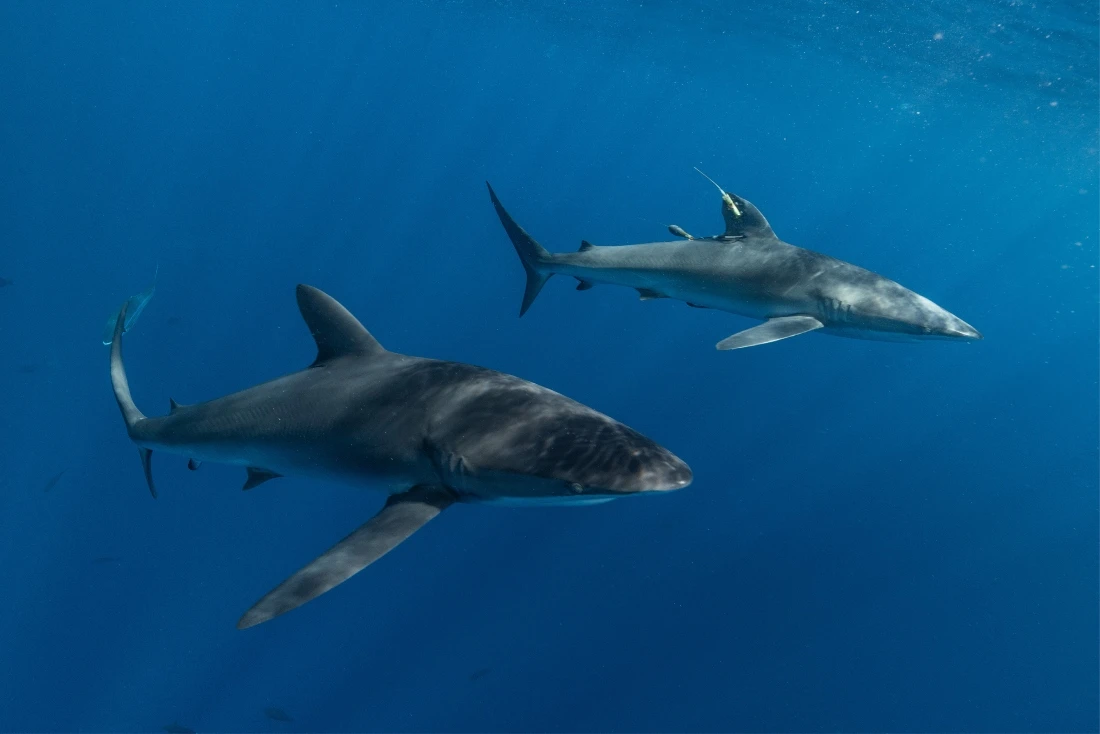
Exotic sharks such as the whale shark — a gentle giant and the largest fish on Earth — and the more menacing-looking hammerheads venture into California waters during El Niño. Both have been spotted recently. Lowe said a white shark nursery reappeared for the first time since 2011 in Santa Monica Bay, where juveniles frolic without bothering humans.
Ludt said the aptly named longfin bigeye fish species was recorded for the first time in California this year when an angler caught one on the Venice Fishing Pier in Los Angeles. When two olive ridley sea turtle nests were found on a pair of Orange County beaches in September, they marked the first-ever recorded nest for any sea turtle species on the US West Coast, according to the US National Oceanic and Atmospheric Administration. The first was discovered by a beachgoer in Seal Beach on September 16, the second by lifeguards in neighboring Huntington Beach three days later, officials said.
And other new species may yet arrive.
'We still aren't fully through it,' Ludt said. 'It's still very much ongoing.'
کوکیز کے بارے میں ایک نوٹ
نیوزہنٹ آپ کو سائن ان رکھنے اور آپ کی زبان اور ملک یاد رکھنے کے لیے ضروری کوکیز استعمال کرتا ہے، تاکہ سائٹ آپ کی توقع کے مطابق کام کرے۔ آپ کی اجازت سے، ہم یہ سمجھنے کے لیے تجزیاتی کوکیز بھی استعمال کرنا چاہتے ہیں کہ لوگ نیوزہنٹ کو کیسے استعمال کرتے ہیں اور وقت کے ساتھ اسے بہتر بنانا چاہتے ہیں۔
قبول کرنا صرف تجزیات کو متاثر کرتا ہے۔ مزید جاننے کے لیے دیکھیں پرائیویسی پالیسی or شرائط و ضوابط.
(0)تبصرے