


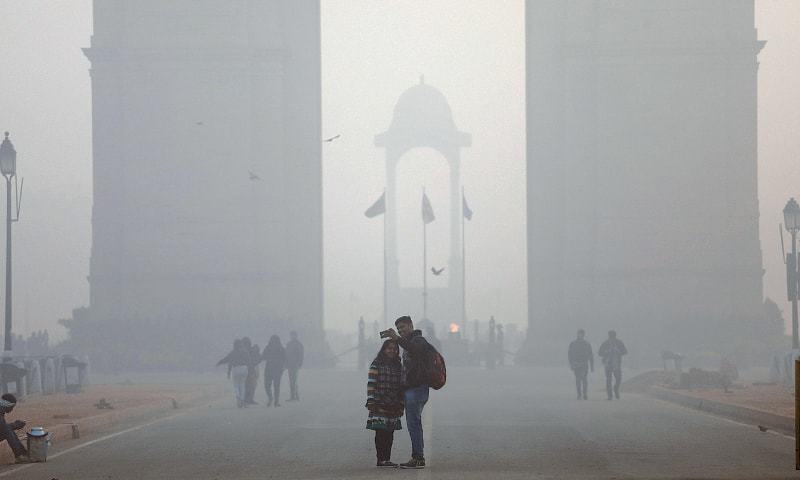
India capital steps up air pollution controls ahead of winter
زمرہ: صحت
شیئر کریں
آرکائیو
پسند کریں
India began annual measures on Thursday to tackle toxic air pollution in New Delhi, a megacity of 30 million people regularly ranked among the world's most polluted capitals.
Delhi's air quality deteriorates in winter, when cooler air traps pollutants close to the ground. Major sources include coal-fired power plants, traffic, construction and farm stubble burning in neighbouring areas.
The Delhi government on Wednesday announced a ban on open rubbish burning and ordered food stalls to stop using coal or firewood.
In previous years, such measures have failed to curb pollution, which peaks from November to January, when levels of cancer-causing PM 2.5 microparticles often hit more than 300 micrograms per cubic metre, 20 times the World Health Organisation's recommended daily maximum.
Monitors recorded 233 micrograms per cubic metre early on Thursday, about 15 times the limit.
The government's Commission for Air Quality Management has predicted air quality to remain 'poor' in the coming days.
A study in The Lancet Planetary Health in 2024 estimated that 3.8m deaths in India between 2009 and 2019 were linked to pollution that exceeded India's own air quality guidelines.
Last year, pollution levels peaked at 846 micrograms per cubic metre, 56 times the WHO limit.
The UN children's agency warns that polluted air puts children at heightened risk of acute respiratory infections.
Further restrictions take effect on November 1, including doubled parking fees and work-from-home arrangements for government office staff, aimed at reducing traffic emissions.
Tighter construction rules will also begin then, followed by a complete ban on construction and demolition from December 10 to January 20.
Last month, the authorities also imposed a construction ban that will run from December 10 to January 20 as part of a winter action plan to tackle pollution. It will include restrictions on vehicular traffic aimed at encouraging residents to use public transport.
کوکیز کے بارے میں ایک نوٹ
نیوزہنٹ آپ کو سائن ان رکھنے اور آپ کی زبان اور ملک یاد رکھنے کے لیے ضروری کوکیز استعمال کرتا ہے، تاکہ سائٹ آپ کی توقع کے مطابق کام کرے۔ آپ کی اجازت سے، ہم یہ سمجھنے کے لیے تجزیاتی کوکیز بھی استعمال کرنا چاہتے ہیں کہ لوگ نیوزہنٹ کو کیسے استعمال کرتے ہیں اور وقت کے ساتھ اسے بہتر بنانا چاہتے ہیں۔
قبول کرنا صرف تجزیات کو متاثر کرتا ہے۔ مزید جاننے کے لیے دیکھیں پرائیویسی پالیسی or شرائط و ضوابط.
(0)تبصرے