


The 10 Greatest R-Rated Mystery Movies, Ranked
Category: Entertainment
Share
Archive
Like
R-rated mystery movies have room to be uglier about the truth. They can follow obsession into places a safer movie would soften, and they can let violence, sex, grief, corruption, and psychological damage sit on the screen without cleaning the edges for comfort.
And my favorite ones? They do more than ask who did it. They make the search itself feel dangerous. A clue can ruin someone. A missing person can expose a whole rotten system. A detective can solve the case and still lose something that was holding him together.
10
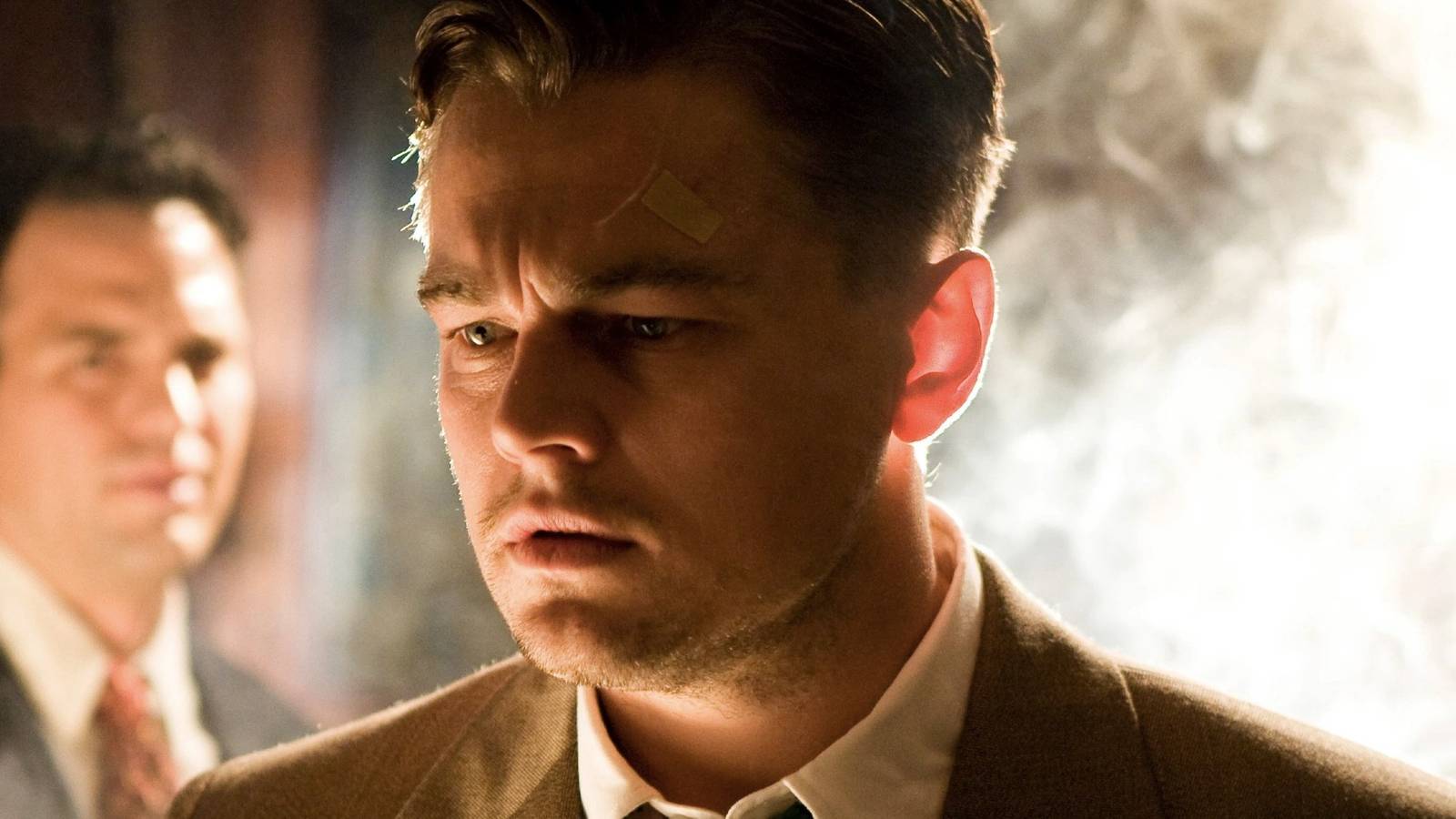
'Shutter Island' (2010)
A close-up of Leonardo DiCaprio as Teddy Daniels looking concerned in Shutter Island Image via Paramount Pictures
The fog, the ferry, and that first look at Ashecliffe already tells you nobody is walking into a normal investigation here. Shutter Island gives us U.S. Marshal Teddy Daniels (Leonardo DiCaprio) arriving at a remote hospital for the criminally insane to find a missing patient, with his new partner Chuck Aule (Mark Ruffalo) following him through locked wards, hostile doctors, storm warnings, and a place that seems designed to keep secrets alive.
What makes the mystery so addictive is how closely it stays tied to Teddy's grief. He is not just chasing Rachel Solando. He is chasing a version of reality where his pain still has an enemy he can fight. The Dachau memories, the dreams of Dolores, the lighthouse, the repeated questions about patient files, and Ben Kingsley's calm control as Dr. Cawley keep tightening the island around him. And at the end, the movie flips the whole script onto you. It makes you feel like the whole movie was a lie. Shutter Island leaves you trapped with Teddy's last choice, and that choice keeps arguing in your head. I won't lie — this film becomes annoying once it ends.
9
'The Girl with the Dragon Tattoo' (2011)
Daniel Craig in The Girl with the Dragon Tattoo. Image via Sony Pictures Releasing
The Girl with the Dragon Tattoo follows Lisbeth Salander (Rooney Mara) as a hacker and investigator hired to look into journalist Mikael Blomkvist (Daniel Craig), who later joins her in reopening the decades-old disappearance of Harriet Vanger, a young woman from a wealthy Swedish family full of money, cruelty, and buried sickness.
The case pulls them into family photos, Bible verses, old business records, Nazi history, sexual violence, and a house full of people who have learned how to live around a missing girl. Mikael is such a grounded, bruised curiosity character but Lisbeth is the reason the movie burns. Her revenge against her abusive guardian is hard to watch, yet it tells you exactly why she recognizes predators so quickly. That's amazing. The mystery has a procedure. The emotional charge comes from Lisbeth cutting through powerful men who assumed fear would keep everyone quiet. Every clue feels colder because this world has been protecting monsters politely for years.
8
'The Usual Suspects' (1995)
Gabriel Byrne reading from a paper in a line up in The Usual Suspects Image via PolyGram Filmed Entertainment
The Usual Suspects begins after a massacre on a ship, with small-time con man Roger 'Verbal' Kint (Kevin Spacey) sitting with federal agent Dave Kujan (Chazz Palminteri) and explaining how he, Keaton, McManus, Fenster, and Hockney got pulled into the orbit of Keyser Söze, a criminal name spoken like a ghost story by men who are not easily scared. A room full of criminals telling stories should not feel this slippery, but that is the whole thrill.
The pleasure is in how the movie turns narration into a trap. Verbal looks weak, nervous, and cornered, so the audience starts leaning toward him before realizing the story has been arranging itself too neatly. Keaton's haunted reputation, Kobayashi's threats, the lineup scene, the Redfoot job, the Hungarian survivor, and the office details behind Kujan all become part of the game. The mystery is not only Keyser Söze's identity. It is whether a listener can protect himself from a good story once he wants the story to make sense.
7
'Gone Girl' (2014)
Rosamund Pike smiling gently in Gone Girl Image via 20th Century Studios
Gone Girl is nasty and the nastiest trick here is how quickly a missing-wife case turns into a public performance. Nick Dunne (Ben Affleck) comes home on his fifth wedding anniversary and finds Amy (Rosamund Pike) gone, with the house staged badly enough to make him look suspicious. Police start circling. Cable news smells blood. Neighbors watch him like a man who forgot which face grief requires.
Then Amy's voice takes control, and the whole movie reveals a marriage where both people understand image better than intimacy. Nick is selfish, smug, and sloppy, which makes him perfect prey for a woman who plans with terrifying patience. Amy's diary, the treasure hunt, the pregnancy reveal, Desi's lake house, the blood on her return home, and that dead-eyed press conference all twist domestic life into theater. The R-rated edge is crucial here because otherwise this film would've never hit as hard as it does. This mystery is about bodies as evidence, marriage as leverage, and media as a weapon. It is funny in the most poisonous way, which is exactly why it still feels dangerous.
6
'Prisoners' (2013)
Hugh Jackman's Keller looking intense in Prisoners Image via Summit Entertainment
Few modern thrillers make desperation feel as heavy as Prisoners. Keller Dover (Hugh Jackman) is a Pennsylvania father whose young daughter Anna disappears with her friend Joy on Thanksgiving, and the investigation quickly centers on Alex Jones (Paul Dano), a mentally impaired man who was driving a suspicious RV. Detective Loki (Jake Gyllenhaal) takes the official path, following evidence, suspects, and buried connections, while Keller decides the law is moving too slowly for a parent running out of hope and goes full Liam Neeson Taken on it.
The film's grip comes from how every choice feels uglier than the last. Keller's decision to imprison and torture Alex is horrifying, yet the character keeps the pain close enough that the viewer understands the emotional trap without being asked to approve it. Loki's blinking intensity, the rainy streets, the maze drawings, the priest's basement, and that final whistle all keep the movie tightening from different directions. The title is perfect too, since almost everyone here is trapped by something: grief, guilt, faith, violence, or the need to believe suffering can force truth out of the dark.
5
'Blue Velvet' (1986)
Laura Dern and Isabella Rossellini looking over at Kyle MacLachlan in 'Blue Velvet' Image via De Laurentiis Entertainment Group
Blue Velvet follows Jeffrey Beaumont (Kyle MacLachlan) as a college student back in his small hometown after his father's stroke, where his curiosity leads him toward lounge singer Dorothy Vallens (Isabella Rossellini), violent criminal Frank Booth (Dennis Hopper), and a hidden world sitting right underneath white fences and friendly daytime streets. Finding a severed ear in the grass is such a simple nightmare image, and it sends Jeffrey into a version of suburbia he was never supposed to see.
The mystery has a strange pull because Jeffrey is not a noble detective but curious, aroused, frightened male, and fascinated by the darkness he keeps pretending to investigate from a safe distance. Dorothy's pain gives the story its human ache, while Frank turns every room he enters into a threat. The closet scene, the nightclub song, the joyride, the oxygen mask, the police connections, and the artificial brightness of Lumberton all feel connected by one awful idea.
4
'Zodiac' (2007)
Robert Graysmith (Jake Gyllenhaal) hunchesover his desk while Paul Avery (Robert Downey Jr.) loiters casually behind him in 'Zodiac' (2007). Image via Paramount Pictures
The scariest thing about Zodiac is how much time it has. The film follows the hunt for the Zodiac Killer through journalists, detectives, letters, codes, false leads, and years of obsession that grind people down without giving them the clean release of certainty. Robert Graysmith (Jake Gyllenhaal) begins as a cartoonist at the San Francisco Chronicle, Inspector Dave Toschi (Mark Ruffalo) carries the police side with style and frustration, and reporter Paul Avery (Robert Downey Jr.) gets pulled into the killer's orbit and starts unraveling in public.
This is a thriller where the monster's power comes from absence. The lake attack, the cab murder, the newsroom letter openings, the basement scene with the movie posters, and Graysmith's final stare at Arthur Leigh Allen all hit differently because the movie never turns obsession into easy heroism. It shows how a case can become a life, then eat that life year by year. The pacing feels hypnotic because the viewer becomes part of the same hunger. You want the answer. The film understands the cost of wanting it too badly.
3
'Memento' (2000)
Guy Pearce as Leonard Shelby, holding out a polaroid in Memento. Image via Newmarket
Leonard Shelby (Guy Pearce) cannot make new memories, which means the movie turns the mystery into a condition instead of a puzzle. Memento's premise circles him. His wife was attacked, he believes the killer is still out there, and he uses Polaroids, tattoos, notes, and routines to keep himself pointed toward revenge. The cruel part is that every system he trusts can be manipulated by the next person who understands his damage.
Watching him move through Teddy (Joe Pantoliano), Natalie (Carrie-Anne Moss), motel rooms, license plates, and fragments of the Sammy Jankis's (Stephen Tobolowsky) story feels like being trapped inside broken momentum. Then the whole backwards structure is not a gimmick sitting on top of the story either. It gives the viewer a taste of his panic. You keep grabbing for context at the same time he does, then the movie quietly asks whether identity can survive when memory becomes something you edit to keep going.
2
'Se7en' (1995)
A close-up of Detective Mills (Brad Pitt) crying while holding a gun in Se7en. Image via New Line Cinema
By the time detectives Somerset (Morgan Freeman) and Mills (Brad Pitt) step into the first crime scene, the city already feels diseased. Se7en gives them a killer staging murders around the seven deadly sins, and the structure could have been gimmicky in weaker hands. Here, it becomes a march through moral decay.
Every murder scene expands the nightmare. Gluttony is disgusting. Greed is staged like judgment. Sloth is one of the most horrifying reveals in '90s cinema. Lust feels almost unbearable through what it implies. The library research, the rain, the apartment chase, the killer turning himself in, and that empty desert road all keep moving toward dread instead of surprise alone. Somerset understands the world's rot too well, while Mills still believes anger can meet evil head-on and win. The box lands with such force because the film has spent the entire runtime preparing a trap made from temperament. The ending hurts as character, not only twist.
1
'Chinatown' (1974)
Jack Nicholson as Jake Gittes with a bandaged nose in sunglasses and a hat driving and smoking in Chinatown. Image via Paramount Pictures
Private detective Jake Gittes (Jack Nicholson) thinks he is working a clean adultery job, and that is the tragedy before he even understands it. Chinatown begins with him being hired to photograph Hollis Mulwray, the chief engineer for the Los Angeles Department of Water and Power, then realizing he has been used in a setup tied to water rights, land fraud, political power, and one of the most damaged family secrets in American cinema.
Jake is smart enough to keep digging and vain enough to believe digging will give him control. Evelyn Mulwray (Faye Dunaway) moves through the story like someone trying to hide pain from a man who keeps mistaking secrecy for guilt. Noah Cross (John Huston) brings a kind of evil that feels calm because the world has already made room for him. The broken glasses, the orange groves, the dried riverbed, the nose-slitting warning, and Evelyn's desperate attempt to protect Katherine all keep pushing Jake toward a truth he cannot fix. That is why the movie still feels enormous. The mystery gets solved, and justice still slips away in the street.
COLLIDER
.
Collider · Quiz
Collider Exclusive · Oscar Best Picture Quiz
Which Oscar Best Picture
Is Your Perfect Movie?
Parasite · Everything Everywhere · Oppenheimer · Birdman · No Country
Five Oscar Best Picture winners. Five completely different visions of what cinema can be — and what it can do to you. One of them is the film that was made for the way your mind works. Ten questions will figure out which one.
🪜
Parasite
🌀
Everything Everywhere
☢️
Oppenheimer
🐦
Birdman
🪙
No Country for Old Men
FIND YOUR FILM →
QUESTION 1 / 10
TONE
01
What kind of film experience do you actually want?
The best movies don't just entertain — they leave something behind.
A Something that pulls the rug out — that makes me think I'm watching one kind of film and then reveals I'm watching another entirely.
B Something overwhelming — funny, sad, absurd, and genuinely moving, all at once.
C Something grand and weighty — a film that makes me feel the full scale of what I'm watching.
D Something formally daring — a film that pushes what cinema can even do.
E Something lean and relentless — pure tension with no wasted frame.
NEXT QUESTION →
QUESTION 2 / 10
THEME
02
Which idea grabs you most in a film?
Great films are driven by a central obsession. What's yours?
A Class, inequality, and what people are willing to do when desperation meets opportunity.
B Identity, family, and the chaos of trying to hold your life together when everything is falling apart.
C Genius, moral responsibility, and the catastrophic weight of a decision you can never take back.
D Ego, legacy, and the terror of becoming irrelevant while you're still alive to watch it happen.
E Evil, chance, and whether moral order actually exists or if we just tell ourselves it does.
NEXT QUESTION →
QUESTION 3 / 10
STRUCTURE
03
How do you like your story told?
Form is content. The way a story is shaped changes what it means.
A Genre-twisting — I want it to start in one lane and migrate into something completely different.
B Maximalist and genre-blending — comedy, action, drama, sci-fi, all in one ride.
C Epic and non-linear — cutting between timelines, building a mosaic of cause and consequence.
D A single unbroken flow — I want to feel like I'm living it in real time, no cuts to safety.
E Spare and precise — every scene doing exactly what it needs to do and nothing more.
NEXT QUESTION →
QUESTION 4 / 10
VILLAIN
04
What makes a truly great antagonist?
The opposition defines the protagonist. What kind of opposition fascinates you?
A A system — invisible, structural, and almost impossible to fight because it has no single face.
B The self — the ways we sabotage, abandon, and fail the people we love most.
C History — the unstoppable momentum of events that no single person can stop or redirect.
D The industry — the machinery of culture that chews up talent and spits out irrelevance.
E Pure, implacable evil — a force so certain of itself it becomes almost philosophical.
NEXT QUESTION →
QUESTION 5 / 10
ENDING
05
What do you want from a film's ending?
The final note is the one that lingers. What do you want it to sound like?
A Shock and inevitability — a conclusion that recontextualises everything that came before it.
B Earned emotion — I want to cry, laugh, and feel genuinely hopeful, even if the world is a mess.
C Devastation and grandeur — an ending that makes me sit in silence for a few minutes after.
D Ambiguity — something that leaves enough open that I'm still thinking about it days later.
E Bleakness — an honest refusal to pretend the world is tidier than it actually is.
NEXT QUESTION →
QUESTION 6 / 10
WORLD
06
Which setting pulls you in most?
Where a film takes place shapes everything — mood, stakes, what's even possible.
A A gleaming modern city with a hidden underside — beauty masking rot, wealth masking desperation.
B A collapsing suburban life that opens onto something infinite — the multiverse of a single ordinary person.
C The corridors of power and science at a world-historical turning point — where decisions echo for decades.
D The grimy, alive chaos of New York and Hollywood — fame as both destination and trap.
E Vast, indifferent landscape — desert and highway where violence arrives without warning or reason.
NEXT QUESTION →
QUESTION 7 / 10
CRAFT
07
What cinematic craft impresses you most?
Every great film has a signature — a technical or artistic element that makes it unmistakable.
A Production design and mise-en-scène — every frame composed to carry meaning beneath the surface.
B Editing and tonal control — the ability to move between registers without losing the audience.
C Score and sound design — music that becomes inseparable from the dread and awe of what you're watching.
D Cinematography as performance — the camera not recording events but participating in them.
E Silence and restraint — what's left unsaid and unshown doing more work than any dialogue could.
NEXT QUESTION →
QUESTION 8 / 10
PROTAGONIST
08
What kind of main character do you root for?
The protagonist is the lens. Who you choose to follow says something about you.
A Someone smart and resourceful who makes increasingly dangerous decisions under pressure.
B Someone overwhelmed and ordinary who turns out to be capable of something extraordinary.
C A brilliant, tortured figure whose gifts and flaws are inseparable from each other.
D A self-destructive artist whose ego is both their superpower and their undoing.
E A quiet, principled person trying to make sense of a world that has stopped making sense.
NEXT QUESTION →
QUESTION 9 / 10
PACE
09
How do you feel about a film that takes its time?
Pace is a choice. Some films sprint; others let tension accumulate slowly, deliberately.
A I love a slow build when I know the payoff is going to be seismic — patience for a devastating reveal.
B Give me relentless momentum — I want to feel breathless and emotionally spent by the end.
C Epic runtime doesn't scare me — if the material demands three hours, give me three hours.
D I want it to feel propulsive even when nothing is technically happening — restless energy throughout.
E Deliberate and unhurried — I want dread to accumulate in the spaces between the action.
NEXT QUESTION →
QUESTION 10 / 10
AFTERMATH
10
What do you want to feel walking out of the cinema?
The best films leave a mark. What kind of mark do you want?
A Unsettled — like I've just seen something I can't fully explain but can't stop thinking about.
B Moved and energised — like the film reminded me what actually matters and gave me something to hold onto.
C Humbled — like I've been in the presence of something genuinely important and overwhelming.
D Exhilarated — like I've just seen cinema doing something it's never quite done before.
E Haunted — like a cold, quiet dread that stays with me for days.
REVEAL MY FILM →
The Academy Has Decided
Your Perfect Film Is…
Your answers have pointed to one Oscar Best Picture winner above all others. This is the film that was made for the way your mind works.
BEST PICTURE 2020
Parasite
You are drawn to films that operate on multiple levels simultaneously — that begin in one genre and quietly, brilliantly migrate into another. Bong Joon-ho's Parasite is a film about class, desire, and the architecture of inequality that manages to be darkly funny, deeply suspenseful, and genuinely shocking across a single extraordinary running time. Your instinct is for cinema that hides its true intentions until the moment it's ready to reveal them. Parasite is exactly that — a film that rewards close attention and punishes assumptions, right up to its devastating final image.
BEST PICTURE 2023
Everything Everywhere All at Once
You want it all — and this film gives you all of it. The Daniels' Everything Everywhere All at Once is one of the most maximalist films ever made: action comedy, multiverse sci-fi, family drama, existential crisis, and a genuinely earned emotional core that sneaks up on you amid the chaos. You are someone who responds to ambition, who doesn't want cinema to choose between being entertaining and being meaningful. This film refuses that choice entirely. It is overwhelming by design, and its overwhelming nature is precisely the point — because the feeling of being crushed by infinite possibility is exactly what it's about.
BEST PICTURE 2024
Oppenheimer
You are drawn to cinema on a grand scale — films that understand history not as a backdrop but as a force, and that place their characters inside that force and watch what happens. Christopher Nolan's Oppenheimer is a film about the terrifying gap between what we can do and what we should do, told with the full weight of one of the most consequential moments in human history behind it. You want your films to feel important without feeling self-important — to earn their ambition through sheer craft and the gravity of their subject. Oppenheimer does exactly that. It is enormous, complicated, and refuses easy comfort.
BEST PICTURE 2015
Birdman
You are drawn to films that foreground their own construction — that make the how of the filmmaking part of the what it's about. Alejandro González Iñárritu's Birdman, shot to appear as a single continuous take, is cinema examining itself through the cracked mirror of a fading actor's ego. You respond to formal daring, to the feeling that a film is doing something that probably shouldn't be possible. Michael Keaton's performance and Emmanuel Lubezki's restless camera create something genuinely unlike anything else — a film that is simultaneously about creativity, relevance, self-destruction, and the impossibility of ever truly knowing if your work means anything at all.
BEST PICTURE 2008
No Country for Old Men
You are drawn to cinema that trusts silence, that refuses to explain itself, and that treats dread as a form of meaning. The Coen Brothers' No Country for Old Men is a film about the arrival of a new kind of evil — implacable, arbitrary, and utterly indifferent to the moral frameworks we use to make sense of the world. It is one of the most formally controlled films ever made, and its controlled restraint is what makes it so terrifying. You want your films to haunt you, not comfort you. You are not interested in resolution if resolution would be dishonest. No Country for Old Men is honest in a way that most cinema never dares to be.
↻ RETAKE THE QUIZ
(0)Comments