
WELCOME TO NEWSHUNT
Stay Connected with the World On Just One Platform with Infinite Perspectives
What's happening around the Globe

 Dawn
Saudi Civil Defence issued an emergency warning for Riyadh city, then lifted it minutes later, noting that the...Read more..
Must Read
See more +
 The Nation
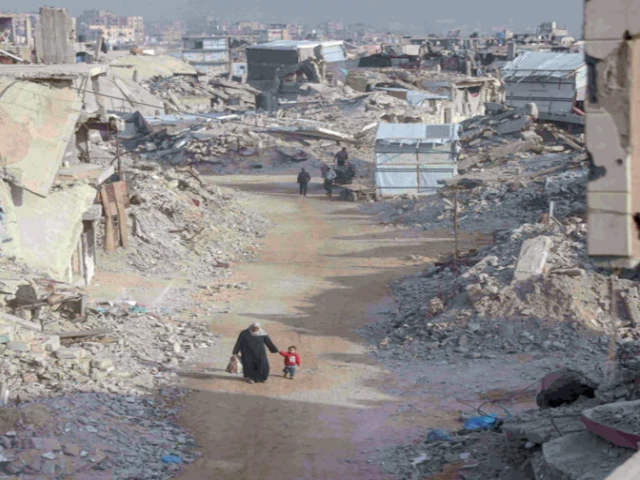
As 2026 draws to a close, the question is whether the crises already in motion will combine in ways that overwhelm governments, economies and societies. A confrontation in the Gulf can raise the cost of fertiliser for a farmer thousands of miles away. A government paying more for imported fuel has fewer resources to rebuild after a flood. A young person watching education budgets shrink while military commitments expand may reasonably ask whose security the state is protecting. It is in these connections that the danger of a polycrisis lies. Cultural Insecurity In the United Nations’ 2026 Global Risk Report, 36 per cent of respondents expected large-scale war within a year. The World Economic Forum likewise placed economic confrontation, armed conflict and extreme weather among the leading risks. These assessments record perceptions, but they capture a political reality. Governments face mounting demands for cooperation at a time when their relations are increasingly governed by rivalry and mistrust. Russia’s full-scale invasion of Ukraine has entered its fifth year. Neither side has been able to impose a decisive settlement. Russia continues to strike Ukrainian cities and energy infrastructure, leaving civilians uncertain of electricity and heating as winter approaches. Ukraine, in turn, has used drones and long-range strikes against Russian military and energy targets. The fighting tests how much damage each society can absorb and how long its political leadership believes the adversary can endure. Reckless Rhetoric For Vladimir Putin, the war is bound up with the revival of Russian nationalism and the claim that Russia must reassert its place in a hostile world. Moscow presents the conflict as a proxy war waged against it by the United States and Europe. That interpretation gives little weight to Ukrainians’ own reasons for resisting invasion. It also narrows the Kremlin’s room for diplomacy. Having presented the struggle at home as existential, Moscow has made any concession harder to defend. In West Asia, the US and Israeli attacks on Iran on 28 February triggered Iranian retaliation and a wider regional confrontation. The US blockade of Iranian shipping and threats to commercial passage through the Strait of Hormuz have extended the costs to Gulf states and energy importers far beyond the region. Washington may calculate that economic pressure improves its bargaining position over time. Tehran may conclude that the longer it waits, the less it will have left to bargain with. The same passage of time can thus give one side a reason to persist and the other a reason to escalate. Diagnosis’ Cost Ukraine and Iran illustrate, in different circumstances, how asymmetric warfare can turn military superiority into a poor guide to political outcomes. Ukraine has sustained resistance against a much larger neighbour. Iran has demonstrated how an adversary with fewer conventional resources can impose costs across a region. In both theatres, the capacity to keep fighting can outlast any reasonable expectation of decisive victory. Each side can still find grounds to believe that one more season of pressure will improve the terms of peace. Meanwhile, the wounds deepen. Cartoon In Gaza, even a declared ceasefire has failed to give civilians the security the word implies. Israeli attacks have continued to affect populated areas and medical facilities. The UN Commission of Inquiry has concluded that Israel continues to commit genocide in Gaza and has committed war crimes and crimes against humanity in the occupied Palestinian territory. Households feel the consequences through the price of energy. European gas prices reached their highest level of the year to that point in September, amid renewed fighting in West Asia. For importing economies, dearer fuel raises the cost of transport, electricity, fertiliser and food. Governments already burdened by debt must decide how much relief they can afford and which public services will pay the price. The UN’s September forecast put global growth at 2.6 per cent in 2026 and 2.9 per cent in 2027. Even that modest improvement may mean little to families whose wages continue to lag behind rent and groceries. The prospect that much of the wealth generated by artificial intelligence will accrue to a handful of firms and economies adds a further question about who will share in recovery. Generation Z has brought these questions onto the streets. In France, protests that began over conditions in schools broadened to include the cost of living. Young people in Germany, Italy, Spain and Portugal also mobilised, with grievances reflecting their own national circumstances. Some gatherings descended into clashes and rioting. Governments must address the violence while hearing what brought so many peaceful demonstrators out in the first place. A student who cannot count on a teacher in the classroom or see a path from a first job to a home has reason to question the priorities of the political establishment. The difficulty with entrenched leadership is its insulation from such experience. Long service can deepen judgement, but political systems that reward longevity while offering younger citizens little influence deprive themselves of knowledge they need. On climate change especially, the generation that will live longest with today’s decisions has had the least say in making them. Ambassador G. R. BaluchThe writer is a former ambassador and Director Global and Regional Studies Center at IOBM University Karachi.
 The Pakistan Connect
Rawalpindi reduces public transport fares after petrol price cut: Check rates


Politics
See more +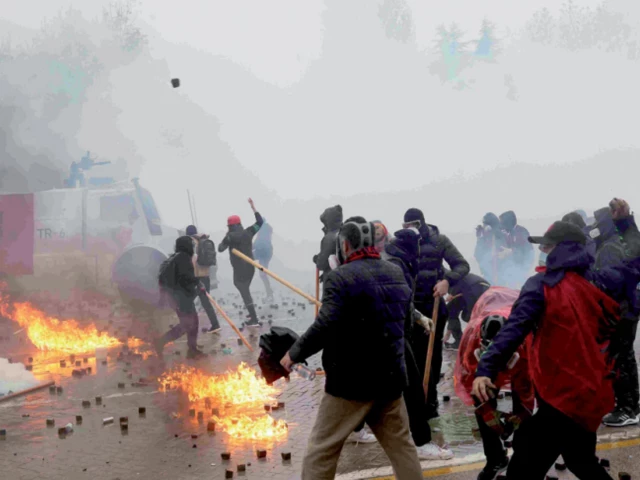

RAWALPINDI - Two suspected criminals were killed and two others were arrested in an injured condition during four separate police encounters across different areas of the city, police officials said on Saturday. A police spokesperson said that the operations were carried out across the jurisdictions of New Town, Saddar Barooni, Morgah, and Race Course police stations on the directives of City Police Officer (CPO) Dr Sardar Ghias Gul as part of an ongoing crackdown against criminal elements. Police also recovered two stolen motorcycles, illegal weapons, and over 1.5 kilograms of narcotics from the arrested suspects. Rawat police arrest man for raping niece of wife A suspect identified as Shahid Mehmood was killed during an exchange of fire with a patrolling team in the New Town area. Police said Shahid was a convicted and record-holder criminal wanted in multiple cases of drug peddling, illegal weapons, and vehicle theft. In a separate encounter within the limits of Saddar Barooni police station, another wanted suspect, identified as Khalid Mehmood, was killed during an armed resistance against police personnel. He was wanted across the twin cities in several narcotics and arms cases. ANF seizes 69kg of drugs, 6 arrested in 4 operations Meanwhile, two other suspects were apprehended in injured condition following crossfire in two separate incidents: A suspect identified as Umair was arrested after sustaining injuries during an exchange of fire with Morgah police.
Business
See more +

Entertainment
See more +




With performances unfolding simultaneously across the Arts Council, the 25-day, 1,500-artist-strong World Culture Festival was an exhilarating exercise in cultural discovery — and the perennial frustration of being unable to see everything
Blend
See more +
Financial
See more +



SciTech
See more +
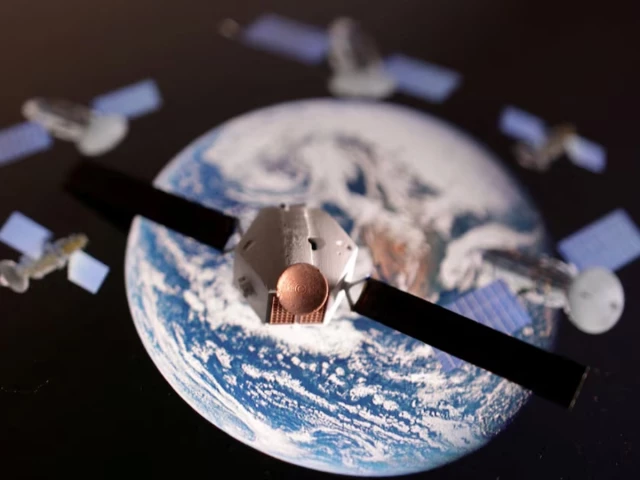

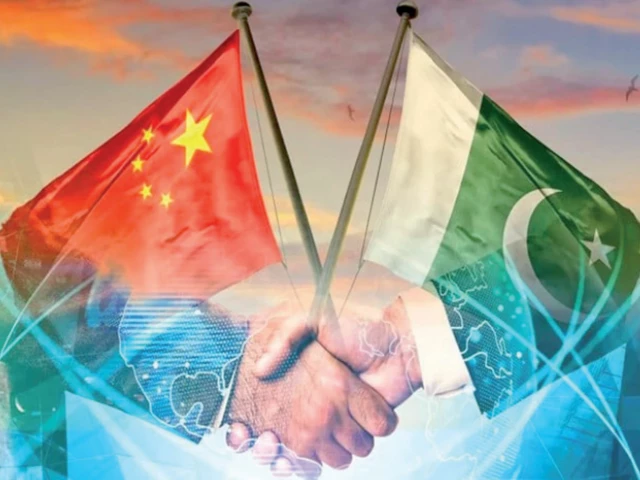
The centre remains under discussion and could link Pakistani universities, research institutions and industries with Chinese expertise. The proposed cooperation also includes joint research, technology exchange, professional training and talent development.
Health
See more +




Tourism
See more +




A severe Thanksgiving storm lashes the US East Coast with 112kph winds, leaving nearly one million people without power, disrupting flights, and postponing New York's Macy's parade.
Live News
See more +Shorts
See more +Stay Ahead—
Download the App.
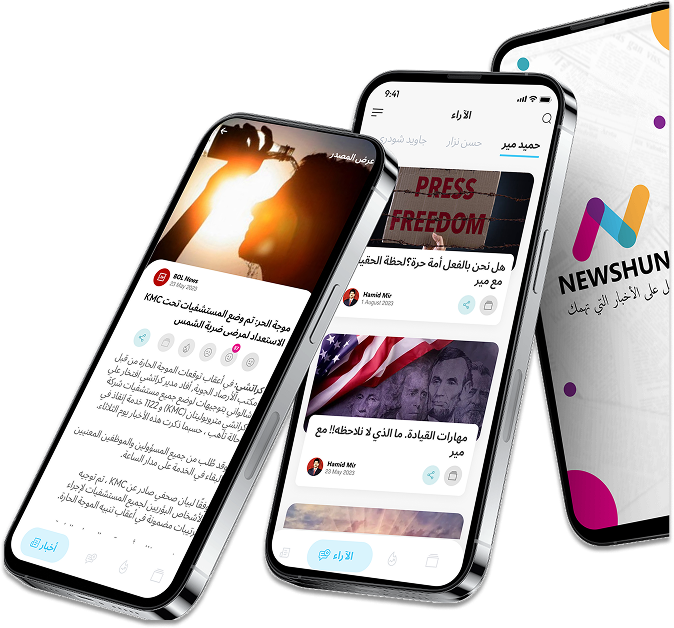
Stay informed on the go with the NEWSHUNT app. Get real-time updates, AI-curated headlines, and personalized news feeds straight to your device. With a clean and distraction-free experience, NEWSHUNT makes it easier to follow the stories that matter to you—anytime, anywhere.



Stay Informed. Stay Ahead
Subscribe to our newsletter and get the latest breaking news, in depth stories, expert analysis and top headlines from around the world delivered straight to you.
No spam, no clutter — only the news that matters to you
A note on cookies
Newshunt uses essential cookies to keep you signed in and to remember your language and country, so the site works the way you expect. With your permission, we'd also like to use analytics cookies to understand how people use Newshunt and improve it over time.
Accepting only affects analytics. To learn more, view our Privacy Policy or Terms & Conditions.