


PISA 2025: Moroccan Students Rank Among Lowest Performers Globally
Category: SciTech
Share
Archive
Like
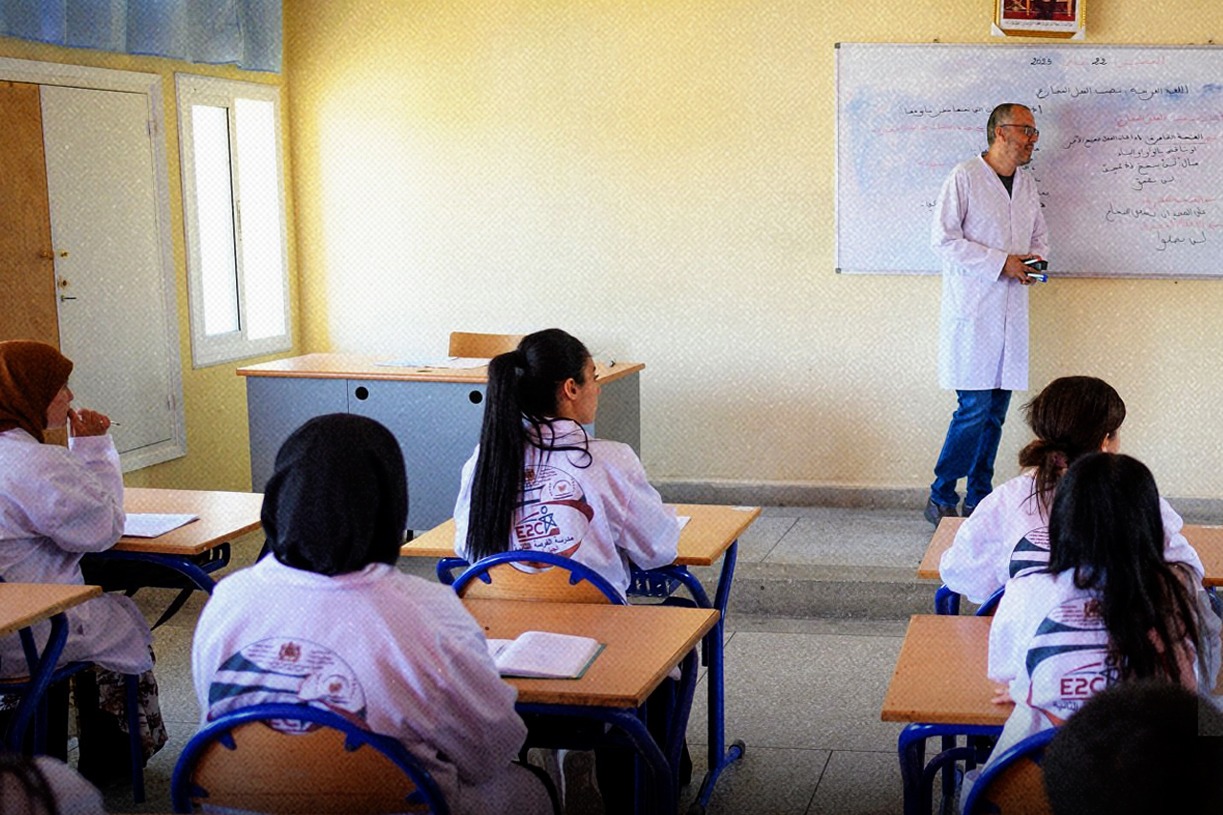
Agadir – Morocco's education system continues to face several challenges, with Moroccan students recording some of the lowest scores among the 91 countries and economies assessed in the OECD's 2025 Programme for International Student Assessment (PISA).
Moroccan students achieved an average of 358 points in science, 321 in reading, and 355 in mathematics, placing the country below OECD averages in all three core subjects. In computational problem-solving, Morocco recorded an average score of 374 points, also below the OECD average.
The OECD released the PISA 2025 results today, assessing the knowledge and skills of more than 760,000 students across 91 countries and economies, representing around 33 million 15-year-olds worldwide.
The assessment examines how effectively students can apply knowledge, solve complex problems, think critically, and communicate in real-world situations.
Morocco records low proficiency levels
The report shows that a large majority of Moroccan students failed to reach the minimum Level 2 proficiency across the three core subjects.
Only 23% of Moroccan students reached Level 2 or higher in science, compared with 74% across OECD countries. In mathematics, just 16% reached at least Level 2, against an OECD average of 65%. In reading, the proportion stood at only 13%, compared with 69% across the OECD.
At the other end of the scale, Morocco recorded almost no students at the highest proficiency levels in science, mathematics, or reading. The OECD defines Level 5 and 6 students as top performers capable of applying knowledge creatively and independently to complex or unfamiliar situations.
Across the three subjects, 73.2% of Moroccan students remained below Level 2, compared with 19.7% on average across OECD countries. Only 0.1% reached Level 5 or 6, compared with 11.9% across the OECD. Scores decline from 2022
Morocco's 2025 results also show a decline in mathematics and reading compared with the previous PISA cycle.
Between 2022 and 2025, Morocco's average score fell by 10 points in mathematics and 18 points in reading, while science performance remained statistically about the same according to the OECD's country assessment. The OECD's comparative tables record Morocco's science score at 358 points, seven points below its 2022 result.
Compared with 2018, Morocco's average scores are lower in all three subjects. The share of low-performing students also increased over that period by eight percentage points in mathematics, 14 points in reading, and eight points in science.
School attendance and classroom conditions raise concerns
The assessment also points to challenges beyond test scores.
Around 36% of Moroccan students said they had skipped at least one full school day during the two weeks preceding the PISA test, compared with an OECD average of 22%. Some 62% said they had skipped at least one class, compared with 24% across OECD countries, while 59% reported arriving late for school.
Moroccan students also reported significant disciplinary challenges in science lessons. Some 36% said they could not work well in most or all lessons, 41% reported that noise and disorder disrupted most or every science lesson, and 39% said classmates did not listen to the teacher.
Resource shortages remain another concern. School principals reported that 69% of Moroccan students attended schools where there were shortages of educational materials, such as textbooks, IT equipment, library resources, or laboratory materials. Another 52% attended schools where shortages in physical infrastructure posed similar difficulties. Students show signs of engagement despite weak performance
The PISA findings also reveal areas of resilience among Moroccan students.
Some 67% of Moroccan students said they put in additional effort when schoolwork becomes challenging, compared with 60% across OECD countries. Meanwhile, only 17% agreed or strongly agreed that school had been a waste of time, below the OECD average of 24%.
The OECD also found that 82% of Moroccan students ask teachers for help when they need it, while 84% seek help from classmates when they do not fully understand something.
A note on cookies
Newshunt uses essential cookies to keep you signed in and to remember your language and country, so the site works the way you expect. With your permission, we'd also like to use analytics cookies to understand how people use Newshunt and improve it over time.
Accepting only affects analytics. To learn more, view our Privacy Policy or Terms & Conditions.
(0)Comments