


Norah O'Donnell's CBS Mornings Return Holds a Real Boomerang
Category: Business
Share
Archive
Like
Her move back to morning television after seven years shows why returning employees should treat an old job like a new one.
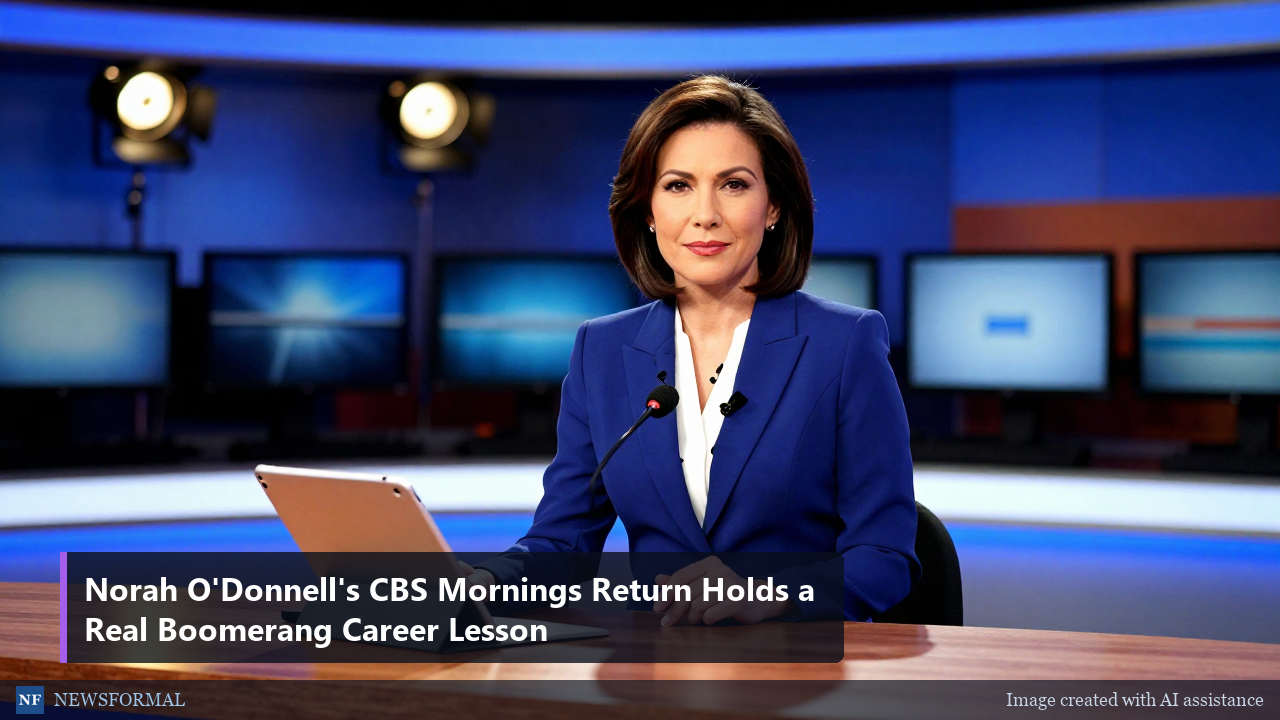
Norah O'Donnell is set to return to CBS Mornings on September 8, rejoining cohosts Gayle King and Nate Burleson seven years after leaving the program. CBS announced the move on Thursday; O'Donnell coanchored the morning show from 2012 to 2019 before moving to CBS Evening News .
The return may once have been seen as a step down, but Syracuse University television professor Robert Thompson argues that morning television now gives anchors broader opportunities to interview guests, break news and use a wider range of skills. He also frames the assignment as a sign of CBS's confidence in O'Donnell at a time when the morning program has struggled.
Career experts caution that returnees should not behave as if time stood still. HEC Paris management professor Brad Harris says a boomerang hire is often closer to a new employee, albeit a senior one, than an insider returning from a short break. The challenge, he says, is to combine the confidence of an insider with the curiosity of a newcomer.
University of Florida media and management professor Andrew Selepak adds that bringing back a prominent employee can be an admission that the organization was stronger when that person was there. That makes it important for returnees to ask why they are returning and whether the pay matches the difficulty of a possible rescue project. Why CBS's Confidence in O'Donnell Doesn't Erase the Risks of a Return Why CBS Is Betting on a Familiar Face
Thompson's reading is that the morning show assignment is not a 2026 demotion. In his view, CBS is placing O'Donnell in a high-visibility role because it wants to improve a program that has struggled. That is an interpretation of the network's strategy rather than a stated CBS rationale, but it helps explain why a former evening anchor would accept a morning shift. The Boomerang Employee's Real Position
Harris's point complicates the feel-good comeback story: institutional knowledge is useful, but seven years away means personnel, technology and the job itself have changed. A returnee who assumes old standing still applies risks misreading the role. Success, according to Harris, requires treating the position as substantially new while using past credibility to move quickly. Salary and the Risk of Chasing Former Glory
Selepak warns that a company may seek a returnee partly because it wants to recover past success. That can create leverage for the employee in pay negotiations, but it also means the role may carry turnaround pressure. His advice is to evaluate whether the move is genuinely a forward step and whether compensation reflects the difficulty of the assignment. How to Handle a Boomerang Return to an Old Employer
For employees weighing a return to a former employer, the experts interviewed by Business Insider point to several concrete questions. Treat the job as new, not familiar. O'Donnell's seven-year gap means the program, its staff and its workflow have changed; Harris says the right mindset is closer to a senior new hire than a returning insider.
O'Donnell's seven-year gap means the program, its staff and its workflow have changed; Harris says the right mindset is closer to a senior new hire than a returning insider. Ask why the company wants you back. Selepak notes that a return invitation can signal the business was stronger when you were there, so clarify the specific problem the employer hopes you will solve.
Selepak notes that a return invitation can signal the business was stronger when you were there, so clarify the specific problem the employer hopes you will solve. Check whether the money matches the mission. If the role is a rescue assignment, Selepak says the salary should reflect that difficulty rather than simply matching your previous title.
If the role is a rescue assignment, Selepak says the salary should reflect that difficulty rather than simply matching your previous title. Use past credibility without assuming old status. Harris advises marrying the confidence of an insider with the curiosity of a newcomer to avoid misreading how the organization has moved on.
Harris advises marrying the confidence of an insider with the curiosity of a newcomer to avoid misreading how the organization has moved on. Separate status from opportunity. Thompson's view is that morning TV offers a wider platform than it once did, so evaluate the actual scope of the role rather than treating it as an automatic demotion.
A note on cookies
Newshunt uses essential cookies to keep you signed in and to remember your language and country, so the site works the way you expect. With your permission, we'd also like to use analytics cookies to understand how people use Newshunt and improve it over time.
Accepting only affects analytics. To learn more, view our Privacy Policy or Terms & Conditions.
(0)Comments