


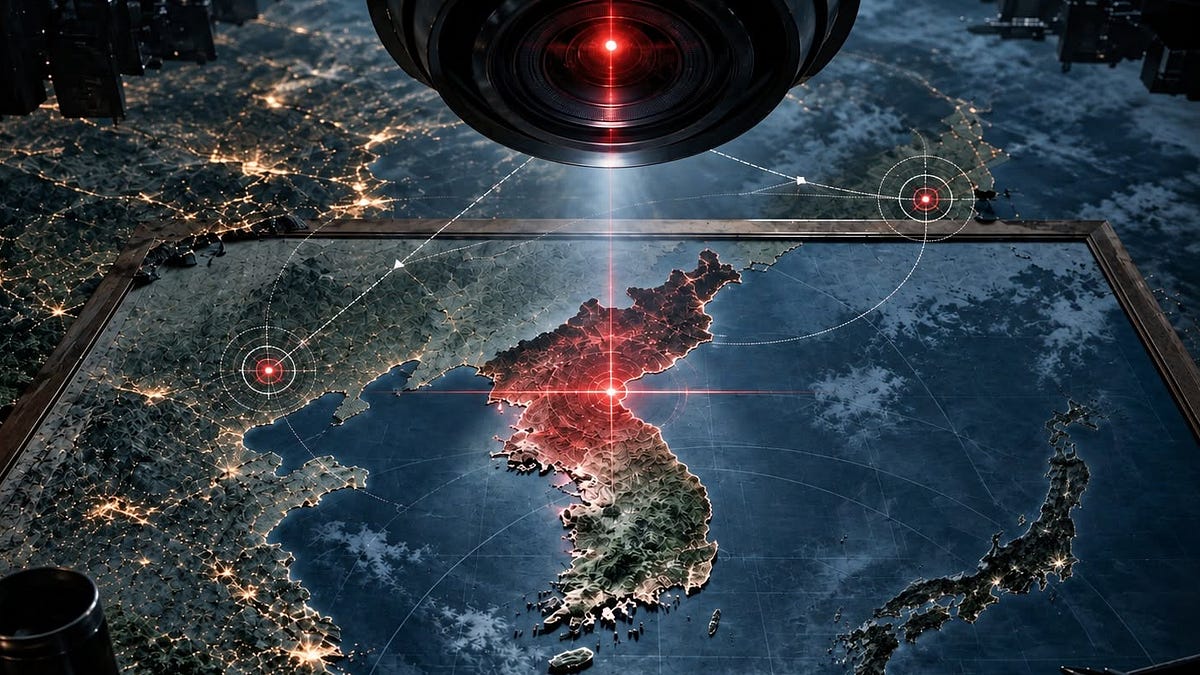
How Could the United States Target Mainland China from South Korea? U.S. Plans Permanent Deployment of Multi-Domain Effects Battalion (MDEB). 한국에서 중국 본토 타격 준비하는 미군.미국, 다영역효과대대(MDEB) 한국 상시 주둔 준비.
Category: Politics
Share
Archive
Like
What would Tacoma, Washington, Honolulu, Hawaii, Mainz-Kastel, Germany, and another future city—most likely Pyeongtaek (Camp Humphreys), South Korea—have in common? Your guess or answer? If you don't know, please consider reading today's posting. It's not going to be the most entertaining read, but please do read it and let me know what you think.
Few noticed this important news which escaped the radar of most people. On August 19,The Wall Street Journalreported that the U.S. Army, underActing Chief of Staff Christopher LaNeve, was moving aMulti-Domain Task Forcefrom Europe to South Korea.
Korea's Substack is a reader-supported publication. To receive new posts and support my work, consider becoming a free or paid subscriber.
The Wall Street Journal,'New Drone Unit to Be Phased Out as Hegseth's Army Pick Makes His Mark'(August 19, 2026)
Key Takeaway for Korean Peninsula Posture:Details how the U.S. Army is shifting Multi-Domain Task Force (MDTF) assets from European deployments toward South Korea, aligning with USFK priority adjustments under Gen. Xavier Brunson.
U.S. Army Press Release (Sept. 17, 2021):
'U.S. Army Europe and Africa activated the 2nd Multi-Domain Task Force Sept. 16 on Allen Field at Clay Kaserne... The task force includes a headquarters element, an intelligence, cyberspace, electronic warfare and space detachment, and a brigade support company. The task force will be located on Mainz-Kastel, Germany.'
— U.S. Army Official News (Read full article)
Subsequent South Korean reports, citing U.S. Army officials and the Wall Street Journal, reported that the deployment involved elements of the 2nd MDTF, which is headquartered in Germany. The size and precise composition of the forces being transferred have not been publicly disclosed.
Strategic Shift: European Relocation to USFK
'Hundreds of troops from the Multi-Domain Effects Battalion (MDEB)—which handles cyber warfare, space operations, electronic warfare, and information intelligence under the 2nd MDTF previously stationed in Wiesbaden—are slated for deployment to South Korea. While the long-range fires battalion remains state-side to minimize regional diplomatic friction, positioning non-kinetic MDEB early-detection assets inside the First Island Chain signals an evolving USFK posture aimed at both North Korean deterrence and strategic encirclement dynamics relative to China.'
'U.S. Multi-Domain Task Force Shift to Korea Signals China Focus.'Seoul Economic Daily (SEDaily), September 3, 2026.
Link:SEDaily Commentary
The Multi-Domain Effects Battalion doesNOTdirectly fire long-range missiles itself.Indirectly, its four steps can lead to offensive operations:1)locatingthe adversary; 2)disruptingcommand-and-control networks; 3)developingtargets for attack; and 4)passingthat information to U.S. Army, Navy, and Air Force missile and air assets.
The U.S. may claim that the **80-year-old U.S.-designated and fabricated 'enemy,' North Korea—specifically, North Korea's nuclear and missile threats—is the reason for deploying the unit to South Korea. Even a person with minimal intelligence can see that this is afalse claim.
The nature of a unit created to confront China does not change simply because it is brought to South Korea. South Korea already has asurplus of U.S. surveillance capabilities directed at North Korea; it hosts THAAD, U.S. Air Force assets, space, electronic-warfare, intelligence, surveillance, and reconnaissance capabilities, as well as a large U.S. military presence of approximately 25,000 troops.
The difference between THAAD and the Multi-Domain Task Force is this: while THAAD can be regarded as incorporating South Korea into the U.S.missile-defense network, the Multi-Domain Task Force means incorporating South Korea into the U.S.offensive operations network. That is why this represents a major escalation of the threat level on the Korean Peninsula.
Japan also has numerous U.S. military bases. South Korea offers advantages for monitoring mainland China and Russia's Far East and obtaining targeting information at close range.South Korea—closest to eastern China and also relatively close to Russia's Far East—has large U.S. military bases and communications, intelligence, and logistics facilities are already established in places such as Pyeongtaek whereCamp Humphreys and existing U.S. Forces Korea infrastructure to deploy multidomain capabilities.
In fact, South Korea has already participated in training for this during the latest U.S.-led war game, the well-known, scaled-back Freedom Shield exercise.
In August 2025, USFK Commander General Brunson, a Biden nominee who has been one of the most outspoken U.S. commanders serving in South Korea in support of the U.S. Indo-Pacific war-making campaign, stated that having a Multi-Domain Effects Battalion in South Korea would provide a better understanding of the 'surrounding' battlespace—that is, the ability to target China.
Last March, the Hawaii-based 3rd Multi-Domain Task Force participated in Freedom Shield 26. It connected intelligence, space, and cyber capabilities with South Korean and U.S. forces and simulated long-range precision strikes.
In May of this year, Brunson again stated that he advocated for the benefits of having Multi-Domain Task Force capabilities stationed in South Korea.
The sequence has been:
deployment need raised → training in South Korea → operational integration → no South Korean protest and consideration of permanent deployment.
The South Korean military is also actively embracing multidomain operations. The upcoming U.S.-Japan-South Korea Freedom Edge exercise is likewise expanding to include exercises that integrate multiple domains of warfare.
North Korea has argued that U.S.-Japan-South Korea military exercises demonstrate that the United States has not changed its hostile policy toward North Korea. If a Multi-Domain Effects Battalion is permanently stationed in South Korea, there will be yet another basis for that argument. If South Korea speaks of dialogue and reducing tensions while accepting such capabilities, its claims of improving inter-Korean relations will also lose credibility.
The Multi-Domain Task Force was created to confront China's anti-access/area-denial system. China could interpret its deployment to South Korea as South Korea joining U.S. military preparations for a potential contingency in the Taiwan Strait. That would also run counter to efforts to improve South Korea-China relations, including those pursued around Foreign Minister Wang Yi's visit to South Korea.
Meanwhile, the United States is also strengthening the command functions of U.S. Forces Japan.There have also been proposals to place U.S. Forces Japan and U.S. Forces Korea under a single four-star command structure or to elevate the status of the commander of U.S. Forces Japan.If this direction becomes reality, command functions will be concentrated in Japan, while surveillance, intelligence, and targeting capabilities will be positioned in South Korea. If command, intelligence, training, targeting, and firepower among the United States, Japan, and South Korea become interconnected, the result could function as a single war-fighting system even without a separate trilateral military alliance treaty. A Japan-centered 'Korea-Japan structure' could emerge. South Korea could lose its military decision-making authority and become a military that moves according to wars decided by others.
Meanwhile, the United States is also strengthening the command functions of U.S. Forces Japan.There have also been proposals to place U.S. Forces Japan and U.S. Forces Korea under a single four-star command structure or to elevate the status of the commander of U.S. Forces Japan.If this direction becomes reality, command functions will be concentrated in Japan, while surveillance, intelligence, and targeting capabilities will be positioned in South Korea. If command, intelligence, training, targeting, and firepower among the United States, Japan, and South Korea become interconnected, the result could function as a single war-fighting system even without a separate trilateral military alliance treaty. A Japan-centered 'Korea-Japan structure' could emerge. South Korea could lose its military decision-making authority and become a military that moves according to wars decided by others.
South Korea could lose its military decision-making authority and become a military that moves according to wars decided by others. Once again, South Korea would bear the risks created by this unit without having command authority over it. The Lee Jae-myung government insists on self-reliant defense while pledging to recover wartime operational control.Simply having a South Korean general hold wartime command authority, or OPCON, does not create military sovereignty if South Korea accepts EVERY military operation proposed by the United States. For instance,if U.S. forces stationed in South Korea conduct operations against China or Russia, South Korea would not be able to decide whether, or to what extent, it participates. What kind of military sovereignty is that? Interestingly, President Lee's nominee for the new defense minister has stated that the purpose of the ROK's recovery of OPCON is to strengthen the U.S.-ROK alliance—an oxymoronic and contradictory discourse that would be insulting even to a non-security expert.
The United States orders the South Korean military. As the U.S. war with Iran has expanded, demands have emerged for South Korean support in the Strait of Hormuz. The U.S. demands that South Korea provide its Cheongung-II missile system to Ukraine. The U.S. determines how U.S. weapons are to be used in South Korea. The South Korean government and military blindly accept this as 'strengthening the alliance' and serving the 'national interest.'
The U.S.-South Korea relationship is one of the longest-running imperialist–vassal-state relationships in contemporary history. Without an accurate understanding of this truth and reality—and resistance to it—nothing can be done regarding peace, a peace treaty, sovereignty, or U.S.-DPRK rapprochement. All of these efforts will be farcical and a waste of time and resources.
Selected References
Michael R. Gordon and Lara Seligman, The Wall Street Journal, 'New Drone Unit to Be Phased Out as Hegseth's Army Pick Makes His Mark,' August 19, 2026.Reports that the U.S. Army is moving a Multi-Domain Task Force from Europe to South Korea as part of broader changes under Acting Army Chief of Staff Gen. Christopher LaNeve.
U.S. Army, 'Multi-Domain Task Force Activates in Wiesbaden,' September 17, 2021.Documents the activation of the 2nd Multi-Domain Task Force in Germany and its location in Mainz-Kastel, including intelligence, cyberspace, electronic warfare, and space capabilities.
U.S. Army, 'Third Multi-Domain Task Force Activated for Indo-Pacific Duty,' September 23, 2022.Describes the 3rd MDTF in Hawaii and its multidomain capabilities in the Indo-Pacific.
U.S. Army, '3d MDTF, ROK Forces Enhance Network Resilience at Freedom Shield 26,' May 13, 2026.Documents the participation of the Hawaii-based 3rd MDTF in Freedom Shield 26 and its integration with U.S. and ROK forces, including intelligence, cyber, space, and simulated long-range precision fires.
Congressional Research Service, 'The Army's Multi-Domain Task Force (MDTF),' updated July 10, 2024.Provides an overview of MDTF organization and capabilities, including the Multi-Domain Effects Battalion and long-range fires.
U.S. Army, 'From Concept to Capability: US Army Rises to Meet the Challenge in the Indo-Pacific.'Provides background on the development of the MDTF concept and its relationship to countering Chinese anti-access/area-denial capabilities.
U.S. Army, '56th Artillery Command Re-activates as Theater Fires Command in Wiesbaden,' November 8, 2021.Documents the reactivation of the 56th Artillery Command in Wiesbaden and its relationship to the broader theater-fires architecture in Europe.
U.S. Army, 'Army Seeks Public Feedback on Proposed Stationing of Multi-Domain Task Force.'Describes the MDTF concept and its integration of land, sea, air, space, and cyberspace capabilities.
U.S. Army Pacific, FY2026 organizational materials.Provides organizational information on U.S. Army Pacific and its multidomain forces in the Indo-Pacific.
[2026-09-06]Are They Turning South Korea into a Tool of War? — The U.S. Intent Behind Deploying a Multi-Domain Effects Battalion (MDEB)
민플러스 (Minplus), '사드 100배의 악마를 우리 땅에 받아들일 것인가' — 'Will We Accept the Devil That Is 100 Times Worse Than THAAD on Our Land?'A Korean-language critical article examining the reported deployment of U.S. Multi-Domain Task Force/Multi-Domain Effects Battalion capabilities to South Korea and arguing that the deployment could significantly expand the military role of South Korea within the U.S. regional war-fighting architecture. The title deliberately frames the proposed deployment as potentially far more consequential than the deployment of THAAD.
Back to my question:What would Tacoma, Washington; Honolulu, Hawaii; Mainz-Kastel, Germany; and another future city—most likely Pyeongtaek (Camp Humphreys), South Korea—have in common?The answer is the Multi-Domain Task Force (MDTF) and Multi-Domain Effects Battalion (MDEB)—all part of the infrastructure of U.S. militaristic imperialism. The implication is that we are all in it and need to fight back together, in solidarity—in the Americas, Europe, and Asia!
Many thanks for reading yesterday's posting. I really appreciate your support, and comments are always welcome!
미국이 한국군을 지휘한다. 미국의 대이란 전쟁이 확대되면서, 호르무즈 해협에서 한국의 지원을 요구하는 목소리가 나오고 있다. 미국은 한국에 천궁-II 미사일 체계를 우크라이나에 제공할 것을 요구한다. 미국은 한국에 배치된 미국산 무기를 어떻게 사용할 것인지 결정한다. 그런데도 한국 정부와 군은 이를 맹목적으로 '한미동맹 강화'이자 '국익에 부합하는 것'이라고 받아들인다.
한미관계는 현대사에서 가장 오래 지속되어 온 제국주의 국가와 종속국 간 관계 가운데 하나다. 이 냉엄한 진실과 현실을 정확히 인식하고 이에 맞서지 않는다면, 평화도, 평화협정도, 주권도, 북미관계 개선도 이룰 수 없다. 이러한 모든 노력은 결국 희극이 되고, 시간과 자원의 낭비로 끝날 것이다.
Korea's Substack is a reader-supported publication. To receive new posts and support my work, consider becoming a free or paid subscriber.
A note on cookies
Newshunt uses essential cookies to keep you signed in and to remember your language and country, so the site works the way you expect. With your permission, we'd also like to use analytics cookies to understand how people use Newshunt and improve it over time.
Accepting only affects analytics. To learn more, view our Privacy Policy or Terms & Conditions.
(0)Comments