


NADRA Introduces New CNIC With Secure QR Code
Category: SciTech
Share
Archive
Like
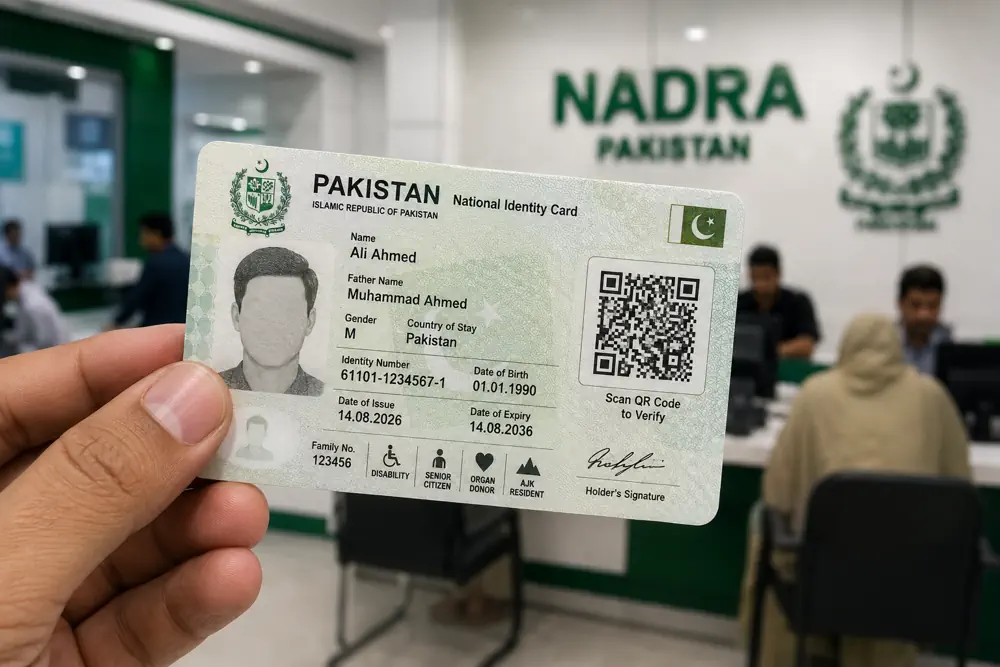
New chipless CNIC features a secure QR code that can be scanned through smartphones.
Polycarbonate identity card has been developed and manufactured in Pakistan.
Existing CNICs will remain valid until their stated expiry dates.
QR-based format will be expanded to NICOP and Juvenile Cards from January 2027.
The National Database and Registration Authority (NADRA) has introduced a new chipless national identity card featuring a secure QR code, replacing reliance on microchips with a smartphone-based identity verification system.
The new polycarbonate card has been developed and manufactured in Pakistan by the National Security Printing Company (NSPC) in Karachi. According to NADRA, the locally produced card has been designed in line with the authority's technical and security requirements.
1/6An important step towards self-reliance and easier digital verification!
NADRA has introduced a new chipless, QR code-based National Identity Card, manufactured in Pakistan by the National Security Printing Company (NSPC), Karachi. pic.twitter.com/15qRzx6Suy — NADRA (@NadraPak) August 14, 2026
The federal government approved the introduction of the new identity card in February 2026. Instead of carrying an embedded microchip, the card contains a machine-readable QR code that can be scanned using a smartphone and NADRA's PakID mobile application.
The QR code contains relevant identity information along with the cardholder's photograph. The system is designed to help authorized institutions verify identity details more quickly and transfer information such as names and addresses into their computer systems, reducing the possibility of manual data-entry errors.
Several additional details will also appear on the new CNIC. These include a family number and designated symbols identifying people with disabilities, senior citizens, organ donors and residents of Azad Jammu and Kashmir. The cardholder's name and address will be printed in both Urdu and English.
NADRA has also upgraded the card's visible and concealed security features to meet current security requirements while taking advantage of local manufacturing capabilities.
The authority introduced its chip-based Smart National Identity Card around 14 years ago. However, one of the practical challenges with the system was the limited availability of dedicated card readers and supporting infrastructure required to use the embedded chips.
The QR-based system is intended to overcome this limitation because smartphones and other compatible devices equipped with suitable scanning software can be used for verification.
NADRA plans to provide QR-code scanning and verification software to authorized organizations. Banks, hospitals, telecom operators, Pakistan Railways and police departments are among the institutions expected to be able to use the system for identity verification.
The rollout of the new identity card will take place in phases. From August 14, 2026, the QR-code-enabled polycarbonate card will initially replace the existing chipless CNIC issued on Teslin material.
From January 2027, NADRA expects to expand the new format to all categories of national identity cards, including the National Identity Card for Overseas Pakistanis (NICOP) and Juvenile Cards.
The Pakistan Origin Card (POC) is also planned to move to the chipless QR-code-based format at a later stage. NADRA currently lists QR-code versions of the CNIC, NICOP and POC among its identity-document formats.
People who already have valid identity cards will not be required to immediately obtain the newly introduced card. Existing CNICs and other identity documents will continue to remain valid until the expiry dates printed on them.
Also Read
A note on cookies
Newshunt uses essential cookies to keep you signed in and to remember your language and country, so the site works the way you expect. With your permission, we'd also like to use analytics cookies to understand how people use Newshunt and improve it over time.
Accepting only affects analytics. To learn more, view our Privacy Policy or Terms & Conditions.
(0)Comments