


Two Unarmed F-16 Pilots Were Ready to Ram a Hijacked Plane to Protect Washington on 9/11
Category: Blend
Share
Archive
Like
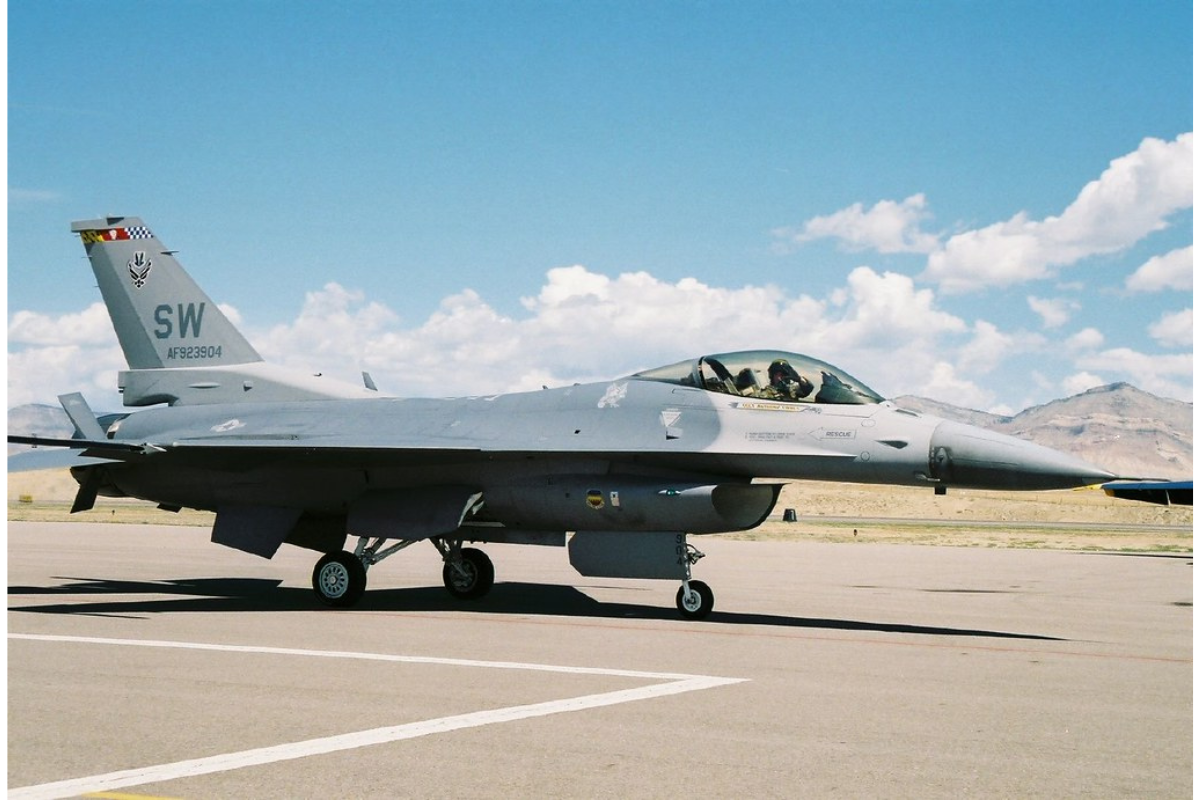
Two US fighter pilots took off on 9/11 knowing they might have to die to stop a hijacked passenger jet reaching Washington, even though their
F‑16s
carried no missiles.
First Lieutenant Heather 'Lucky' Penney, 26, and Lieutenant Colonel Marc Sasseville scrambled from Andrews Air Force Base as the attacks on New York and the Pentagon unfolded, preparing for a mission they believed could end with them ramming United Airlines Flight 93 if there was no other way to bring it down.
The pilots had only the most basic ammunition aboard their jets and no time to properly arm them. Their plan was for Sasseville to strike the airliner's cockpit while Penney would hit its tail, a manoeuvre they understood was likely to be fatal.
Neither pilot knew that the passengers aboard Flight 93 were already fighting back against the hijackers, or that the Boeing 757 would crash in Pennsylvania before the F‑16s could reach it. The pilots would spend hours in the air before learning that the flight they had been prepared to sacrifice themselves to stop was already down.
Penney was working in an office when she realised the country was under attack.
By then, hijacked aircraft had already struck New York's World Trade Center, while American Airlines Flight 77 was heading towards the Pentagon.
The attacks made Washington an obvious potential target. But fighter units that had been kept on alert during the Cold War had largely been reduced after the collapse of the Soviet Union, meaning no fully armed aircraft were immediately waiting on the runway.
Shortly after the Pentagon was hit, the Secret Service called the DC Air National Guard and ordered pilots to get airborne. Penney and Sasseville scrambled to their F‑16s and were told to search for an airliner that could be approaching Washington at low altitude.
With no missiles available, the two pilots had to consider an extraordinary alternative. They decided Sasseville would ram his aircraft into the nose of the hijacked plane, while Penney would strike its tail. No one expected either pilot to survive.
'Had [Sasseville] and I been successful, it would have been a suicide mission,' Penney later recalled. For Penney, the possibility of dying was secondary to the responsibility of stopping another aircraft from reaching the capital.
Unknown to the pilots, however, United 93 had already crashed in a field near Shanksville, Pennsylvania, after passengers fought back against the hijackers. The aircraft went down before Penney and Sasseville were launched, meaning they could never have reached it in time.
Penney said she spent roughly three hours airborne without knowing the flight number or the full circumstances surrounding the aircraft they were searching for.
Only after landing did she learn what had happened to Flight 93. The pilots' intended mission therefore never became a collision, but their willingness to carry it out has become one of the lesser-known accounts of 9/11.
Penney has repeatedly rejected the idea that she and Sasseville should be regarded as the day's principal heroes. Instead, she points to the passengers aboard Flight 93, who confronted the hijackers and attempted to retake control of their aircraft. 'What [Sasseville] and I were willing to do is what the passengers on Flight 93 actually did,' she said.
Twenty‑five years after the attacks, Penney says the story remains a reminder of the courage displayed by ordinary Americans during one of the darkest days in the country's history. For the two fighter pilots, the mission was simple: protect Washington at any cost. They were prepared to give their lives to do it.
A note on cookies
Newshunt uses essential cookies to keep you signed in and to remember your language and country, so the site works the way you expect. With your permission, we'd also like to use analytics cookies to understand how people use Newshunt and improve it over time.
Accepting only affects analytics. To learn more, view our Privacy Policy or Terms & Conditions.
(0)Comments