


Nathan Fielder was not supposed to appear in Elizabeth Holmes documentary ‘You Can See Everything'
Category: Entertainment
Share
Archive
Like
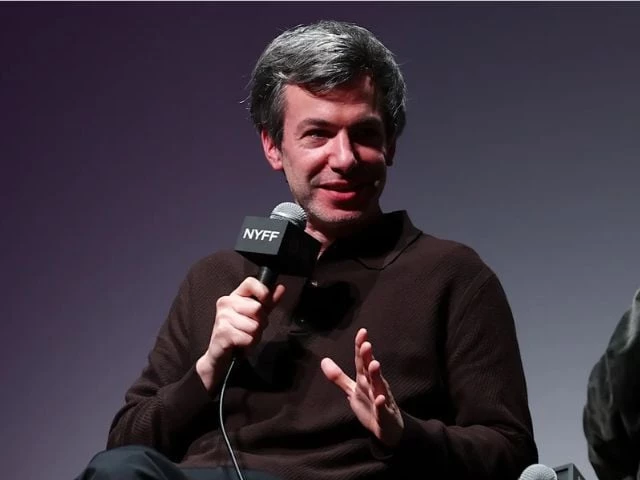
Nathan Fielder was initially expected to produce
You Can See Everything
, but the documentary took an unexpected direction when he became increasingly involved in filming and eventually joined Lance Oppenheim as co-director.
In an interview on
IndieWire
's Filmmaker Toolkit
Podcast
, Oppenheim explained how the project changed during its first days of production. The documentary follows former Theranos chief executive Elizabeth Holmes and her partner, Billy Evans, in the period before she reported to prison to serve her sentence for defrauding investors.
According to Oppenheim, Fielder initially intended to stay behind the scenes and observe the director's working methods. However, the original filming approach quickly proved difficult. Oppenheim had planned to use one camera, anamorphic lenses and a small crew, but the confined environment and the couple's movements made it challenging to capture important moments.
The production soon shifted to a tighter 4:3 aspect ratio and multiple cameras. Two operators used zoom lenses to follow Holmes and Evans, while Oppenheim operated a third camera with a wide-angle lens.
During filming, Holmes and Evans began asking Fielder questions whenever the crew paused to adjust equipment. Their interactions gradually brought him into the documentary itself.
By the second day, Fielder was appearing on camera more frequently. He eventually suggested that he and Oppenheim direct the project together, an idea Oppenheim welcomed.
The filmmakers found that Fielder's presence allowed them to explore their own confusion about the couple's behaviour rather than simply observe events from a distance.
Oppenheim said the revised approach enabled the crew to film for extended periods, allowing interactions to unfold without the pressure of traditional interviews.
The director described the finished documentary as a particularly rigorous form of vérité filmmaking, built around observing events as they happened.
A note on cookies
Newshunt uses essential cookies to keep you signed in and to remember your language and country, so the site works the way you expect. With your permission, we'd also like to use analytics cookies to understand how people use Newshunt and improve it over time.
Accepting only affects analytics. To learn more, view our Privacy Policy or Terms & Conditions.
(0)Comments