


Solid-state batteries just went into mass production. The line makes 6,000 packs a year
Category: Business
Share
Archive
Like
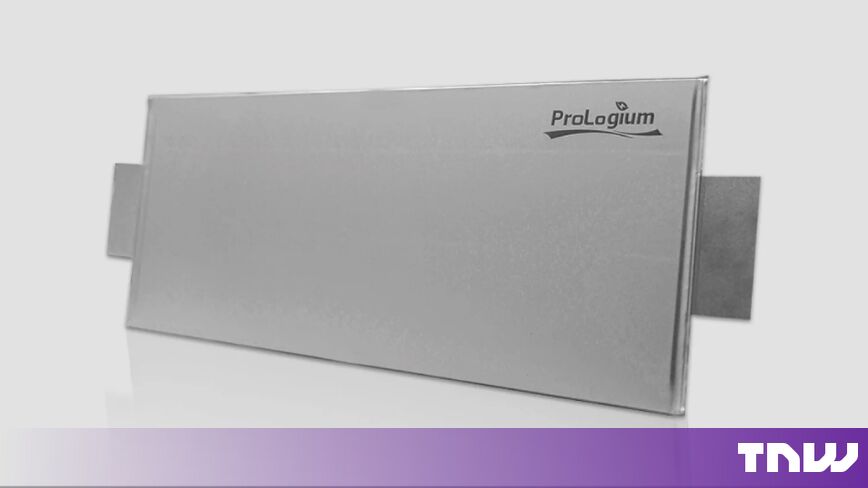
ProLogium says it has begun mass-producing all-solid-state cells in Taiwan at 381 Wh/kg, verified by TUV Rheinland and tested against a Chinese all-solid-state standard. Its subsidised Dunkirk gigafactory broke ground in February and its published staging starts at 0.8 GWh in 2028, in a Europe that has already lost Northvolt.
ProLogium says it has begun mass-producing all-solid-state battery cells in Taiwan, InsideEVs reported. Its Gen 3.5 lithium ceramic cell was measured by TUV Rheinland at 381 Wh/kg and 903 Wh/L.
That is roughly 30% above the nickel-manganese-cobalt cells in most electric cars today, which top out near 300 Wh/kg. Lithium iron phosphate sits between 150 and 200.
UL Solutions tested the cell under China's GB/T 43568-2026 standard, introduced in July to separate true all-solid-state cells from ones still carrying liquid electrolyte. It lost under 0.05% of its mass in a vacuum at 120C, against a 0.5% ceiling.
Scale is the caveat. The Taoyuan line runs at 0.5 GWh a year, about 6,000 packs of 80 kWh, which is not much against a conventional cell plant.
Three weeks ago LG Energy Solution's North America president said solid-state cars are a decade away, and that large formats are where companies struggle. ProLogium's cell is a large format.
Its shipments so far total 2.4 million cells across consumer and specialty uses, including more than 900,000 to an American audio supplier and around 10,000 automotive samples. Mercedes-Benz has a technology cooperation agreement with the company.
The European part of this is a building site in Dunkirk.
ProLogium broke ground there on 10 February, beside the Gravelines nuclear plant, with French subsidy agreed in 2023 and permits granted last year.
The company now describes the plant as starting at 4 GWh and topping out at 44. At the groundbreaking the staged figures were 0.8 GWh in 2028, 4 GWh by 2030 and 12 by 2032. The two accounts are not obviously reconcilable.
It has also slowed the French expansion once already, in 2024.
That matters because Europe's own champion is gone. Northvolt went bankrupt and its assets were bought by America's Lyten, leaving smaller efforts such as one German firm's bet on dry electrodes to carry the domestic case.
So the largest new cell project in France is Taiwanese-owned, French-subsidised, nuclear-powered, and certified against a Chinese standard.
The chemistry may well work. Whether it arrives at European scale in time is the question that followed Northvolt's collapse, and Dunkirk is now a large part of the answer.
A note on cookies
Newshunt uses essential cookies to keep you signed in and to remember your language and country, so the site works the way you expect. With your permission, we'd also like to use analytics cookies to understand how people use Newshunt and improve it over time.
Accepting only affects analytics. To learn more, view our Privacy Policy or Terms & Conditions.
(0)Comments