


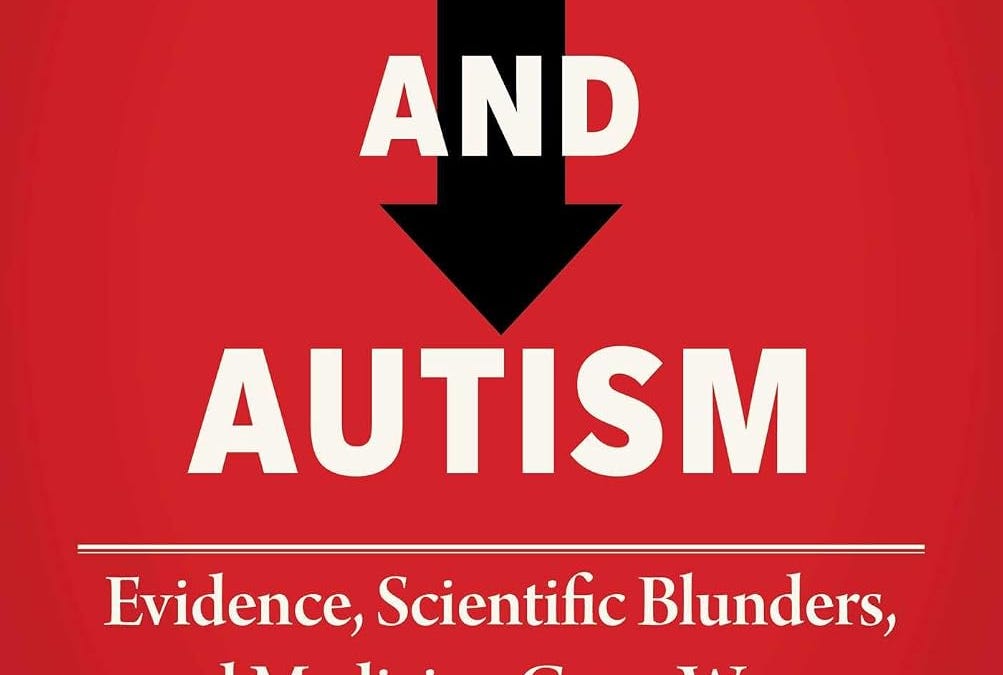
474. Tylenol and Autism: Evidence, Scientific Blunders, and Medicine Gone Wrong: A Critical Review
Category: Health
Share
Archive
Like
I know Tony Lyons, who heads Skyhorse Publishing, the publisher of this book. I have interviewed him multiple times.
Dr. William Parker sent me the PDF and answered my questions by email within hours. He knew before sending it that I was writing a review, not a promotion, and he sent it anyway. Everything he told me appears below and reflects his words. You will see that I gave him the last word because a relatively unsophisticated analysis told me that he was telling the truth
•Last week, I outlined the travesty of casual acetaminophen use. This week, I review the book that says it triggers most autism.
•William Parker, PhD, spent more than 27 years in Duke's Department of Surgery and has published more than 150 peer-reviewed papers.Tylenol and Autism: Evidence, Scientific Blunders, and Medicine Gone Wrongis 312 pages long and includes 341 references.
•His group searched for the pediatric safety studies that everyone cites. They screened 3,096 papers. Fifty-two included a safety experiment. The median follow-up was 48 hours, and none examined the brain.
•A newborn cannot use the same pathway an adult uses to clear this drug. That pathway starts to develop after about two months, and becomes fully developed at about two years. Every veterinarian knows that this deficiency is fatal to a cat.
•Parker places the peak danger in the first days after birth. Every large study you have read about tested pregnancy instead.
•Pediatrics(the journal) rejected him twice, and he printed both sets of reviews, with his rebuttals as appendices C and D. A second journal then refused to publish his response to an attack it had published. I have never seen an author lay out the case against himself like this.
•His five clinical rules should be adopted tomorrow, and no theory of autism is required to justify any of them.
Parker is not a crank, and the reviewers who treat him as one hand him the argument.
He earned a doctorate in chemistry in 1992 and, the following year, joined Duke's transplantation research group as its biochemist. He worked in the Department of Surgery for more than 27 years alongside the surgeon-immunologist Randy Bollinger, who wrote the foreword to this book. In 2004, his group described bacterial biofilms in the healthy human gut. In 2007, he published the work for which he is best known, identifying the appendix as a reservoir that repopulates the colon with beneficial organisms after a purge. That paper drew national coverage and received about 500 citations.
He shifted his focus to acetaminophen around 2015, and Duke subsequently declined to renew his research contract. He declined an appointment at Duke for teaching, officially retiring in 2021. He now directs WPLab, Inc., a nonprofit in Durham, and holds a visiting appointment at the University of North Carolina at Chapel Hill.
I have watched sequences like this for ten years. A productive investigator turns to a question that threatens a revenue stream, and the institutional welcome cools. (A less charitable interpretation would credit the institutions with being implicit with the worldwide cabals' mass-murder agendas.)
Begin where his critics never begin.
In 2022, Parker's group published a study in theEuropean Journal of Pediatricsthat did something no one had bothered to do. They asked where the claim that this drug is safe for children came from. They screened 3,096 papers and found 218 that asserted the drug was safe for infants or children. They traced 103 of those back to the authority behind the claim, and 52 of those sources reported an experiment.
The median follow-up in those experiments was 48 hours. Not one monitored neurodevelopment. None of them counted how much a child had taken since birth.
That is not an argument, and no opinion about autism is required to verify it. It is a finding about the contents of a library, and anyone with a search box and a few weeks can pursue it. Four years have passed, yet nobody else has. The most-used pediatric drug on earth entered universal use based on two days of observation per study, and what years of repeated dosing do to a growing brain was never asked.
Look at what he did not claim. The same paper says the evidence is sufficient to conclude that the drug does not cause acute liver damage in children when used as directed. His title says the drug was never shown to be safe for neurodevelopment. A man building a case would have taken the stronger line. He took the accurate one.
Any physician will recognize this.
The body clears acetaminophen in three ways. Glucuronidation dominates in adults and eliminates the drug without harm. Sulfation dominates in young children and continues until the pathway saturates. Whatever the first two cannot handle is metabolized by cytochrome P450 to N-acetyl-p-benzoquinone imine, an electrophile that glutathione neutralizes on contact. Five to ten percent of a therapeutic dose follows that route in an adult. If glutathione is overwhelmed, the metabolite begins binding to proteins.
Every clinician who has managed an overdose knows this pathway. Parker's contribution is to ask where it goes in a newborn. Glucuronidation is not developed during the first weeksof life. That is textbook pharmacology, not his invention. Sulfation takes over, saturates, and the overflow has one place to go.
Then he adds the children who are least equipped for it. Those later diagnosed with autism often have impaired sulfation and low glutathione levels. About 75 percent have autoantibodies against the cerebral folate receptor, and folate supports glutathione synthesis. The homozygous GSTM1 deletion, which weakens glutathione handling, doubles the risk of autism.
His twenty-sixth line of evidence is the key. Veterinarians do not give acetaminophen to cats, and most cat owners know this. Cats lack a functional glucuronidation pathway, and a single Tylenol tablet kills them. Human newborns lack the same pathway for their first two months. As he puts it, if we know cats have a problem that makes this drug toxic, and we know babies have the same problem, what are we thinking?
He offers a second mechanism. The drug works by blocking prostaglandin synthesis, and prostaglandins govern aspects of brain development. Margaret McCarthy's work with rats showed that blocking that synthesis within a narrow window after birth produces lasting changes in brain structure, reduced social interaction, and blunted sensory function in males but not in females. This is the most structured explanation I have seen for the male predominance in autism.
Chapter 3 is the heart of the book, and its argument is simpler than the statistics that surround it. Parker demonstrates this with two drugs any physician knows.
Coffee is safe. If a study finds that coffee drinkers have higher rates of lung cancer, the coffee is innocent, and the cigarettes did it. Smoking is what a statistician calls a confounding factor, a nuisance that creates a spurious association. The right move is to adjust for it.
Codeine is different. It does nothing until the body converts it to morphine, and the enzyme CyP2D6 performs that conversion. Give codeine to a baby whose enzyme is overactive, and morphine arrives too quickly, stopping his breathing. That is why we stopped giving codeine to small children. The enzyme is not a nuisance. The enzyme is the mechanism.
Parker's charge is that the whole field decided acetaminophen is like coffee, even though the evidence shows it is like codeine. The big studies adjusted for infection, fever, other medicines, maternal illness, smoking, and social class before comparing anyone. Those are the conditions that produce oxidative stress, and oxidative stress is what makes a child vulnerable to this drug. Adjust them away, and you have paved over the road the injury travels down.
I asked him whether I had understood him. His reply:
Yes, basically, after approximately 30 variables are 'adjusted for' (before the entire cohort except the siblings is excluded), the p-value is already greater than 0.05.
In plain terms, he says the association had already disappeared before the sibling comparison everyone quotes was run. Nobody has disputed that to date.
Parker has said for years that use during pregnancy accounts for no more than 20 percent of autism cases, probably closer to 10 percent. His own table shows 50 to 60 percent for the period from birth through day five, when the cord has been cut and the newborn has to clear the drug alone.
Now look at what has been tested. Sweden, 2.5 million children. Denmark, 1.5 million. Hong Kong, 708,000. Japan, 218,000. Each one examined exposure during pregnancy.
Not one has looked at the window he is pointing at.
When a headline tells you the science has settled this, it means the science has settled a question Parker set aside years ago. He answered my email on the point without ceremony. Since the President's announcement, 35 articles on PubMed have claimed Trump was wrong, all of them resting on the same Swedish analysis and all of them about pregnancy.
Two paragraphs after the graph that anchors his statistical case, Parker writes:
While this demonstrates that the Drexel team's calculations obscured a real association, it doesn't prove that acetaminophen plus oxidative stress causes autism. We need to look at more evidence to know if acetaminophen is involved in the induction of autism.
I have read a good deal of the coverage of this man, and not one piece quotes that sentence. He marks the limit of his argument in his book on the page where a weaker writer would have declared victory.
He is equally candid about why the settling study has not been done. It would require pairs of similar siblings who differed in whether the mother received the drug during labor, with cord blood banked at the moment of clamping to determine how much the newborn had to handle alone. No parent would agree to random assignment. Hundreds of samples would be needed to yield a handful linked to a diagnosis. Twins are useless because their exposure is identical. His summary is that a valid sibling study can be designed but probably cannot be executed.
That is a scientist marking the edge of what can be known, and it is the book's most useful paragraph.
Here is the part of the story that made me angry, and it has not been reported anywhere.
Parker submitted a manuscript toPediatrics, the flagship journal of the American Academy of Pediatrics, on February 7, 2024. He received two hostile reviews and was rejected. He then printed both rounds of reviews and his rebuttals as appendices C and D of this book, unedited and in full. Almost no author does that. It is what a man does when he wants you to judge the argument instead of taking his word.
Then this. In mid-August 2025, a group led by Professor Andrea Baccarelli at Harvard's T.H. Chan School of Public Health published a review of acetaminophen and neurodevelopment inEnvironmental Health. The Trump administration cited the review. In the review, the authors called Parker's mathematical proof speculative.
When someone disparages your work in a journal, editors typically give you a chance to respond. Parker's team wrote a brief rebuttal within the journal's word limits and submitted it on August 17, three days after the criticism appeared.
Professor Philippe Grandjean, a founder of the journal and an adjunct professor at Harvard Chan, rejected it the next day, where Baccarelli is dean of the faculty. The letter stated that the manuscript did not offer sufficient new environmental health information for the journal's international readership.
They resubmitted and explained that they were responding to a paper the journal itself had published days earlier. They received the same rejection, word for word. On August 27, an editorial office assistant at Springer Nature confirmed that Grandjean was making the decisions.
A journal published an attack on a man's work and then twice, in identical language, told him that his answer held nothing new for its readers. That is a door held shut. When people ask why a scientist with 150 papers ends up publishing through an advocacy imprint, that is the answer, not that his arguments were tested and failed.
He gets the last word here, so I will ask my questions plainly rather than deliver verdicts he cannot reply to.
First, on August 3 of this year, six weeks after this book was printed, the ECHO Cohort Consortium published a direct test of the circumcision line inJAMA Pediatrics, following 2,771 American boys, of whom 1,840 were circumcised. Autism was diagnosed in 6 percent of the circumcised and 9 percent of the uncircumcised. He has been careful about the limits of the older Danish circumcision data, quoting Frisch and Simonsen's own statement that they had no analgesic records. How does he read the new American cohort, and does it change the weight he gives that line?
Dr. Parker's response: I will first offer condolences: Brandolini's law dictates that it takes more effort to effectively address nonsense than it does to produce nonsense. I find this law to be accurate. My research group and collaborators have been working on a response to that ECHO article, but the process takes time. Here is a brief summary of that response-in-progress.
By way of background, treatment for the pain of circumcision has improved over the decades, and acetaminophen is seldom used any longer for that purpose in US hospitals. However, parents are still told to give it to their newborn when they get home if he is uncomfortable, and use of acetaminophen in that context was not tracked in any of the studies described here.
The older Danish study found a statistically significant difference of about 2-fold more infantile autism (non-regressive autism) in circumcised boys compared to uncircumcised boys. The study was conducted because investigators were concerned that giving acetaminophen at the time of birth to treat the pain of circumcision might lead to autism. The results of the Danish study supported this concern. In the more recent ECHO study, 27 investigators from at least 18 prestigious institutions, all funded by the National Institutes of health, found no association between circumcision and autism. They concluded that something was possibly wrong with the older Danish study.
The first question is, should we expect the same result for boys born in Denmark from 1994 through 2003 and for boys born in the US from 2003 through 2023? The answer is, as some might suspect, no. Almost all of the US boys had a good reason besides circumcision to receive acetaminophen very early in life: they received a number of vaccines by the two-month mark, before the glucuronidation pathway begins to develop in the average infant. The typical Danish boy would have received zero vaccines during this same period of development. Further, theoretical considerations and experimental results tell us that acetaminophen exposure with a potent inflammatory stimulus (vaccine or infection) will likely carry a greater risk than an exposure without such a stimulus (uncomplicated circumcision or teething). The inflammatory stimulus provides the cofactor, oxidative stress, for the acetaminophen-induced induction of autism. In addition, intravenous acetaminophen and opioid-sparing protocols for labor and delivery and for the neonatal intensive care units were developed in the 2010's, leading to increased exposures to acetaminophen very early in development. Thus, we expect that a number of factors will overshadow or swamp out any effect of acetaminophen exposure due to circumcision in the US boys.
Further, even if we make the very wrong assumption that the effect of acetaminophen exposure from circumcision adds onto the effects of other acetaminophen exposures (rather than is swamped out by other exposures carrying greater risks), the prevalence of autism was so incredibly high in the ECHO study that the absolute effect of circumcision seen in the Danish study (less than about a 0.7% absolute change in autism prevalence) would have been too small to observe in the ECHO study.
It is a wonder that the 27 scientists working on this NIH-funded project did not mention any of these issues, but rather questioned the older study, which was much better powered from a statistical perspective and was less affected by ethnic-based differences than their own study.
We now come to another important issue: the authors of the ECHO study found that the absolute differences in autism prevalence between uncircumcised and circumcised boys were due in large part to ethnicity and year of birth. After all of their calculations were run, no statistically significant differences between circumcised and uncircumcised boys were found. The earlier Danish study had been adjusted for ethnic factors and year of birth, and the results were still significant.
The ECHO study showed that Black boys had more than twice the prevalence of autism as white boys, but the study team did not mention this issue in the text of their document. This observation corroborates data from the California Public School systems published in late March, 2026 by investigators at Rutgers University, which found dramatic increases in the prevalence of autism associated with low socioeconomic status and Black ethnicity.
We suspect that cannabis use disorder, the prevalence of which depends profoundly on socioeconomic status, affects the toxicity of acetaminophen during early brain development. The profound rise in autism prevalence in California coincides with the legalization of recreational cannabis use in that state. Further, cannabis and acetaminophen affect the same signaling pathways in the brain, and a study in laboratory animals in 2019 identified a lethal drug-drug interaction between cannabis and acetaminophen. That drug/drug interaction is currently the only explanation (hypothesis) offered for the emerging socioeconomic-associated increases in autism prevalence.
The ECHO study is yet another case of getting exactly what we might expect to get if our conclusions about acetaminophen are correct. Not only can we put our finger on what might have caused the dramatic rise of autism since 2000, but the effects of possible acetaminophen use for circumcision in the Danish and in the US are exactly as we might expect given known differences between the Danish boys and the US boys.
Sadly, the manuscript published by the ECHO study team is yet another example of getting exactly what we have been getting. Another study team has the evidence in front of them, and seem to be blind to a reasonable explanation for that evidence which explains not only their evidence, but dozens of other lines of scientific evidence.
Second, this is the one I want most. He told me he has never seen a study come back empty and that the studies yield what they should if oxidative stress and acetaminophen together trigger autism. I follow the argument. If the adjustment destroys the signal before the analysis begins, an empty result is an artifact, and interpreting it as a refutation is the error he has spent a decade describing.
So what would the other answer look like? What result from what study would show him he was wrong? If he has one, it would be the strongest thing he could say, because a claim that specifies its own disproof is the kind that wins in the end. I would print his answer in full.
Dr. Parker's answer:
By way of background, susceptibility to acetaminophen-mediated neurodevelopmental injury starts to decrease after about two months of age, but remains relatively high for about two years based on the observations of parents regarding the timing of their child's regression into autism. Finally, some susceptibility is still present until approximately the sixth birthday, after which regression into autism is extremely rare.
The best way to approach this problem is to avoid acetaminophen exposure from conception to the sixth birthday in a cohort of humans, and monitor the prevalence of autism in that cohort. If, in that cohort, the prevalence of autism is not extremely low, then my research team, my collaborators, and I are all profoundly wrong. It would take about 2.5 years of close monitoring for the expected results to be obvious, although it would take longer for the study to be completed, of course.
Whatever you conclude about autism, chapter 11 should change practice tomorrow. Parker is careful to say that he cannot give medical advice and can only state what the standards ought to be, which he correctly calls the job of a scientist. Here are his rules, in my words.
One. Stop giving acetaminophen in ways it was never meant to be given. That covers treating temperatures that do not amount to a fever, and dosing more often or higher than the label says.
Two. Stop giving it where the evidence shows it does not work. That covers the pain of circumcision and probably the treatment of fever to prevent febrile seizures.
Three. Stop giving it when no evidence shows long-term benefit. That covers routine fever treatment and prophylactic dosing before labor and delivery.
Four. Stop giving it when the governing medical bodies no longer recommend it, including routine dosing alongside vaccination.
Five. Where the evidence indicates it helps, do not give it without informing the parents that the long-term question about the brain remains unanswered. They are entitled to weigh both sides.
Each of those follows from the safety literature alone. As Parker notes, even the most ardent advocate for drug use in infants would approve of the first. I would adopt all five today, and so should every pediatrician in this country.
I opened this book expecting a polemic and closed it having read a scientist.
He found a window in the first weeks of life that no one has studied. He proved that the safety literature everyone cites was never compiled. He made a precise, testable claim about the Swedish analysis that no one has answered for four years. He identified the exact reason the settling study cannot be run, which is the least-cited paragraph in the book and the most useful. And he stated the limit of his own case in print, on the page where it cost him the most.
What I did not expect was the paper trail. Rejected twice byPediatrics, with the reviews printed against him. Called speculative by a Harvard-led review, then refused a reply twice by that journal in identical language, by an editor at the same school.
Two generations of American children took this drug under 48 hours of observation. The man who noticed lost his university appointment, and the journals will not publish his response to the people who criticized him in their pages. That is the scandal, and every word of it stands whether or not he turns out to be right about autism.
Buy the book. Read chapter 3 twice, then read appendices C and D, and decide for yourself who is acting like a scientist.
Two things. First, pediatrics as a specialty is outrageously corrupt and probably the worst-influenced specialty in medicine, as it receives massive kickbacks to force vaccines on every one of its helpless patients. The second brief anecdote I will hand you is that they advocated for bottle feeding over breastfeeding and have commercial ties to formula manufacturers. I have been writing about these subjects for several years, and my archives are full of it. Second, if you believe medical publications or their editors have anything approaching integrity, read my bookButchered by 'Healthcare.'I have a full chapter on this corrupt disaster.
Dr. Parker, the floor is yours.
I thank Dr. Yoho for his careful consideration of the evidence presented, and for the opportunity to address the two questions he asked. Although the scientific evidence pointing at acetaminophen toxicity for brain development is quite clear, that science has not gotten us to the tipping point. Rather, I believe that outreach efforts by objective individuals such as Dr. Yoho will be the driving force for getting us to a tipping point that will, in turn, eventually lead to the end of the pandemic of autism.
William Parker,Tylenol and Autism: Evidence, Scientific Blunders, and Medicine Gone Wrong, Skyhorse Publishing and Children's Health Defense, 2026.Publisher page
Cendejas-Hernandez J, et al. 'Paracetamol (acetaminophen) use in infants and children was never shown to be safe for neurodevelopment: a systematic review with citation tracking.'European Journal of Pediatrics, 2022.Link
Parker W, et al. 'The role of oxidative stress, inflammation and acetaminophen exposure from birth to early childhood in the induction of autism.'Journal of International Medical Research, 2017.Link
Parker W, et al. 'The Dangers of Acetaminophen for Neurodevelopment Outweigh Scant Evidence for Long-Term Benefits.'Children, 2024. The source of the five rules.Link
Jones JP, et al. 'Evaluating the Role of Susceptibility Inducing Cofactors and of Acetaminophen in the Etiology of Autism Spectrum Disorder.'Life, 2024. The simulation paper.Link
Parker W, et al. 'Evidence that acetaminophen triggers autism in susceptible individuals has been ignored and mishandled for more than a decade.'Journal of the Academy of Public Health, 2025.Link
Ahlqvist VH, et al. 'Acetaminophen Use During Pregnancy and Children's Risk of Autism, ADHD, and Intellectual Disability.'JAMA, 2024.Link
Prada D, Ritz B, Bauer AZ, Baccarelli AA. 'Evaluation of the evidence on acetaminophen use and neurodevelopmental disorders using the Navigation Guide methodology.'Environmental Health, 2025. The review that called Parker's proof speculative.Link
McGrath M, et al. 'Neonatal Medical Male Circumcision and Child Autism Diagnosis.'JAMA Pediatrics, 2026.Johns Hopkins summary
Frisch M, Simonsen J. 'Ritual circumcision and risk of autism spectrum disorder in 0- to 9-year-old boys.'Journal of the Royal Society of Medicine, 2015.Link
Viberg H, et al. 'Paracetamol (Acetaminophen) Administration During Neonatal Brain Development Affects Cognitive Function and Alters Its Analgesic and Anxiolytic Response in Adult Male Mice.'Toxicological Sciences, 2014.Link
Nevison C, Zahorodny, W. 'Accelerating Autism Prevalence in California with Changepoint Circa Birth Years 2015–2016 and Divergence by County and Socioeconomic Indicators.' Preprints 2026.Link
Parker W, et al. 'Hypothesis: Emerging Evidence Might Suggest That Increases in Cannabis Use Disorder Following Legalization of Recreational Cannabis Significantly Contribute to Socioeconomic-Dependent Increases in the Prevalence of Autism Spectrum Disorder' Preprints 2026.Link
As evil as Tylenol is, I had no idea that it was targeted, purposely or not purposely, at the most vulnerable children immediately after birth. This information is so important that I kept the paywall off altogether. Please get a paid subscription if you can afford it.
Share this vital information, especially with women of childbearing age.
Share
Leave a comment
A note on cookies
Newshunt uses essential cookies to keep you signed in and to remember your language and country, so the site works the way you expect. With your permission, we'd also like to use analytics cookies to understand how people use Newshunt and improve it over time.
Accepting only affects analytics. To learn more, view our Privacy Policy or Terms & Conditions.
(0)Comments