


As Winter Approaches, Midea Helps Canadian Homeowners Rethink Heating System Replacements
Category: Business
Share
Archive
Like
LOUISVILLE, Ky., Sept. 08, 2026 (GLOBE NEWSWIRE) -- As many Canadian homeowners begin planning for winter and replacing aging heating equipment, they have more choices than ever before. Modern inverter-driven cold-climate heat pumps and dual-fuel systems provide flexible solutions that can improve comfort, enhance energy efficiency and help manage long-term operating costs—without forcing homeowners to choose between a furnace or a heat pump.
Midea, one of the world's largest manufacturers of home appliances and HVAC solutions, is encouraging Canadians to evaluate their heating equipment before temperatures fall. Late summer and early fall provide time to test an aging system, consult a qualified contractor and compare available replacement options before heating demand increases.
'Many homeowners do not begin thinking about their heating system until it stops working, often during the first stretch of cold weather,' said David Rames, Senior Specialist - Product Promotion & Development at Midea Residential Air Conditioning. 'Planning ahead gives homeowners more time to understand how today's technology works, review available financial programs and find an Easy Upgrade solution that fits their home.'
Replacing a Heating System Is No Longer an Either-Or Decision
Homeowners frequently assume that upgrading to a heat pump requires them to abandon their existing gas heating infrastructure. Dual-fuel systems provide a more flexible path.
A dual-fuel configuration pairs an electric heat pump with a compatible gas furnace. The heat pump can provide heating during much of the season, while the furnace remains available as a secondary source based on outdoor conditions, equipment settings and homeowner preferences. The concept resembles the role hybrid vehicles have played in the automotive market. Rather than requiring consumers to move directly from a conventional vehicle to a fully electric model, hybrids combine electric technology with a familiar backup. Dual-fuel heating gives homeowners a similar middle ground and a new way to think about replacing aging equipment.
'A dual-fuel system can provide the comfort and variable-speed operation of a modern heat pump while retaining access to a gas furnace,' Rames said. 'For many Canadians, that can make the upgrade feel more practical and less disruptive.'
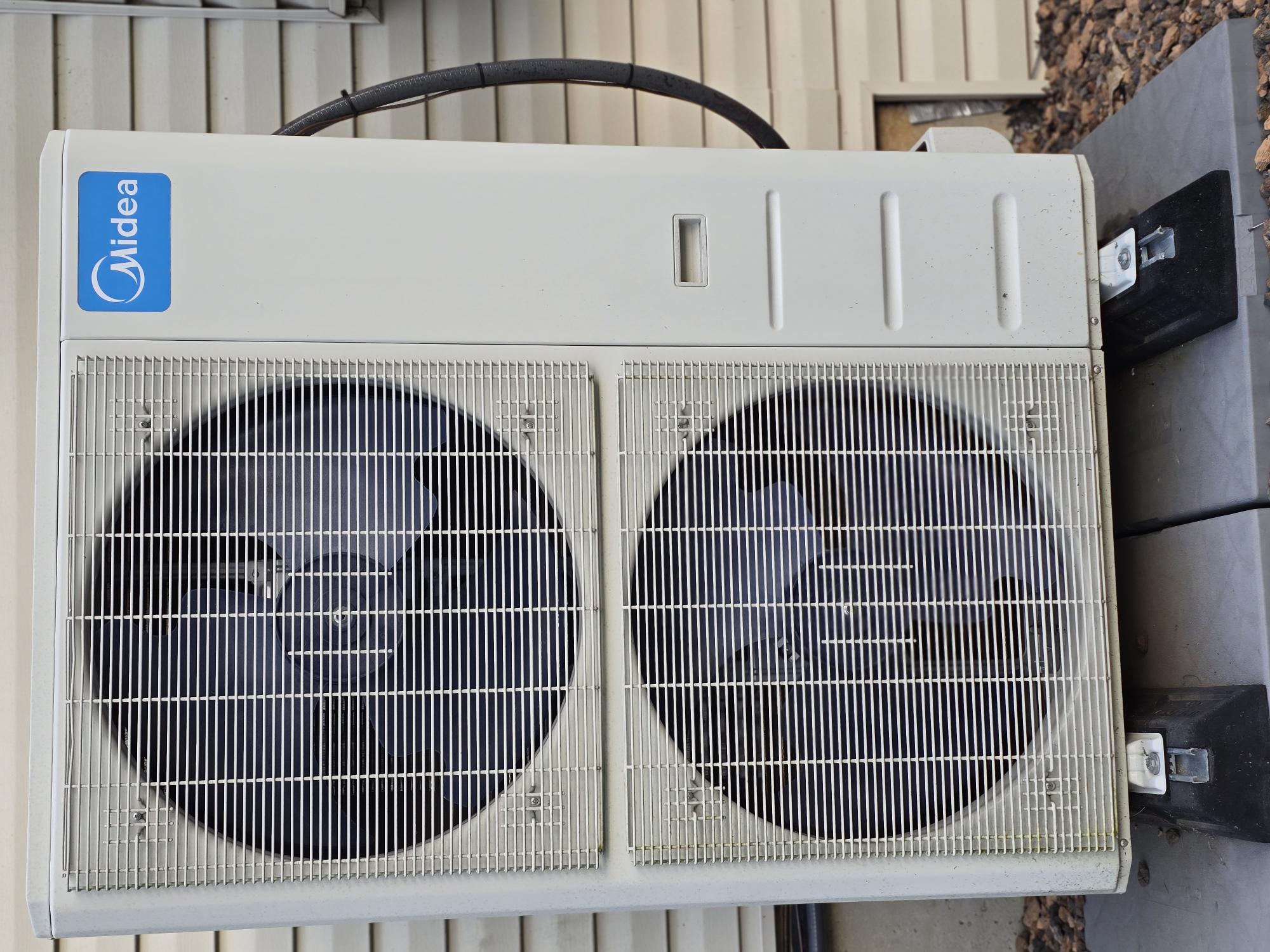
Midea's EVOX family of inverter heat pumps includes configurations that support dual-fuel applications. Midea's A-coil can integrate with compatible gas furnaces and traditional 24-volt controls, helping contractors work within existing home heating infrastructure instead of requiring a complete system overhaul. Midea positions this compatibility as part of its Easy Upgrade approach, which focuses on reducing structural and electrical barriers during HVAC replacement projects while helping homeowners balance comfort, efficiency and cost.
Modern Heat Pumps Are Engineered for Cold Climates
Some Canadians still associate heat pumps with antiquated equipment that lost heating capacity as temperatures declined. Today's systems use inverter-driven compressors and advanced refrigerant-cycle controls to maintain output across a wider range of conditions.
Midea's highest-performing model, the EVOX All Climate Heat Pump, delivers 100 percent heating output down to -35 C (-31 F) and continuous operation down to -40 C (-40 F). These specifications apply to the highest-performing models in the EVOX All Climate line.
Inverter technology allows a heat pump to adjust its output in response to the home's heating demand instead of repeatedly cycling on and off at full capacity. This can support steadier indoor temperatures and more precise comfort control.
Midea recently demonstrated these cold-climate capabilities through a residential installation in Alaska, where winter conditions mirror those experienced across many parts of Canada. In partnership with Canadian contractor and HomeRenoVisionDIY creator Jeff Thorman, the project supported a home operated by Hope Community Resources that houses and employs adults with disabilities.
Available Incentives and Financing Can Help Support an Upgrade
Canada's incentive landscape continues to change, making it important for homeowners to check current federal, provincial, municipal and utility requirements before selecting equipment.
The application period for the federally administered Oil to Heat Pump Affordability Program ended on July 31, 2026, for residents of Alberta, Manitoba, the Northwest Territories, Quebec and Saskatchewan. Other provinces and territories have used separate delivery arrangements and may follow different timelines. Existing federal applicants have until January 31, 2027, to submit required documents.
The federal Canada Greener Homes Affordability Program is also being introduced through participating provincial and territorial partners. The program provides no-cost home energy retrofits, which may include heat pumps, for eligible low- and median-income homeowners and tenants. Availability and application processes vary by jurisdiction.
Other programs remain available in parts of Canada. Examples include:
Toronto Home Energy Loan Program: Toronto homeowners can borrow up to $125,000 for eligible home improvements, including air-source heat pumps. Repayment terms of up to 20 years are available for qualifying heat pump projects. Current rates and terms are subject to change. Home Renovation Savings Program, Ontario: Eligible homeowners may qualify for rebates of up to $7,500 for a qualifying cold-climate air-source heat pump, or $12,000 for a qualifying ground-source heat pump. Better Homes B.C.: British Columbia continues to offer heat pump rebates through programs with eligibility based on household income, existing heating fuel and equipment type. Current incentives can reach up to $13,000 for certain central ducted or multi-split heat pump projects, with additional northern top-ups available in qualifying areas.
Program availability, funding and eligible equipment lists can change. Homeowners should verify requirements directly with the program administrator and their contractor before purchasing a system.
Five Questions to Ask Before Replacing an Aging System
Midea recommends that homeowners discuss the following considerations with a qualified HVAC contractor:
How did the existing system perform last winter?
Unusual noises, inconsistent temperatures and repeated service visits may indicate that equipment should be evaluated before the next heating season. What heating capacity does the proposed system maintain in cold weather?
Homeowners should ask for performance data at specific outdoor temperatures rather than relying on a general cold-climate description. Is the home a candidate for a dual-fuel configuration?
A home with an existing gas furnace and compatible ductwork may support an electric heat pump while retaining the furnace as part of the system. Can the new equipment work with the home's existing infrastructure?
Contractors should review the electrical service, controls and ductwork. Products designed for Easy Upgrades may reduce the need for rewiring or structural changes. Which rebates or financing programs are currently accepting applications?
Eligibility varies by location, income and equipment. Homeowners should confirm that the proposed equipment appears on the applicable qualified product list before installation.
Installation Quality Remains Critical
Equipment specifications represent only one part of a successful heating upgrade. Proper sizing, airflow configuration and control setup directly affect comfort and performance.
A qualified contractor should complete an appropriate heating and cooling load calculation, inspect the existing duct system and explain how the proposed equipment will operate under different outdoor conditions. Contractors should also review the balance point and control strategy for dual-fuel systems so homeowners understand when each heating source will operate.
'Heat pump technology has advanced, but every home is different,' Rames said. 'A contractor should match the equipment and configuration to the building instead of relying on a one-size-fits-all recommendation.'
Planning Ahead Gives Homeowners More Choice
Waiting until a heating system fails can turn a planned upgrade into an emergency replacement. Contractor schedules often become more limited once sustained cold weather arrives. Evaluating equipment before winter gives homeowners time to compare system configurations, confirm product availability and research active financial programs. It also creates an opportunity to consider Easy Upgrade solutions that work with existing ductwork, electrical service or gas heating infrastructure.
Midea offers inverter-driven heating and cooling systems for a range of Canadian climates and housing types, including the EVOX family of heat pumps and EVOX G³ ducted systems. The EVOX G³ platform features a modular air-handler design, 24-volt control compatibility and dimensions intended to support replacement of existing furnace systems with fewer installation changes.
Homeowners can learn more about Midea's Canadian heating and cooling solutions at MideaComfortNA.ca.
Contractors and companies interested in becoming a Midea heat pump distributor can call 1-888-MIDEA-NA (1-888-643-3262).
CONTACT FOR MEDIA INQUIRIES:
Coyne PR
mideab2b@coynepr.com
CONTACT FOR CONTRACTORS AND DISTRIBUTORS:
infohvac.na@midea.com
1-888-643-3262
A photo accompanying this announcement is available at https://www.globenewswire.com/NewsRoom/AttachmentNg/b9470fc8-e87e-4820-93a5-d6fff8bec231
A note on cookies
Newshunt uses essential cookies to keep you signed in and to remember your language and country, so the site works the way you expect. With your permission, we'd also like to use analytics cookies to understand how people use Newshunt and improve it over time.
Accepting only affects analytics. To learn more, view our Privacy Policy or Terms & Conditions.
(0)Comments