


Russia backs Mecca Agreement as Gulf security framework
Category: Politics
Share
Archive
Like
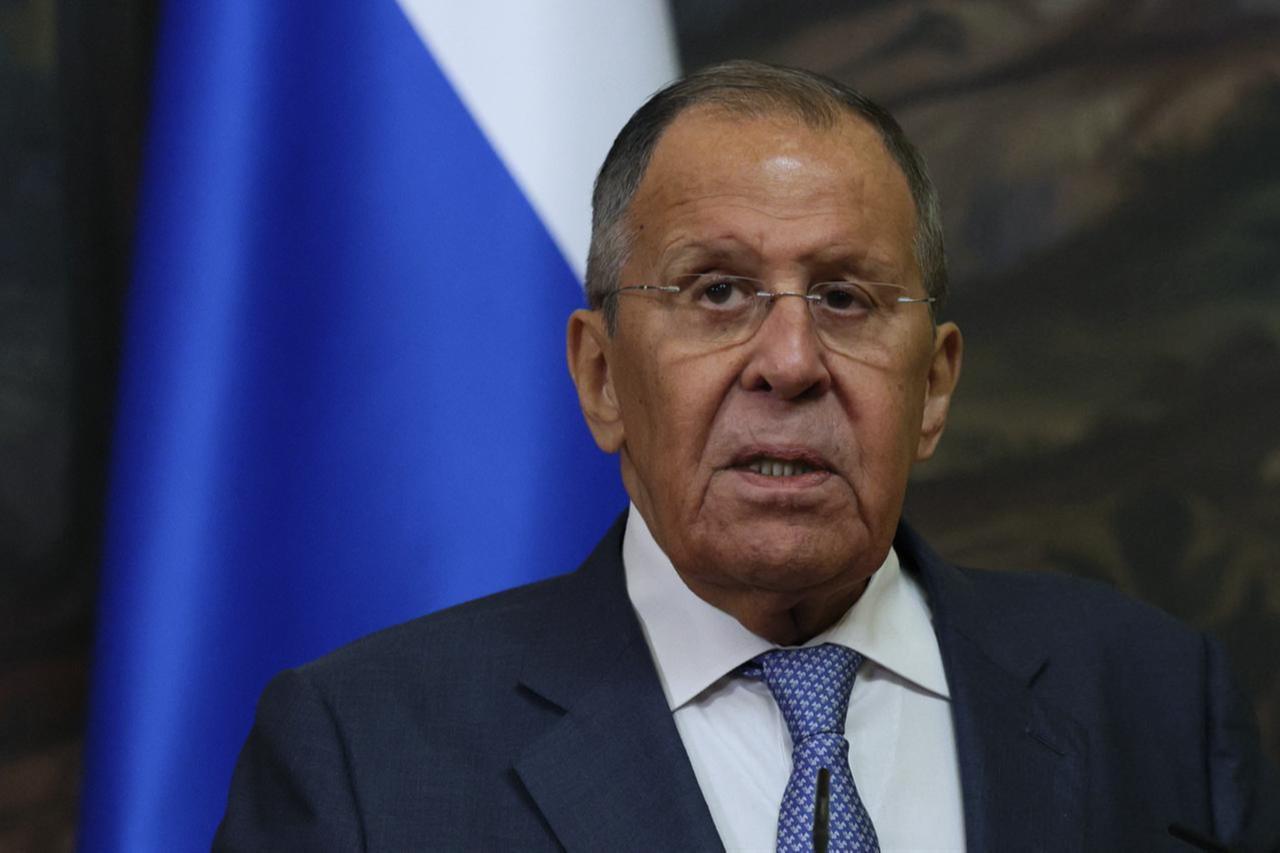
Russian Foreign Minister Sergei Lavrov attends a joint press conference with Vatican envoy and Secretary for Relations with States and International Organisations of the Holy See following their talks in Moscow on August 25, 2026. (AFP Photo)
R ussian Foreign Minister Sergey Lavrov on Monday pointed to the Mecca Agreement, put forward by Saudi Arabia, Pakistan and Türkiye, as a promising framework for collective security in the Gulf, and said the arrangement could eventually pave the way for Iran's inclusion in regional security arrangements.
Speaking to students and faculty at the Moscow State Institute of International Relations, Lavrov described the agreement as a structure for collective security and a defensive alliance. He said its proponents have emphasized that its doors remain open to other countries, including those outside the Gulf region itself.
"Egypt is often mentioned," Lavrov said, adding that if Algeria were to show interest, "that too would have a positive effect at some stage."
Lavrov said that if the framework's backers were to agree on conditions for Iranian participation, it would mark the most practical step yet toward a broader security concept Moscow first proposed more than 20 years ago. Long-standing Russian proposal
Lavrov recalled that Russia had suggested more than two decades ago that Gulf states, including the Arab monarchies, and Iran consider holding a joint meeting to develop a regional security concept.
He said Moscow's intent was to help facilitate discussions where governments could raise mutual grievances and work toward confidence-building measures, and that Russia had also proposed involving the Arab League, the Organization of Islamic Cooperation and the five permanent members of the UN Security Council to help ease the process. Fallout from US-Israeli military action
Lavrov said the situation shifted after the United States and Israel launched a joint military operation against Iran in February. He noted that in the years before that operation, Iran and Saudi Arabia had normalized relations through an initiative brokered by China and actively encouraged by Russia, a rapprochement that had marked a notable thaw between the two regional rivals after years of estrangement.
Lavrov concluded by saying Russia does not intend to seek a leading role in shaping the process going forward.
A note on cookies
Newshunt uses essential cookies to keep you signed in and to remember your language and country, so the site works the way you expect. With your permission, we'd also like to use analytics cookies to understand how people use Newshunt and improve it over time.
Accepting only affects analytics. To learn more, view our Privacy Policy or Terms & Conditions.
(0)Comments