


Centipede Vs. Millipede: How To Easily Tell The Difference
Category: SciTech
Share
Archive
Like
When working around your yard or garden, you will inevitably come across crawling or slithering creatures from time to time. Yet these aren't always worms or the occasional snakes that you might see. Centipedes and millipedes are other possibilities, too. Distinguishing one arthropod from the other is important. While millipedes don't pose a significant threat to human health, centipedes may occasionally bite when they are threatened. The good news is that it's relatively easy to tell these two apart from one another, and bites from centipedes are rare.
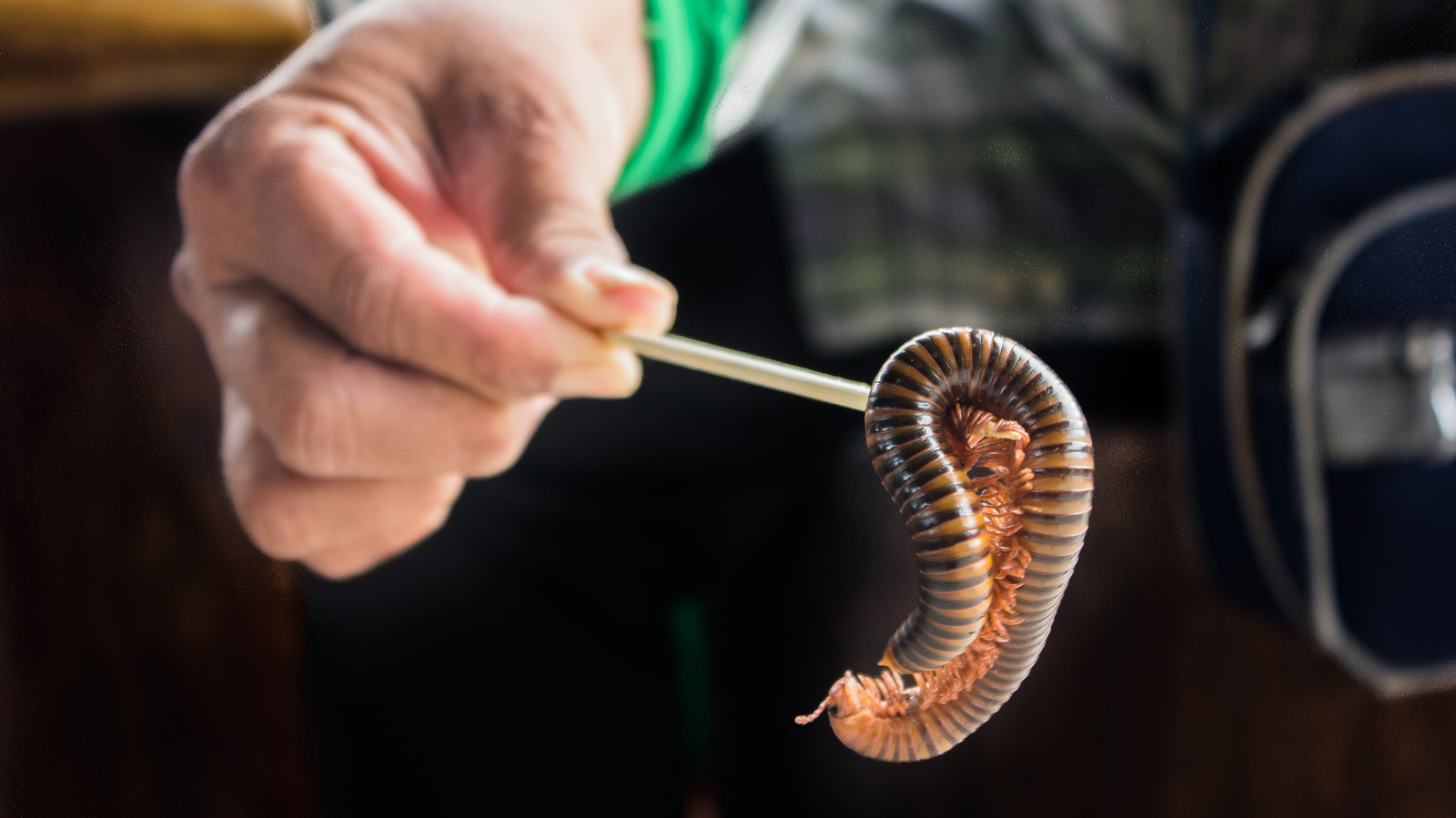
Between these two creatures, millipedes are most often mistaken for worms. Much of this has to do with their round appearance, along with their numerous legs. Millipedes range in color from shades of brown or reddish-brown to black, and each of their body segments contains two pairs of legs that ripple like waves as they crawl around. Millipedes can also curl up when they are threatened.
Centipedes, on the other hand, have just one pair of legs per body segment, and are also much flatter than millipedes. Centipedes are usually much longer than their millipede counterparts, the latter of which measures a couple of inches or less. The exact length of a centipede varies by type, with some measuring between 1 and 12 inches, per the University of Georgia. If you're trying to figure out whether an elongated and flat creature with long antennae on its head is a millipede, chances are that it's actually a centipede. While centipedes can also be brown, some are red or light yellow in color.
Both centipedes and millipedes prefer moist habitats with lots of humidity. They're also mostly nocturnal. It might seem reasonable for these two creatures to stick around your yard or garden, but they do enter homes on occasion. Of the two creatures, millipedes are more likely to do so, though. Their small sizes and round shapes make it easy for them to fit through small cracks in your foundation, and around windows and doors. From there, they can stay on the ground or climb up walls. Millipedes primarily access indoor spaces by mistake, as their diets largely consist of decomposing leaves and other vegetation outdoors. However, they may sneak into homes for shelter from the cold.
You may be able to remove a wayward millipede from your home by hand, but there are a few caveats. While millipedes are not considered venomous, some species can emit defensive fluids that may stain your hands or cause allergic reactions. Getting rid of millipedes in larger numbers may require occasional treatments or the help of a pest control expert.
Spotting centipedes around your yard or garden can be concerning, especially if you have curious young children and pets. Chances are good that the centipedes have located a food source inside your home, and that means insects.. House centipedes have shorter bodies than other species, with much longer legs and antennae. While technically venomous, house centipedes rarely bite. Large centipedes that are around 4 to 5 inches long may cause bee sting-like wounds, says the University of Missouri Extension. For this reason, you should always wear gloves when handling them.
Making your home less pest friendly can help cut down on insect infestations and possible centipede encounters. You may spot them around damp areas, such as bathrooms or basements. Debris next to your home, such as wood piles, leaves or trash waiting for pickup can attract them. Removing mulch from right up against your home is another simple trick to keep centipedes out of your home. Centipedes don't normally infest a home in large numbers. Yet if you see them in great numbers, it's probably time to call a pest control to help get rid of centipedes.
Once you've confirmed the presence of millipedes or centipedes, you'll want to fix any cracks or holes to prevent further access. Controlling the dampness and humidity in your home can deter both centipedes and millipedes. If such methods do not control these insects, consider calling a professional pest control company for targeted areas indoors, though this is usually reserved for extreme cases only.
A note on cookies
Newshunt uses essential cookies to keep you signed in and to remember your language and country, so the site works the way you expect. With your permission, we'd also like to use analytics cookies to understand how people use Newshunt and improve it over time.
Accepting only affects analytics. To learn more, view our Privacy Policy or Terms & Conditions.
(0)Comments