


Naomi Osaka's Mother Tamaki: How a Forbidden Romance Led to 10 Years of Family Exile
Category: Entertainment
Share
Archive
Like
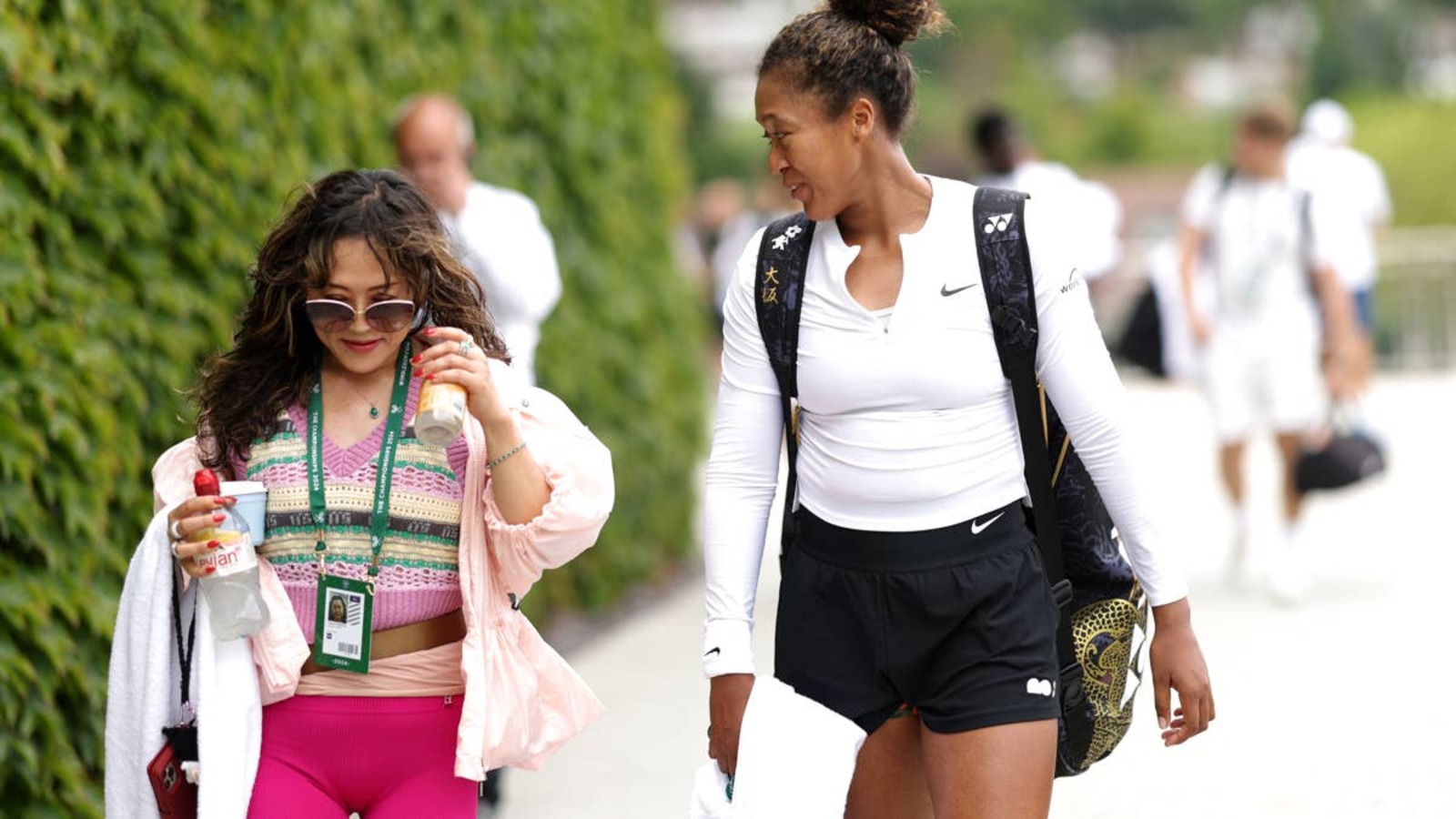
As Naomi Osaka prepares for a mouth-watering Round of 16 clash against Elena Rybakina at the 2026 US Open, her mother Tamaki Osaka has already stolen a slice of the spotlight in New York.
The 54-year-old Japanese mother turned heads during US Open fan week when she arrived for one of Naomi's practice sessions in a bold red mini-dress paired with long black opera gloves, matching red earrings, oversized sunglasses and Swarovski-embellished Nike sneakers. Naomi will face Rybakina on Louis Armstrong Stadium, with their Round of 16 encounter scheduled to begin after 2:30 p.m. EDT.
For a woman who has spent much of her daughter's career away from the spotlight, Tamaki's appearance was impossible to miss. But behind the glamorous fashion statement lies a remarkable story of rebellion, sacrifice and perseverance.
Long before Naomi Osaka became a four-time Grand Slam champion, Tamaki made a life-changing decision that resulted in her being separated from her own family for nearly a decade. She fell in love with a Haitian man, Leonard Francois, and refused to give up that relationship even when her traditional Japanese family demanded otherwise.
That decision changed the course of her life. It also ultimately helped shape the family that produced one of tennis' biggest stars.
Tamaki was born in Nemuro, on the northern Japanese island of Hokkaido, and later moved to Sapporo for school and work.
It was there that she met Leonard, a Haitian college student visiting Japan.
Their relationship developed during the 1990s, when interracial relationships remained deeply controversial in Japan. The young couple kept their romance private for years, but eventually Tamaki's family discovered what was happening.
The situation became particularly difficult when Tamaki's father began making plans for her arranged marriage. Tamaki was faced with a choice: follow the path her family had chosen for her or remain with Leonard.
She chose Leonard. The consequences were severe. Tamaki's father considered her relationship a betrayal of the family's traditions and accused her of bringing shame upon the family.
Rather than abandon Leonard, Tamaki left. The couple eventually moved to Osaka, and Tamaki's relationship with her parents was effectively severed.
For nearly 10 years, she had virtually no communication with the family she had grown up with. It was an enormous personal price to pay for choosing her own life.
But Tamaki and Leonard continued building their family, eventually welcoming daughters Mari and Naomi. The surname their children received would later become famous around the world.
Naomi and Mari both carry the surname Osaka, rather than their father's surname, Francois.
The decision was made while the family was living in Japan.
Tamaki chose to register both daughters under her Japanese surname because she believed it would make life easier for them in Japanese society. Mixed-race families and foreigners could face additional difficulties with matters such as housing, banking and education, and the Osaka surname provided the girls with a stronger connection to their mother's Japanese identity.
It was a practical decision at the time. Years later, the name would become one of the most recognizable in tennis.
When Naomi was three, the family eventually moved to the United States.
Leonard became heavily involved in the tennis development of Naomi and Mari, modeling aspects of their training on the methods used by Richard Williams with Venus and Serena Williams.
Tamaki's role was different, but no less important. She worked. For years, she took on exhausting double shifts at international financial firms and businesses to help cover the enormous costs associated with raising two aspiring tennis players.
Equipment, court fees, coaching and travel all had to be paid for. Tamaki became the financial backbone of the family. But her sacrifice was not simply measured in money.
Naomi has recalled watching her mother come home exhausted from work, sleep for only a short period and then drive her and Mari to early-morning tennis sessions. Sometimes, Tamaki would sleep in the car while her daughters trained.
For Naomi, that image became inseparable from her understanding of her mother's love.
'Growing up, I saw my mother work incredibly hard to support me and my passion for play.'
Naomi also remembered how her mother encouraged her to embrace her diversity and consistently put others before herself.
Tamaki's influence on Naomi extended well beyond tennis.
Growing up with a Japanese mother and Haitian father in the United States meant that Naomi's identity was shaped by three different cultural worlds. Tamaki never asked her daughter to hide those differences.
Instead, she encouraged Naomi to embrace them. That became particularly important as Naomi's fame exploded. Her decision to represent Japan internationally placed her mother's heritage at the center of her public identity, while her Haitian and American roots remained equally important parts of who she was.
In many ways, Naomi's public identity reflected the choices her mother had made decades earlier. Tamaki had refused to allow other people to determine what her family should look like. Naomi would eventually refuse to allow other people to determine who she should be either.
This article first appeared on Athlon Sports and was syndicated with permission.
A note on cookies
Newshunt uses essential cookies to keep you signed in and to remember your language and country, so the site works the way you expect. With your permission, we'd also like to use analytics cookies to understand how people use Newshunt and improve it over time.
Accepting only affects analytics. To learn more, view our Privacy Policy or Terms & Conditions.
(0)Comments