


‘No work, no pay': Punjab toughens stand as employees extend strike
Category: Politics
Share
Archive
Like
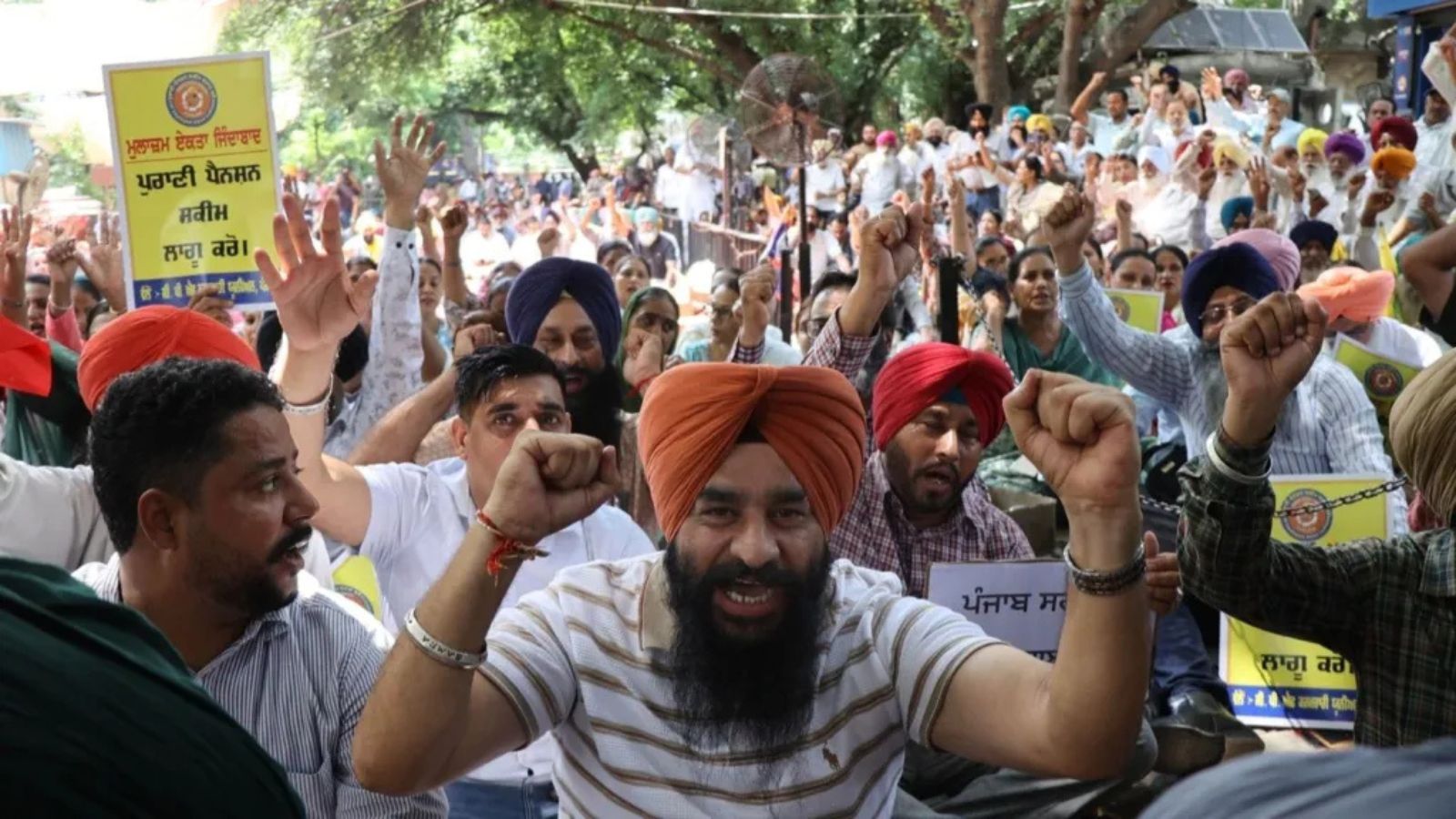
The Punjab government on Tuesday ordered 'no work, no pay' for employees who stayed away from work as part of their agitation over pending dearness allowance (DA) dues and other demands, even as the protesting employees extended their pen-down strike till September 11.
Government offices across the state wore a deserted look as ministerial staff observed a pen-down strike. Work was severely affected at several offices, including the Civil and Mini Secretariats in Chandigarh and district-level administrative complexes. Essential services such as buses, schools and healthcare institutions, however, continued to function.
In an order issued to all administrative secretaries, Chief Secretary KAP Sinha directed that employees abstaining from duty be treated under the 'no work, no pay' principle and that their salaries be deducted for the period of their absence, a government source said.
The move came as employees pressed ahead with their agitation despite repeated appeals from the government to return to work and hold talks. Their key demands include payment of pending DA dues and withdrawal of show-cause notices and other disciplinary action initiated against employees who participated in the August 27 agitation.
Punjab Sanjha Mulazam Manch convener Sukhchain Singh Khaira said the pen-down strike had been extended till Friday, September 11. 'The government will not be able to silence us. We will continue to protest till the time we are given our DA dues,' he said.
The unions have also opposed the government's decision to treat the mass casual leave taken during the earlier agitation as unauthorised absence. They have made withdrawal of the notices and disciplinary proceedings a key condition for meaningful talks.
The fresh confrontation follows a statewide strike on August 27 in which unions claimed participation of more than three lakh government employees. A meeting between Chief Minister Bhagwant Mann and employee representatives could not take place that day after the government insisted that the strike be called off before talks.
The government, on the other hand, has maintained that the DA arrears issue is before the Supreme Court and has cited its financial position while opposing immediate payment. The state has challenged in the Supreme Court a Punjab and Haryana High Court order directing it to clear around Rs 14,191 crore in pending DA and dearness relief arrears to employees and pensioners within 15 days.
The standoff continued despite the government's September 4 decision to raise DA from 42 per cent to 60 per cent for around 85,000 employees recruited after July 17, 2020, whose salaries are governed by the Central government's 7th Pay Commission pattern. The move does not cover employees recruited before that date, who continue to demand clearance of their pending DA instalments and arrears.
Industry Minister Aman Arora had on Monday termed the proposed agitation 'illegal' and warned of action if public services were disrupted. The employees, however, went ahead with the strike.
At the district level, employees staged protests and raised slogans against the government. In Hoshiarpur, employees' union district president Anirudh Modgil alleged that the government withheld 18 per cent dearness allowance (DA), Assured Career Progression (ACP) benefits and other allowances of employees. Modgil said that as per a decision of the Joint Coordination Committee, employees would start 'gheraoing' Punjab ministers from September 12.
In Ferozepur, employees staged a protest at the District Administrative Complex. Pippal Singh, district president, Punjab State Ministerial Services Union said the government had been giving assurances regarding their demands for a long time, but no concrete action had been taken to resolve the issues.
'The government had promised restoration of the old pension scheme in its election manifesto. Though a notification was issued, the complete procedure and necessary conditions for its implementation had not yet been clarified,' alleged Pippal Singh.
The strike also inconvenienced members of the public, with people who had travelled from distant villages to government offices, including the DC office, being forced to return without their work being completed.
A note on cookies
Newshunt uses essential cookies to keep you signed in and to remember your language and country, so the site works the way you expect. With your permission, we'd also like to use analytics cookies to understand how people use Newshunt and improve it over time.
Accepting only affects analytics. To learn more, view our Privacy Policy or Terms & Conditions.
(0)Comments