


Rail corridor to Galway hailed as crucial step towards low‑carbon transport in North-West
Category: Tourism
Share
Archive
Like
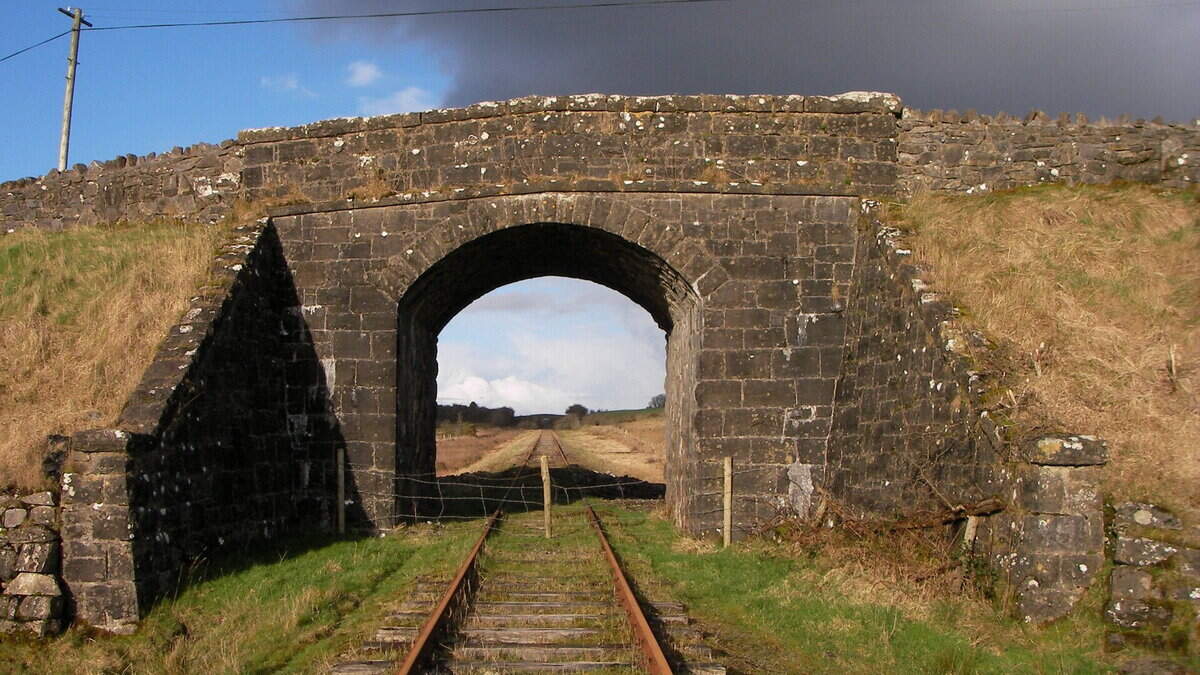
The requirements for a future-oriented, low-carbon public transport infrastructure serving all regions of Ireland are becoming clearer with the discussion surrounding the reopening of the strategic rail corridor to Galway.
A rail connection between regional centres that is on a par with car travel in terms of journey time, as well as the strengthening of the smaller towns such as Tubbercurry, Charlestown, Kiltimagh – are of paramount importance.
The long-term devaluation of this public transport corridor by reducing it to a simple tourism bike path will become apparent, at the very latest, in a further wave of private tourism investments based on car transport, which will develop a momentum of its own and make a return to rail-based public transport implausible.
By contrast, Wexford County Council, recognised this years ago and is developing the Rosslare–Waterford Greenway at a distance from its still-disused railway line. This will enable the future revitalisation of smaller stations as interchange points between train and bike, bus, taxi etc. What is evident here is the equal prioritisation of local everyday mobility alongside tourist objectives.
As in County Wexford, the route of the Greenway in County Sligo may run plausibly alongside and parallel to the railway line. Local engineers are being asked to do their utmost to ensure safe cycling conditions in rural areas, and the latest guidelines from the National Safety Council on road speed reductions are encouraging. The benefits are also felt by the local population.
The aim of any forward-looking, low-carbon infrastructure must be to strengthen all railway stations as 'strategic points for changing modes of transport'.
Regrettably, Sligo undermined this potential in the 1990s by constructing a National Road Trunk Corridor in the middle of town.
The 'Sligo Town Centre Partnership', a group of 21 town centre businesses, publicly highlighted these conflicting objectives at the time and, with financial support from the EU Transport Commission and the Irish state authority SEAI, developed alternative proposals for an integrated transport solution.
Today's Sligo e-bike hire concept has grown out of this. By contrast, Sligo Railway Station, as a hub for all forms of modern mobility (train, bus, bike, walking), has been neglected and drastically devalued by low capacity and the difficult walk from the town centre to the station.
The planned opening of the rail corridor to Galway also requires financial viability through new, paying groups of everyday users, such as commuters to Sligo.
This will only be achievable with effective, rapid connections at Sligo station to local buses, taxis, hire bikes, etc., as well as a quick and safe footpath to the town centre.
All of this also applies to the efforts to enhance the appeal and revitalise rural railway stations through the EU's supportive initiatives and funding schemes.
At the time, Sligo also explored and promoted the concept of a 'Bike Station' to enhance arrival by train / bus – which had proved successful across Europe – in a cross-border partnership with County Fermanagh.
This is a bike service facility offering services for tourists, bike hire and repairs, bike parking, etc., and is therefore a major driver of employment. Sligo's focus at the time on car-based road planning made this impossible.
More than ever, an environmentally and socially oriented public infrastructure is a matter of vital importance.
The swift reopening of rail services to Galway is a first and crucial building block towards climate neutrality in the North-West of Ireland.
A local strategy or planning group would drive this forward – perhaps in collaboration with the ATU, whose architecture students are already undertaking studies to improve the connection between Sligo Railway Station and the city centre?
Or a look at international rail transport, such as that in France: the rail operator SNCF, which already has a regional road-rail fully electric shuttle scheduled for 2027 (Concept 'FLEXY') that can leave the tracks for several kilometres. It is easy to imagine how difficult interchange points such as Collooney Railway Station or connections to Knock Airport could be drastically improved here.
- Wilhelm Bodewigs is a retired urban planner and former spokesperson of the Sligo Town Centre Partnership Group
A note on cookies
Newshunt uses essential cookies to keep you signed in and to remember your language and country, so the site works the way you expect. With your permission, we'd also like to use analytics cookies to understand how people use Newshunt and improve it over time.
Accepting only affects analytics. To learn more, view our Privacy Policy or Terms & Conditions.
(0)Comments