


State Government Must Consult PTAM Before Enacting the Proposed Coaching Classes Regulation Law, in Accordance with the High Court's Order
Category: Politics
Share
Archive
Like
Demand by the Professional Teachers Association of Maharashtra
Pune : The Professional Teachers Association of Maharashtra (PTAM), one of the oldest and largest organisations representing professional teachers and coaching classes in the state, on Tuesday demanded that the provisions of the proposed Maharashtra Private Coaching Centres Registration and Regulation Act be reconsidered and that the State Government hold meaningful consultations with all relevant stakeholders before finalising the legislation.
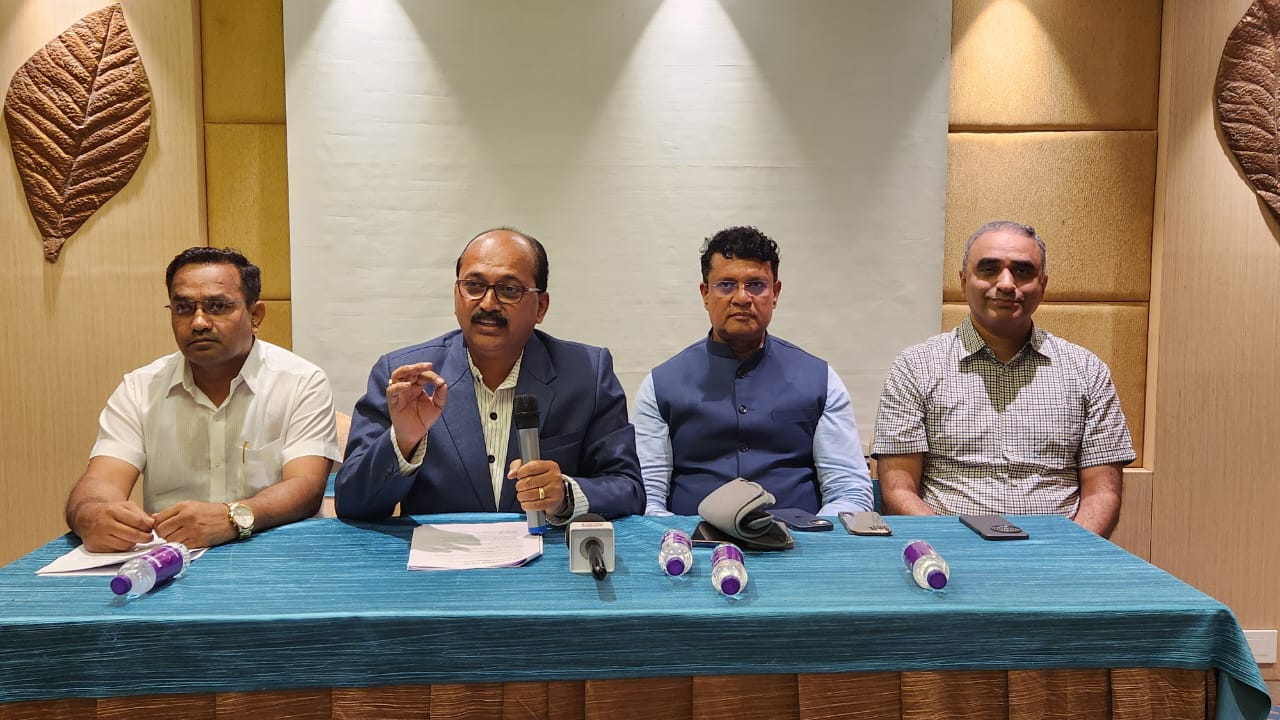
Addressing a press conference held in the city today, PTAM President Dr. Prashant Kulkarni explained the Association's position. He said that PTAM supports fair, balanced and transparent regulation. However, it opposes provisions that impose an unreasonable compliance burden on coaching institutions or create scope for arbitrary administrative action.
PTAM Secretary Dr. Nitin Kadam, former President Vijay Pawar, former Secretary Hanumant Bhosale, Working President Prahlad Daund and Pune Core Committee Member Durgesh Mangeshkar were also present at the press conference.
During the press conference, details were presented regarding Writ Petition No. 3447 of 2025, filed on behalf of PTAM before the Chhatrapati Sambhajinagar Bench of the Bombay High Court in April 2025 by Shri Vijayrao Pawar, Shri Hanumantrao Bhosale and Dr. Prashant Kulkarni, as well as the order passed by the Court.
While disposing of the writ petition, the High Court expressly directed the Maharashtra Government to consult PTAM's representatives and hear the petitioners before enacting the legislation. If the Government decided not to hear them, it was required to communicate the reasons for doing so to the petitioners, the press conference was informed.
Presenting PTAM's position on the proposed legislation, Dr. Kulkarni said:
«'We are not opposed to regulation; we are opposed to unreasonable, unequal and one-sided regulation. Coaching institutions complement the formal education system by providing academic guidance tailored to individual needs, remedial and advanced learning, examination preparation and specialised instruction. The Government must recognise the coaching sector as a partner in education and as a major generator of employment.'»
PTAM has more than 50,000 members across approximately 27 districts of Maharashtra. The Association stated that the proposed regulatory draft is based on the flawed assumption that coaching classes are part of the problem confronting the education sector. Coaching institutions provide vital academic support to students in urban, semi-urban and rural areas and generate employment and self-employment opportunities for lakhs of teachers and young professionals, PTAM noted.
One of PTAM's principal demands is that the proposed registration threshold of 25 students be increased to more than 100 students per branch. According to the Association, this would protect home tutors and very small coaching institutions from being subjected to an unnecessarily complex regulatory framework.
PTAM has also demanded the withdrawal of the blanket prohibition on providing coaching to children below 13 years of age. The Association believes that it would be inappropriate to prohibit age-appropriate remedial education, development of foundational skills, and preparation for Olympiads and scholarship examinations.
The Association further demanded that the fee-refund provisions take into account expenses already incurred by coaching institutions on academic material, digital platforms, administration, taxes, financial commitments made to teachers and infrastructure.
PTAM strongly opposed the creation of an 'Inspector Raj' and 'Licence Raj' under the proposed legislation. It demanded clearly defined inspection criteria, written reasons for administrative action, prior notice except in emergencies, an opportunity for institutions to present their case, graded penalties proportionate to the nature and seriousness of the violation, and a transparent appellate mechanism.
As an alternative regulatory mechanism, PTAM proposed the establishment of a Coaching Classes Self-Regulatory Council. The Council should include representatives of the Government and Education Department, coaching-class associations, legal experts, local self-government bodies and fire-safety authorities, digital-education specialists, mental-health professionals, and representatives of parents and students.
Except in serious or urgent cases, the Council should conduct a preliminary scrutiny of complaints, hear the concerned coaching institution and, wherever possible, facilitate mediation or corrective action before the Government initiates formal proceedings.
PTAM has begun preparing a comprehensive document setting out clause-by-clause objections to the proposed legislation, along with the amendments it recommends. The Association is also preparing a comprehensive white paper highlighting the educational, social and economic contributions of the coaching sector.
PTAM reiterated that it remains committed to dialogue and consultation. However, if its demands continue to be ignored, coaching classes across Maharashtra will observe a one-day shutdown on September 11, 2026, the Association warned.
PTAM clarified that the shutdown would not be directed against students, parents, schools or colleges. It would be a peaceful and democratic expression of concern regarding the proposed legislation.
The Association called upon the Maharashtra Government to temporarily suspend the process of finalising the proposed draft, formally invite PTAM for consultations, and consider the amendments and model legislative draft submitted by the Association.
PTAM's appeal to the Government is clear:
Consult the stakeholders. Change the perspective. Amend the draft. Enact a fair and balanced law.
A note on cookies
Newshunt uses essential cookies to keep you signed in and to remember your language and country, so the site works the way you expect. With your permission, we'd also like to use analytics cookies to understand how people use Newshunt and improve it over time.
Accepting only affects analytics. To learn more, view our Privacy Policy or Terms & Conditions.
(0)Comments