


Vice President Karin orders improvement of regional contact centers
Category: Politics
Share
Archive
Like
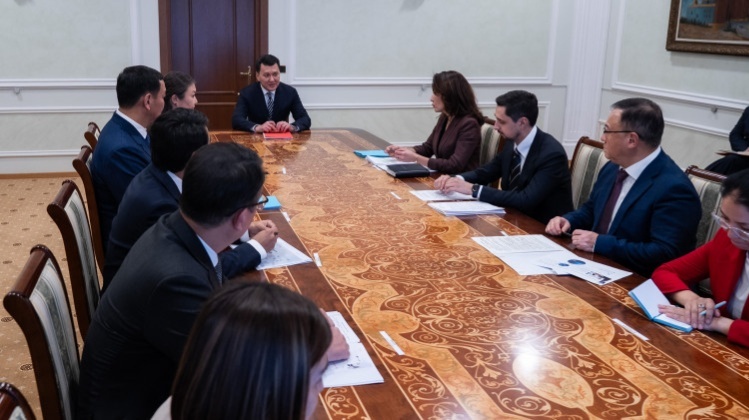
The meeting was attended by the Commissioner for Children's Rights, the head of the Presidential Administration's department for citizen appeals, representatives of the Kazakhstan Institute for Strategic Studies, as well as officials from the Prosecutor General's Office, the Ministry of Labor and Social Protection, the Ministry of Finance, and the Ministry of Artificial Intelligence and Digital Development, according to the press service of Akorda.
At the meeting, Karin noted that, in line with the President's directives, digital technologies and artificial intelligence tools are being actively introduced across all sectors.
'The presidential initiative for large‑scale digitalization also covers such an important area of government work as ensuring effective public feedback channels,' he said.
According to Karin, Kazakhstan has built a broad infrastructure for citizen feedback. Public Service Centers (PSCs) provide more than 30 million services annually, while government contact centers handle over 21 million calls each year.
However, analysis revealed regional disparities in the activities of I‑Komek centers.
In 2025, more than half of four million calls came from Astana residents, while weaker regional centers forced citizens to turn to the national e‑Otinish platform. The information reaches local executive authorities with significant delays, which negatively affects the timeliness of resolving citizens' pressing issues.
Karin emphasized that the positive experience of the capital's I‑Komek service should be extended to other regions to improve the effectiveness of their work in addressing citizens' everyday issues.
Government representatives also reported on the work of front offices, including the e‑Otinish platform, the '111' service contact center, public service centers, and citizen reception centers at government agencies.
Karin highlighted that significant progress has been made in digitizing public services and introducing new technologies, but the key task now is integrating front offices into a unified platform and deploying advanced AI‑based tools.
'This will enhance the implementation of presidential initiatives and significantly speed up responses to citizens' requests,' he said.
Following the meeting, the Vice President set specific tasks for government agencies aimed at creating a proactive format of public service and improving public feedback mechanisms.
On August 31, President Kassym-Jomart Tokayev signed a decree to appoint Erlan Karin as the Vice President of Kazakhstan.
A note on cookies
Newshunt uses essential cookies to keep you signed in and to remember your language and country, so the site works the way you expect. With your permission, we'd also like to use analytics cookies to understand how people use Newshunt and improve it over time.
Accepting only affects analytics. To learn more, view our Privacy Policy or Terms & Conditions.
(0)Comments