


Pakistan’s first astronaut mission enters final stages; four scientific experiments planned aboard China
Category: SciTech
Share
Archive
Like
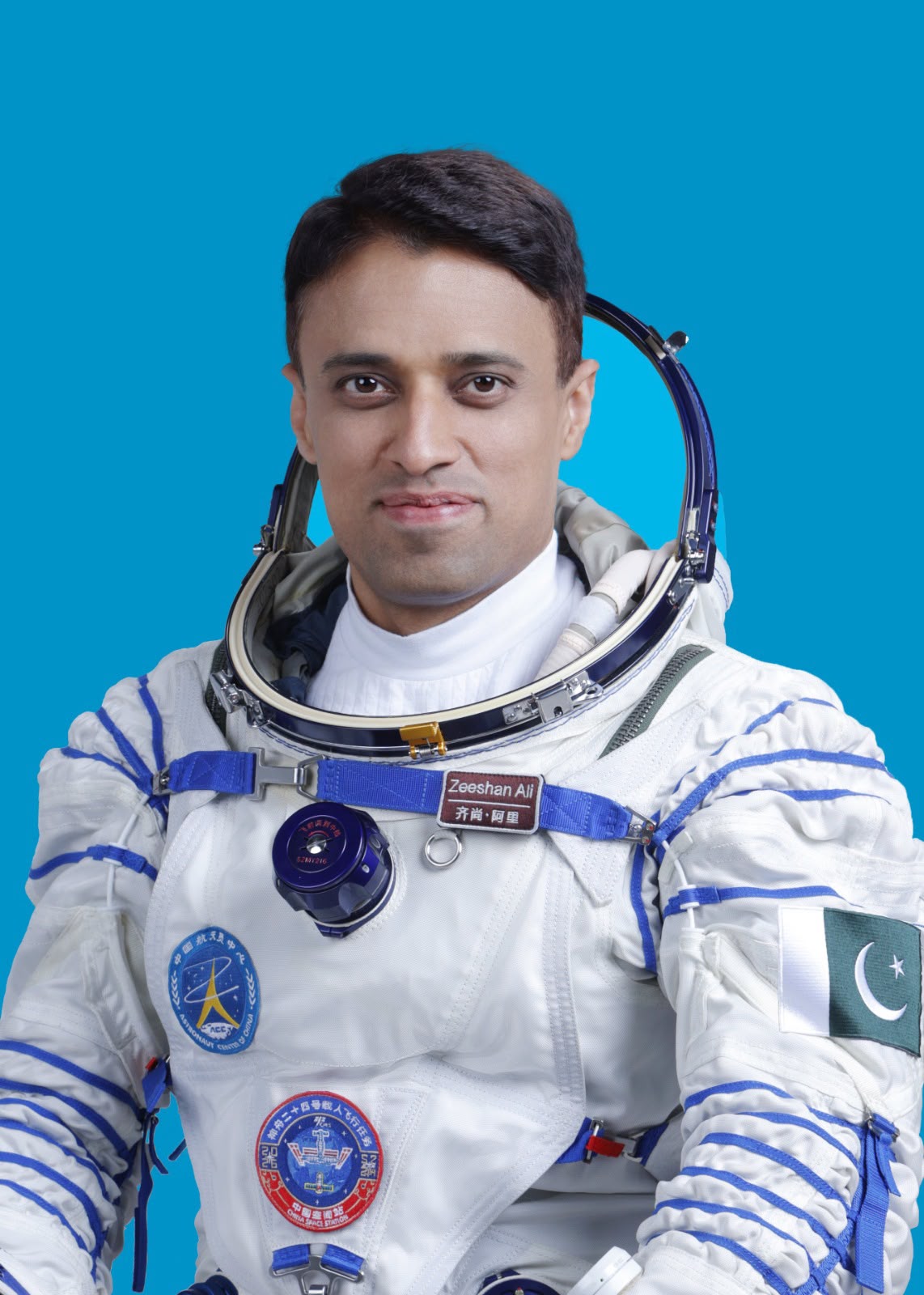
Pakistan’s first astronaut mission has entered its final stages, with Muhammad Zeeshan Ali set to make history by travelling to China’s Space Station (CSS), Tiangong, under an initiative facilitated by the China Manned Space Agency (CMSA), marking a major milestone in the country’s entry into human space exploration.
ISLAMABAD, Nov 24 (APP): Pakistan’s first astronaut mission has entered its final stages, with Muhammad Zeeshan Ali set to make history by travelling to China’s Space Station (CSS), Tiangong, under an initiative facilitated by the China Manned Space Agency (CMSA), marking a major milestone in the country’s entry into human space exploration.
The mission, led by CMSA in partnership with Pakistan’s Space and Upper Atmosphere Research Commission (SUPARCO), will see the Pakistani astronaut serve as a Payload Expert, with primary responsibility for conducting the country’s scientific programme aboard the space station.
During the mission, he will undertake scientific experiments in the microgravity environment, developed by Pakistani researchers in key areas including materials science, fluid physics, life and biological sciences, and biotechnology.
The research is expected to offer potential applications in climate resilience, food security and industrial innovation.
One of the experiments, titled “Establishment of Green Micro-factories to Support Life Sustainability in Space,” will involve cultivating microalgae as a potential source of nutrients and oxygen to support future long-duration space missions.
The remaining three experiments will be deployed on the external experimental modules of the Chinese space station, where they will remain exposed to the space environment for one year.
These experiments include examining the effects of microgravity and cosmic radiation on the longevity of quinoa seeds during spaceflight, with the aim of developing more resilient and radiation-tolerant crop varieties.
Another experiment will assess the healing efficiency of microcapsule-based self-healing composite materials in space environments, with potential applications in reducing maintenance requirements for aircraft, spacecraft and infrastructure.
The fourth experiment will evaluate the performance of hybrid composite materials under static exposure to the external space environment, testing their durability against vacuum, radiation and extreme temperature variations to explore their potential for enhanced spacecraft protection.
The scientific programme is being undertaken with Chinese support and in collaboration with the Centre for Space Utilization, Shanghai Institute of Technical Physics, Dalian Maritime University and Shanghai Jiao Tong University.
The mission represents a defining milestone in Pakistan’s space history and a significant achievement in Pak-China space cooperation, positioning Pakistan among the select group of countries participating in human spaceflight and opening new avenues for scientific research and technological advancement.
A note on cookies
Newshunt uses essential cookies to keep you signed in and to remember your language and country, so the site works the way you expect. With your permission, we'd also like to use analytics cookies to understand how people use Newshunt and improve it over time.
Accepting only affects analytics. To learn more, view our Privacy Policy or Terms & Conditions.
(0)Comments