


Chasing Side Deals, Flexing Influence: Lewandowski's Power Moves at DHS
Category: Politics
Share
Archive
Like
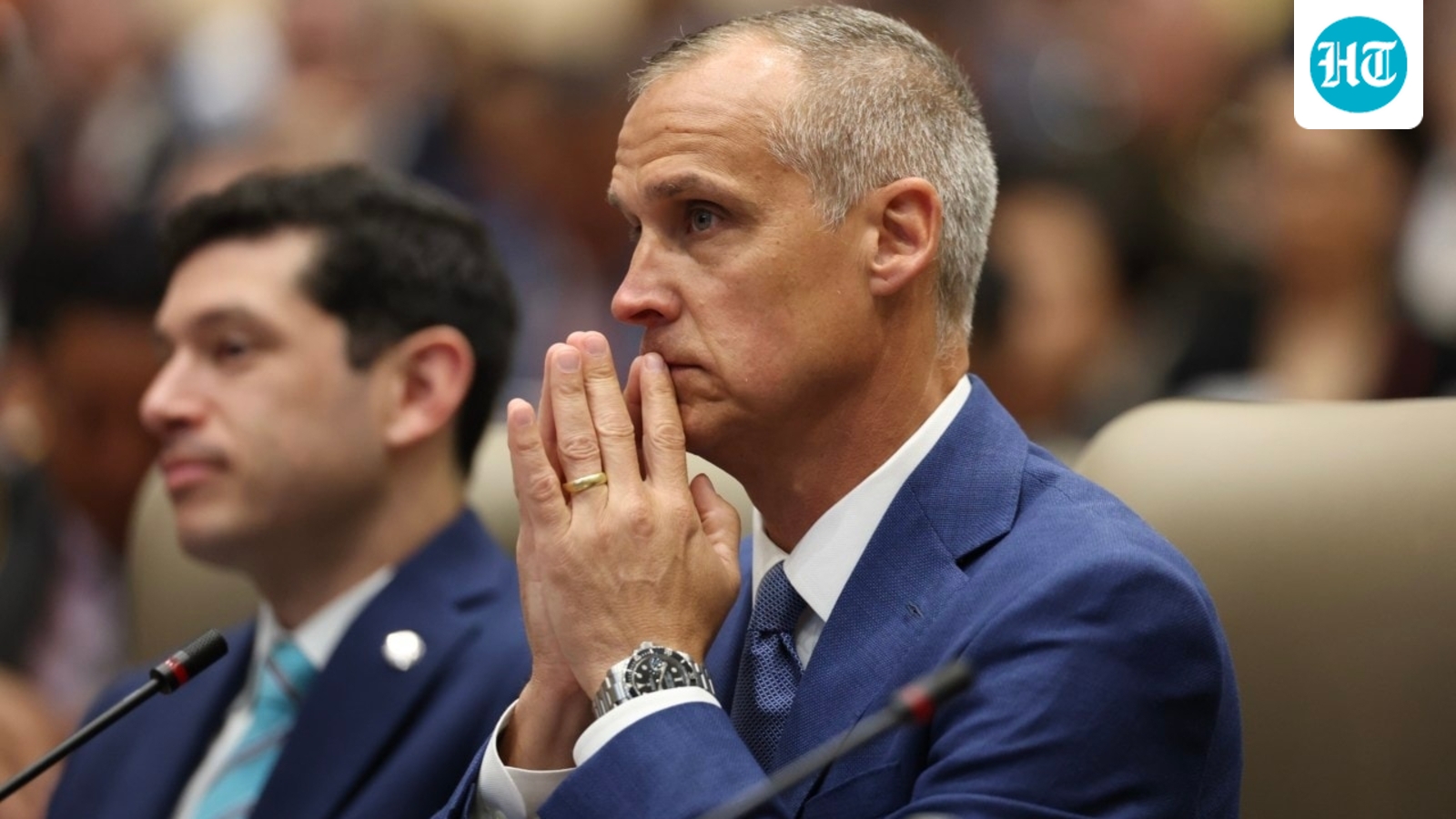
When Corey Lewandowski was at the Department of Homeland Security, he approached senior Qatari officials with a proposal.
Hire me on the side, the longtime Trump aide who was effectively the shadow secretary at the department last year, told them, according to people familiar with his pitch. He said he could help the tiny, wealthy Gulf state with any issues that fell under the department's purview, such as visas, the people said.
He approached representatives of the United Arab Emirates with a similar offer, people familiar with the outreach said.
Some of the foreigners were taken aback and confused why they would need Lewandowski's help when they already had traditional relationships with top administration officials. Qatar and U.A.E. declined the proposals, the people said.
The alleged moneymaking efforts, which appeared to be offers by Lewandowski to sell government services for personal gain, came while he had an expansive portfolio at one of the most powerful agencies in the federal government. The role gave him de facto decision-making authority over large amounts of recently appropriated billions of dollars, the president's border and immigration enforcement agenda and the collection of tariffs, which have been vastly expanded under President Trump.
Lewandowski held the status of a 'special government employee,' or SGE, which allowed him to carry out private business. He also was in a close personal relationship with the actual DHS secretary at the time, Kristi Noem.
A wide-ranging probe by the department's internal watchdog is scrutinizing any potential improprieties in the contracting process, including any evidence of personal enrichment by top officials. It has since found evidence that Lewandowski may have been involved in improperly awarding government contracts, the Journal reported in July.
A representative for Lewandowski denied Lewandowski had 'sought contracts with foreign governments,' said he played no role in contract review or approval at the department and said he hadn't been contacted about any investigation into contracting at DHS. The representative said Lewandowski 'adamantly denies ever demanding any payment or compensation from any potential, former, or current government contractor or seeking or soliciting or entering contracts with foreign governments while volunteering his time with DHS,' and that 'Lewandowski denies any wrongdoing.' The representative didn't respond to other detailed questions from The Wall Street Journal.
Both Noem and Lewandowski left DHS after Trump ousted the secretary in March and replaced her with Markwayne Mullin. Trump pushed out Noem over a chaotic tenure that culminated in two high-profile killings of U.S. citizens by federal agents and a pair of congressional hearings that displayed bipartisan frustration with her leadership.
While running the department, the pair also installed allies in jobs where the people influenced or directed contracts.
SGEs are advisers who usually have specific expertise and are brought in for short-term stints. Only a sliver of SGEs must publicly disclose clients or potential conflicts of interest, but government officials are generally prohibited from using their roles for private gain.
Lewandowski now operates as a consultant. One client is Bahrain, which signed a contract with him after he left office, a Bahraini official said.
Officials said they didn't know the extent to which Noem herself was aware of Lewandowski's alleged efforts. Lewandowski traveled and attended most department meetings with Noem, and the pair have reportedly been romantically linked for years. Lewandowski and Noem have denied having such a relationship.
A spokesperson for Noem didn't respond to requests for comment on her tenure at DHS.
Mullin and White House officials have been briefed on the DHS inspector general's inquiry, the Journal previously reported. Investigators are weighing a potential criminal referral to the Justice Department, and Democrats in the House of Representatives are preparing for a related probe if the party wins a majority in November's midterm elections.
A White House spokeswoman declined to comment.
DHS representatives didn't respond to repeated requests for comment.
Soon after taking office, Noem consolidated under the secretary's control decision-making that had been delegated to sub-agencies. Essentially all department spending over $100,000 was put under the secretary's purview, with the stated goal of reducing fraud and waste. Officials said it created a massive bottleneck.
The move was widely seen within the administration as giving Lewandowski—as Noem's right hand—the power to closely monitor and ultimately decide which companies could receive government contracts.
One of the biggest drivers of spending under Noem was Trump's deportation agenda. Congress gave the department an extra $75 billion to spend during Trump's term on new deportation officers, technology and detention facilities.
Executives at data-analysis company Palantir worked with DHS officials for weeks in fall 2025 to negotiate a sprawling $2.7 billion contract, known as a blanket purchase agreement. They came to a deal for a wide swath of work that included an immigration and Secret Service portfolio.
DHS officials wanted to move quickly and have it signed before Sept. 30, the end of the fiscal year, Palantir officials were told, according to people familiar with the matter. But the contract then sat for weeks on Noem's desk without a signature, and Palantir officials struggled to get answers from DHS on why the contract wasn't signed.
Then in November, Palantir received scheduling requests from Lewandowski, who wanted a meeting with Palantir CEO Alex Karp. Over the course of several weeks, DHS officials repeatedly asked for the meeting, saying it needed to be a one-on-one meeting between Karp and Lewandowski, the people said.
Palantir officials, who thought the terms of the deal were settled, weren't given an agenda for the meeting. The previous negotiations had followed the usual practice for government contracts, in which teams negotiate following standardized procedures, to provide some oversight over the disbursement of taxpayer dollars.
Palantir executives set up a meeting but then canceled it. Karp and others at Palantir felt uncomfortable and concerned about the circumstances of the meeting and didn't want to take it, given the large contract on the table, the people said. They had never previously had a contract held up for so long.
The meeting never happened, and the $2.7 billion blanket purchase agreement wasn't signed. Lewandowski told associates at the department that he was going to consolidate Palantir's work across the agency so the company would receive less money. Eventually, in early 2026, Palantir scheduled a larger meeting with Lewandowski, Noem and a number of Palantir officials including Karp. At that meeting, Palantir was told the blanket purchase agreement would be revised to $1 billion instead of $2.7 billion. That deal was signed in February.
A Palantir spokesperson said the company was given no explanation why the contract was reduced.
'Palantir is proud to support the United States government in a wide variety of missions, and to do so, it is essential for our company to uphold the highest standards of ethical conduct,' the company said in a statement.
Lewandowski also played a role in contracts with GEO Group, the largest provider of private prisons in the U.S., according to people familiar with the matter.
When the company declined to hire Lewandowski as a lobbyist in Trump's first term in 2017, Lewandowski threatened the company that it would never receive another government contract so long as Trump was president, according to people familiar with the threat. Lewandowski had been Trump's campaign manager for a time in the 2016 election and remained close to the administration, though he didn't have an official role. The company ignored his threat, but they still made a record profit under Trump's first term.
At DHS this term, GEO expected to get even more business, given the massive deportation campaign Trump had promised and the billions of dollars in increased spending.
For months, Lewandowski blocked the firm from getting government contracts, according to DHS officials.
Later, Lewandowski boasted to the officials that he was forcing GEO to accept less business than it had previously received. Officials at Immigration and Customs Enforcement said Lewandowski openly and frequently advocated for detention options that could cut GEO's involvement, including by asking states such as Florida and Louisiana to operate their own makeshift facilities rather than use GEO's, arguing it would save money.
While GEO has added new immigration detention contracts under Trump, the company has lost significant market share compared with its work during the Biden administration—moving from handling 37% of the market under Biden to 25% under Trump, according to a Journal analysis of federal contracts. The decline came even though GEO had detention facilities sitting idle. The overall market for the detention services has more than doubled so far under Trump, to around $4 billion.
GEO has booked almost $1 billion in detention contracts in the roughly 500 days of the Trump administration, compared with more than $600 million in such deals in the previous 500 days, under Biden.
Democrats on the House Oversight Committee are now investigating allegations of Lewandowski 'shaking down contractors for kickbacks,' Rep. Robert Garcia, ranking member of the committee, wrote in a letter to GEO chairman and founder, George Zoley, referencing a report by NBC News.
GEO and Zoley didn't respond to requests for comment.
Lewandowski also placed allies across the department, sometimes ensuring they were paid larger than typical salaries.
One, Kara Voorhies, was paid as much as $19,000 a week for serving in an unusually senior role as a contractor at the FEMA disaster relief agency. The DHS investigators looking into potential improprieties in the contracting process searched her office in March and are examining her role in FEMA's decisions, according to people familiar with the matter. Involvement in contracting isn't typical for someone of her employment status, department officials said.
Voorhies didn't respond to requests for comment.
Another ally, Josh Whitehouse, a former Republican lawmaker from Lewandowski's home state of New Hampshire, joined the department as an SGE. He rarely interacted with senior officials other than Lewandowski, and several senior officials weren't aware of any specific duties assigned to him, people familiar with the matter said.
Whitehouse would often be added to meetings by Lewandowski, sitting in on the discussions between DHS officials and corporate executives, people present in the meetings said.
In response to questions from the Journal, a lawyer for Whitehouse said Whitehouse attended meetings that were relevant to his job or that he was asked to attend, and that he 'answered to Mr. Lewandowski' and Noem. He said Whitehouse denied being involved in any self-dealing or corruption while at DHS. He described the allegations as false and 'gossip from 'officials' who have no clue what they are talking about and have an axe to grind.'
In some cases, people that Lewandowski and Noem put in place chose who would receive even small grants from the department. Those grants didn't always go through the usual competitive awarding process, and some of the people's involvement wasn't typical for their job level.
In September 2025, one of the pair's allies told FEMA officials to award a terrorism prevention grant to a nonprofit affiliated with Chris Stanley, according to documents reviewed by the Journal. Stanley worked in the first Trump administration at the U.S. Census Bureau. The grant didn't go through the standard competitive awarding process.
His nonprofit, Common Sense Policy Institute, which also operates under the name Functional Government Initiative, received a $2.3 million terrorism prevention grant, publicly disclosed federal records show. The institute lists 'a secure border free of cartel control' as one of its principles on its website. But it largely operates as a conservative watchdog group, and its published work focuses on critiques of Biden administration officials and programs, for example touting its investigations into diversity and inclusion efforts by that administration and hotel spending by a Biden official during a convention.
It reported raising $200,000 in its 2024 tax filings, the latest available, and paid Stanley a quarter of those funds.
Roderick Law, spokesman for the group, said it submitted a 'detailed and competitive application' for the grant, which it is using for a project titled, 'The Secure Border Initiative: Exposing Cartel Efforts to Undermine Immigration Law.'
DHS didn't respond to requests for comment on the grant.
DHS, a 260,000-employee behemoth created in the aftermath of the 9/11 attacks, oversees immigration and customs, and points of entry such as airports, border crossings and coastlines, incorporating such agencies as TSA, Customs and Border Protection and the U.S. Coast Guard. It also covers disaster response and cybersecurity, among other things.
Under the second Trump administration, it prepared to carry out Trump's promise to deport millions of immigrants living in the U.S. illegally. When Noem and Lewandowski arrived there, White House and department officials said they expected them to focus their travel within the U.S. to help oversee immigration enforcement actions, and Latin America, to talk to leaders about assisting in those efforts.
The pair took on an additional portfolio: the Middle East.
Noem and Lewandowski traveled repeatedly to the region, first in May 2025, when they visited Bahrain and Israel. A photographer accompanied them, taking pictures of Noem riding a camel in a headscarf, steering a U.S. Coast Guard boat with patrol forces and serving french fries to servicemembers on the U.S. base in Bahrain.
White House officials privately complained that the pair were jetting around the globe just as top Trump aide Stephen Miller was ordering ICE to dramatically scale up its deportation efforts.
Some of Lewandowski's actions confused and surprised other officials on the trip.
Late in the planning, he added Whitehouse to the passenger manifest. Whitehouse didn't attend significant official engagements in Bahrain and Israel but insisted on a side trip to Bucharest, where he wanted Coast Guard and other officials to consider purchasing two icebreakers from Damen Shipyards, a Dutch firm with operations in Romania, according to people familiar with the trip.
Coast Guard officials examined the offerings and determined the purchase wouldn't make sense because it would cost hundreds of millions of dollars extra to make the vessels work for U.S. use, according to people familiar with the assessment. The officials also were concerned that Damen had recently been accused by Dutch prosecutors of circumventing European Union sanctions against Russia and of bribing public officials in different countries for years, the people said.
Still, Whitehouse continued to push to acquire the icebreakers, insisting that Trump needed them and that officials who blocked the purchase would be sabotaging the president, the people said. DHS officials were puzzled and taken aback by Whitehouse's insistence, the people said.
A Damen representative confirmed it was in contact with a delegation from DHS and the Coast Guard last year, and referred questions to DHS, which didn't respond to requests for comment. Damen has said it will defend itself on the Dutch allegations in court, and the cases are ongoing.
A lawyer for Whitehouse said Whitehouse was asked to be part of the trip and advocated for the purchase of the icebreakers because he disagreed with the assessment.
A Coast Guard spokesperson said it visited the Damen operations to conduct market research and that it followed applicable laws and acquisition regulations.
In December, as protesters clashed with ICE agents during operations in Minneapolis, Noem and Lewandowski flew on their luxury 737 MAX jet to Jordan, where they met with Jordanian King Abdullah II, and to Abu Dhabi, where they met with top U.A.E. officials, and also to Qatar, where they met with its leader, Emir Sheikh Tamim bin Hamad al-Thani, at a palace near Doha, and other officials. The meetings were about security cooperation, including at sporting events, according to news releases from those governments. Qatar was the previous host of the World Cup, in 2022.
DHS itself didn't publicize the details and purpose of the trip, unlike most of the secretary's meetings and travel, which are typically highlighted with news releases and photos.
Lewandowski and his allies also got involved in small decisions at the department that some officials said in their view didn't have an apparent policy reason.
Whitehouse, for example, asked, sometimes through intermediaries, for specific tariff exemptions for South American countries, people familiar with the requests said. Trump and his team insisted for months that there would be no exceptions or exemptions to the global tariffs, though they ultimately did carve out some products from his duties after they went into effect.
A lawyer for Whitehouse denied he made such a request or had any business relationship related to South America.
Lewandowski also called the director of U.S. Citizenship and Immigration Services, Joe Edlow, demanding that he expedite visas for certain people, people familiar with the requests said. Such requests appeared to officials to be contradictory to the expansive immigration crackdown and tightened visa requirements the administration has put in place, the people said.
Noem continues to serve in the Trump administration as a special envoy to the Shield of the Americas, a multinational security alliance created by Trump and launched in March that has taken few actions. Her brief includes reaching out to Latin American countries to cooperate on security issues.
At the same time, she is also advising a Canadian mining company as a paid consultant.
The arrangement is viewed within the administration as a potential conflict of interest, according to senior administration officials.
Noem and Lewandowski have at times reveled in antagonizing others; officials said Noem displayed a mug in her DHS office using the catchphrase, 'May the bridges I burn light the way,' and sometimes used the phrase after a tense meeting.
But the pair's actions have taken a toll on their relationship with Trump.
As DHS chief, Noem had been living in a government-owned waterfront house on a military base in Washington that is provided to the leader of the Coast Guard. She continued to use the property for weeks after being pushed out of the job. She asked administration officials for accommodations on a military base in Virginia instead, but her request was denied, according to a senior administration official.
The Noem spokesperson said Noem moved out of the residence she was leasing as soon as the lease expired in April.
Noem wanted a larger staff at the Shield but was told no by the White House, the senior administration official said, and Trump has told aides that he doesn't want Noem in the administration long term. Lewandowski sought another job in the administration but was rebuffed, officials said.
Lewandowski, however, has told people close to him he expects the president would pardon him in the event of a criminal case. A lawyer for Lewandowski has said Lewandowski didn't speak about or suggest that he would seek or need a presidential pardon.
Write to Tarini Parti at tarini.parti@wsj.com, Josh Dawsey at Joshua.Dawsey@WSJ.com, Michelle Hackman at michelle.hackman@wsj.com and Summer Said at summer.said@wsj.com
A note on cookies
Newshunt uses essential cookies to keep you signed in and to remember your language and country, so the site works the way you expect. With your permission, we'd also like to use analytics cookies to understand how people use Newshunt and improve it over time.
Accepting only affects analytics. To learn more, view our Privacy Policy or Terms & Conditions.
(0)Comments