


Oyster restoration project in Great South Bay
Category: SciTech
Share
Archive
Like
Tens of thousands of baby oysters were replanted Monday into the Great South Bay as part of a yearslong effort to restore the heavily polluted waterway's ecosystem.
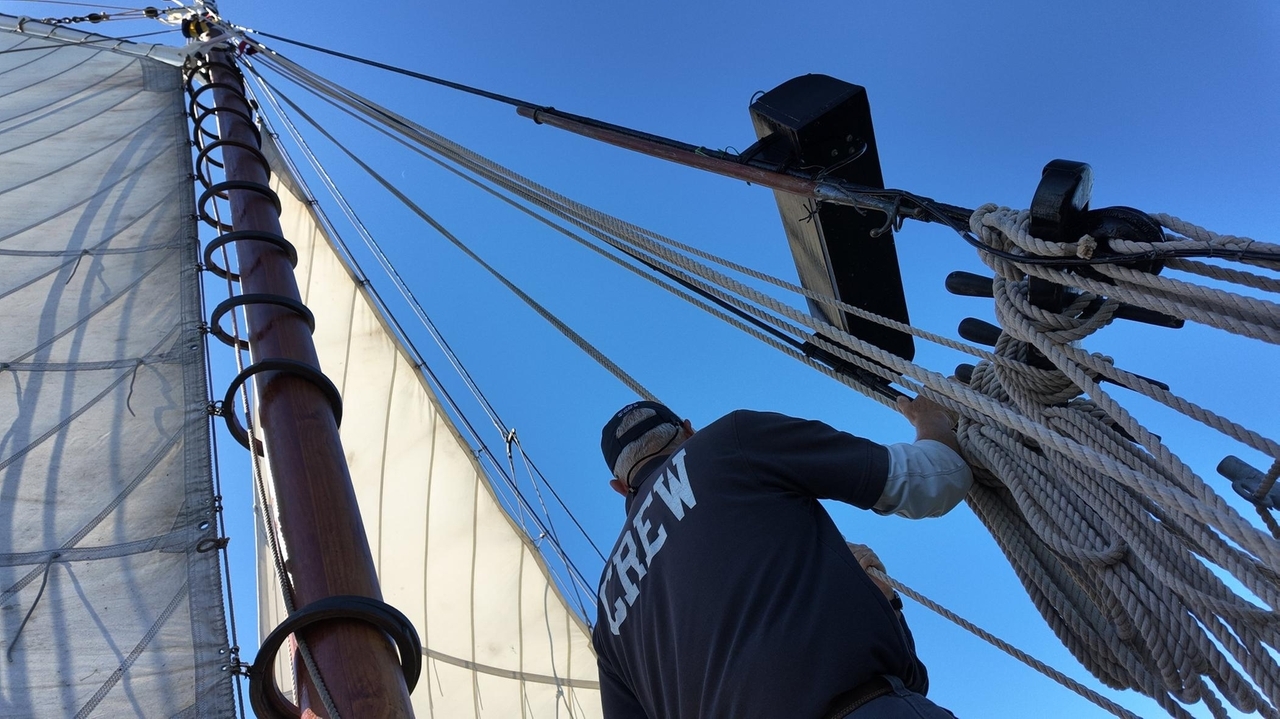
More than a dozen volunteers boarded the 1888 oyster sloop Priscilla early Labor Day morning to begin emptying about 30,000 oyster spat seedlings into sanctuary locations across the bay.
The spats, which spent the summer being nurtured by volunteers from the nonprofit group Save the Great South Bay, are exceptionally effective filters of pollution, averaging more than 50 gallons of water per day, said Patrick Harris, the captain of the Priscilla.
Newsday was onboard the 138-year-old vessel — which was built in Patchogue and has National Landmark status — on Monday as volunteers dumped six crates of baby oysters, each holding about 1,350 spats, into two unmarked spots in the Bay. The precise locations of the oyster gardens are not disclosed to the public to discourage poachers.
In total, project organizers have established eight oyster gardens across the vast bay.
"They're going to sit there and just start cleaning up the bay," Harris explained. "And so far, we've planted 1.3 million oysters in the bay. In a sense, oysters are the organic go-to way of cleaning up polluted waterways."
The effort, which has been ongoing since 2013, was launched in response to the deteriorating condition of the bay's water quality, which experts contend is attributable to seeping pollutants from thousands of private home cesspools and large-scale projects such as malls and golf courses.
Andy Mirchel, director of the Great South Bay Oyster Project, said his team will tend to the oyster spats, which are purchased from the Cornell Cooperative Extension of Suffolk County, for two to three months over the summer at a nursery at the Snapper Inn restaurant in Oakdale.
The process, he said, begins when the spats are just four to six millimeters in length. By early September, when they're ready to be returned to the water, the raised oysters average 35 to 40 millimeters.
But their impact, said Mirchel, a Save the Great South Bay board member, is immeasurable.
'Baby' oysters or spats are prepped to be released into the Great South Bay on Monday. Credit: Newsday/Drew Singh
"The oysters we grow are not for consumption; they're for restoration purposes only," Michel, a Save the Great South Bay board member, said. "They provide shoreline stabilization. They help break waves down. They provide habitat for all sorts of different organisms, and most importantly, they filter the water. Oysters filter more water than any other shellfish we have around here. If we keep planting enough oysters out here, we are going to help clean this bay."
The volunteers include Janet Soley, who ran the nursery over the summer, carefully measuring, counting and washing the baby oysters from the time they were the size of half her pinky nail.
Soley became a bit emotional Monday while preparing to release the spats into their new permanent home.
"I'm so proud of them," said Soley, who also serves as president of the Friends of Connetquot River State Park Preserve. "They're my babies ... I'm an empty nester now until next May."
The project's long-term goal, Mirchel said, is for the oyster gardens to become self-replenishing sanctuaries that feed each other in a continuous group of colonies along the shoreline.
"The idea is to have enough of these sanctuaries that they provide some connectivity," he said. "That maybe the spawn from this one will end up at that one, way down to the west. Oysters produce larvae. And the larvae are floating around for two to three weeks. So we can't control where they land. But what we can do is provide a place for them to spawn."
A note on cookies
Newshunt uses essential cookies to keep you signed in and to remember your language and country, so the site works the way you expect. With your permission, we'd also like to use analytics cookies to understand how people use Newshunt and improve it over time.
Accepting only affects analytics. To learn more, view our Privacy Policy or Terms & Conditions.
(0)Comments