


Wider Europe Briefing: New Russia Sanctions And The Slovak Veto
Category: Politics
Share
Archive
Like
Welcome to Wider Europe, RFE/RL's newsletter focusing on the key issues concerning the European Union, NATO, and other institutions and their relationships with the Western Balkans and Europe's Eastern neighborhoods.
I'm RFE/RL Europe Editor Rikard Jozwiak, and this week I am drilling down on Russia sanctions, a Slovak veto, and more EU money to protect Baltic infrastructure.
Embed
share
Wider Europe Briefing: New Russia Sanctions And The Slovak Veto
byRFE/RL
Embed
share
The code has been copied to your clipboard.
The URL has been copied to your clipboard
No media source currently available
0:00
0:11:38
0:00
Direct link
128 kbps | MP3
64 kbps | MP3
Pop-out player
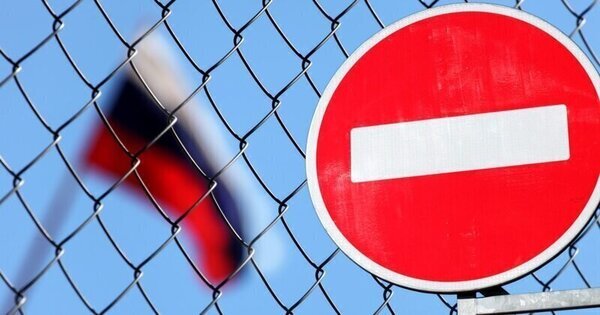
What You Need To Know:The European Union will likely approve new sanctions next week, focusing on people who have abducted Ukrainian children, but larger sanctions in response to theevents in Leipzigwill have to wait as the bloc is first struggling to overcome a Slovak veto to renew restrictive measures on the over 3,000 people already blacklisted.
The EU's foreign policy corps, the European External Action Service (EEAS), has already provided EU capitals with a list of 1,600 people and entities -- mainly belonging to the Russian defense industry -- whom they want to blacklist. This list was produced ahead of Germany officially announcing that Moscow was behind the drone incidents that led to the closure of Leipzig airport in August.
The German government also then closed the Russian consulate in Bonn and the Russia House in Berlin and is looking into further sanctions. But according to several European officials RFE/RL spoke to, Germany might find it easier to simply "co-opt" the EEAS proposal and add more names to it.
Even though most of the names aren't likely to be vetoed by any member state, they probably won't be approved until the bloc's foreign ministers meet on October 12; such a big batch of individuals still need to be legally cleared before they can be slapped with asset freezes and visa bans.
Deep Background:In the meantime, Brussels is likely to approve on September 9 a smaller raft of sanctions on 10 people and 17 entities that Brussels accuses of "systematic unlawful deportation" of Ukrainian children to Russia or territories in Ukraine currently are occupied by Russian forces.
The EU document, seen by RFE/RL, notes that these sorts of deportations "constitute grave breaches of international law and a violation of the fundamental rights of the child with the aim to erase Ukrainian identity and undermine the preservation of its future generations."
The people proposed for sanctioning are mainly leading officials in occupied territories in Crimea and Donbas, but perhaps the most remarkable entry on the list is the Songdowon International Children's Camp, which is run by North Korean authorities.
The document notes that this camp "participates in organized programs involving the transfer of Ukrainian children from temporarily occupied territories of Ukraine to North Korea." The transfers are coordinated by Russian officials, and while it is supposed to be "a cultural exchange," the paper notes that "Ukrainian children are exposed to curated narratives and activities designed to promote pro-Russian narratives."
The other entities are other so-called summer camps in either Russia or in occupied regions of Ukraine where they, according to the bloc, are exposed to programs that pushes "loyalty to Russia, Russian national identity, adoption of Russian national values, military historical themes, and participation in activities linked to military-patriotic organizations."
Drilling Down:
What You Need To Know:For years, the so-called Connecting Europe Facility (CEF) was Brussels' symbol for the European dream of an "ever closer union" -- a 33 billion euro kitty within the bloc's current budget to boost trans-European infrastructure networks in the transport, energy and digital sectors.
Think of 5G corridors, intercontinental energy grids, and upgraded rail links between member states. So popular is this budget envelope among EU member states that the European Commission has suggested the cash in it for the next proposed EU budget from 2028 to 2034 will increase to 88 billion euros.
But this facility is no longer just about connecting member states with infrastructure. As of this year, cash is also going to protect what is already in place against sabotage from third-country actors such as China and Russia.
Earlier this year Estonia, Latvia, and Lithuania, along with Poland, were given 113 million euros from the facility to protect the current infrastructure related with the Baltic states' electricity networks synchronization with the continental European networks rather than expand it: a first on the EU level.
The cash will go to things such as increased monitoring and even walls and fences around substations and energy transformers, increased cybersecurity, emergency reserves, and even the possibility to detect and shoot down drones. Later this week, another political step will be taken to ensure that, legally, the facility can be used to secure critical infrastructure.
Deep Background:The move to dedicate money for security measures that began in February 2025, when the three Baltic states completed theBaltic Synch, leaving the Soviet-era grid they were connected to for decades to the European continental one via Poland through the LitPol overland electricity link.
Even though the synchronization was successful, the trio understand they are unusually exposed to various hybrid attacks to their energy framework. LitPol will remain the only overland energy link at least until Harmony, another electricity connector between Lithuania and Poland, is predicted to be ready in 2030-31.
To understand its importance, and exposure, the LitPol substation in Lithuania across the Polish border is now surrounded with barbed wire, concrete barriers, and military guards ready to prevent drone strikes or armed sabotage.
Drilling Down:
The European Court of Justice is busy with delivering verdicts in numerous cases this fall.
On September 9, it will once again decide on whether Brussels should continue to sanction Russian oligarch Roman Abramovich . The former Chelsea FC owner was blacklisted back in 2022 and has already lost twice court, but he has appealed once more.
That's all for this week!
Feel free to reach out to me on any of these issues on X @RikardJozwiak, or on e-mail [email protected].
Until next time,
Rikard Jozwiak
If you enjoyed this briefing and don't want to miss the next edition subscribehere.
Wider Europe Briefing: New Russia Sanctions And The Slovak Veto
Copy link
Facebook
X (Twitter)
LinkedIn
Email
Share
Copy link
Facebook
X (Twitter)
LinkedIn
Email
Share
Facebook
X (Twitter)
Youtube
Instagram
Follow us
Print
A note on cookies
Newshunt uses essential cookies to keep you signed in and to remember your language and country, so the site works the way you expect. With your permission, we'd also like to use analytics cookies to understand how people use Newshunt and improve it over time.
Accepting only affects analytics. To learn more, view our Privacy Policy or Terms & Conditions.
(0)Comments