


In ‘Bang My Box', Bisexual Icon Robin Byrd's Story Finally Gets Told
Category: Entertainment
Share
Archive
Like
'I was the first woman to bring adult programming to television.'
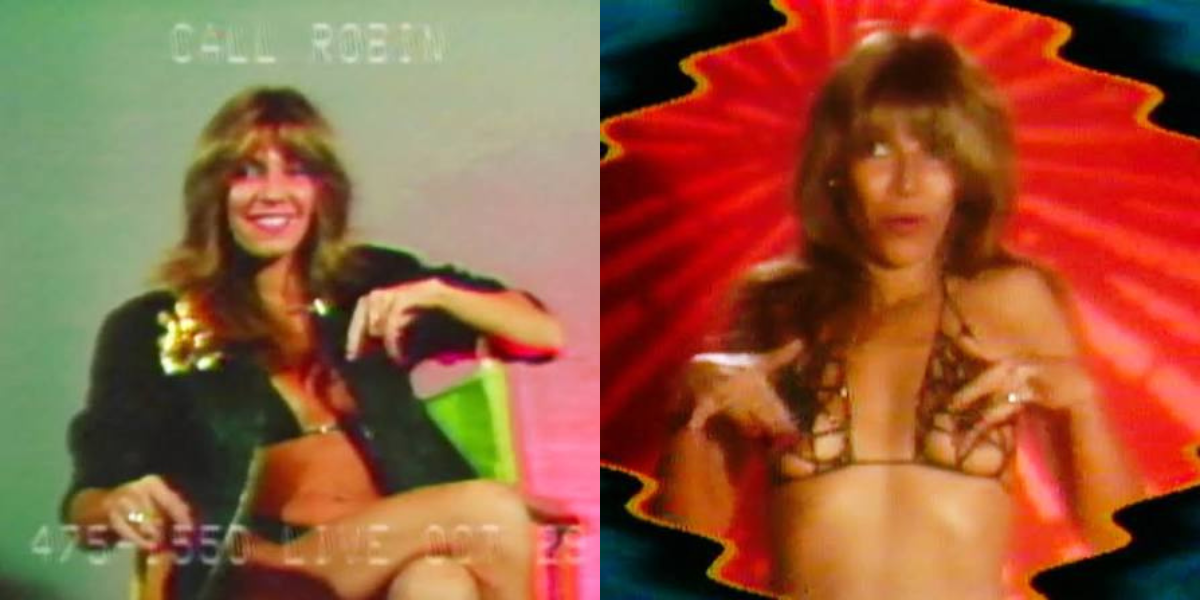
Bang My Box: The Robin Byrd Story (2026), a new documentary streaming on HBO Max, chronicles the life and work of bisexual public access provocateur Robin Byrd. An icon in New York's downtown cultural scene, Byrd hosted, produced, directed, and edited The Robin Byrd Show from 1977-1998, a leased access television show that famously featured porn stars and strippers as guests. Directed and produced by Jyllian Gunther and Stephanie Schwam, Bang My Box uses interviews with Byrd and archival footage of the show to tell her story.
Bang My Box is a poignant, loving portrayal of an 'accidental activist,' as actress and frequent guest of the show Sandra Bernhard calls Byrd. The documentary follows two storylines. We learn about Byrd's journey from porn star to public access entrepreneur in the 1970s, but just as compelling is Byrd's life in the present. We watch as she decides what to do with the hundreds of video tapes of her show and supports her longtime husband Shelly in the midst of his dementia diagnosis.
What emerges is a nuanced look at a subject too often minimized, dismissed, and overlooked. While Saturday Night Live famously parodied The Robin Byrd Show in a number of 1990s skits starring Cheri Oteri, the documentary takes Byrd seriously as a feminist, free speech activist, and New York City cultural icon.
I asked my friend and colleague Axelle Demus, a Postdoctoral Fellow at McGill University's School of Information Studies, for their thoughts on Bang My Box. 'The film rightly foregrounds Robin Byrd and public access TV as vital contributors to America's cultural landscape—despite both having been disparaged and ridiculed,' they said.
To educate and entertain audiences, Byrd invited her friends from the industry onto the television screen. 'People didn't understand the adult industry,' Byrd tells the camera. Guests performed fully nude stripteases, took viewer calls, and played around with Byrd herself at the end of the episode.
'I would turn you on and tuck you in,' Byrd quips.
Bryd portrayed an exaggerated, campy version of herself on screen, always dressed in her trademark black crochet bikini, flirting with and feeling up her guests of all genders. Behind the scenes, she was a serious businesswoman, running the show with Shelly by her side.
The documentary explores how Byrd embraced the sexual revolution of the 1970s and simultaneously took seriously the threat of the AIDS crisis into the 1980s. Byrd demonstrated how to use condoms and dental dams on screen, consistently promoting safer sex to her viewers.
Some of the most powerful quotes in the documentary come from gay male 'Byrdwatchers,' as her fans are called, who talk about what it was like to watch the show in the 1980s and 1990s. 'It was so liberating!' one fan says. 'There was no such thing as being taboo.'
In a time of increasing homophobia and AIDSphobia, The Robin Byrd Show destigmatized all types of sex, and Byrd embraced guests and viewers of all genders and sexualities. 'People were dying and losing their loved ones, so I wanted to give them the love that they were missing,' she says.
When conservative politicians and Time Warner Cable wanted to censor sexually-oriented content in the early 1990s, Byrd joined other public access producers in suing on First Amendment grounds.
The case made national news, and Byrd was invited to speak about it on national television. In a clip, one talk show host says, 'they think it's indecent.' Byrd replies, 'What is indecent? The human body is not indecent. I think homelessness is indecent. Children with no family — that's indecent. I don't think the human body dancing around to songs is indecent.'
The case went all the way to the Supreme Court, which ruled in favor of the producers, striking down laws that made it legal to censor public access. Byrd became a local hero. To this day, The Robin Byrd Show airs uncensored, re-running on local cable channels in New York.
In the present, Byrd splits her time between the apartment she shares with Shelly in Manhattan and a house they own on gay mecca Fire Island (where she still hosts parties!). The documentary shows us the tender moments that make up their daily life together, such as walks in Central Park and annual birthday celebrations at Serendipity. In voiceovers, Byrd reflects on her career and what it's like to care for her partner of 50 years as his dementia progresses. 'He never judged me,' she says. 'He was the woman that I always wanted to marry.'
The camera also follows Byrd as she meets with archive agent Daylon Orr, who encourages Byrd to donate and preserve the hundreds of tapes and storage unit full of ephemera from the show. 'I wanna do something with the clutter, which turns out to be not so much clutter as history,' she realizes. It's moving to watch her recognize the importance of her life's work on screen.
A note on cookies
Newshunt uses essential cookies to keep you signed in and to remember your language and country, so the site works the way you expect. With your permission, we'd also like to use analytics cookies to understand how people use Newshunt and improve it over time.
Accepting only affects analytics. To learn more, view our Privacy Policy or Terms & Conditions.
(0)Comments