


The Axarquía holiday destination of one of the most powerful men in Spain during the reign of Isabella II
Category: Tourism
Share
Archive
Like
Travelling from Loja (Granada province) to the Baños de Vilo in Periana, in the Axarquía area of Malaga province, in the mid-19th century ... was not exactly a comfortable journey. One had to cross mountains, follow bridle paths and tackle a particularly difficult final stretch. Even so, Ramón María Narváez, a general, Duke of Valencia and one of the most politically powerful men during the reign of Isabel II, chose this spot on several occasions to spend his summers.
Back then the Baños de Vilo were not merely a small spring of sulphurous waters. For much of the 18th and 19th centuries, they enjoyed a reputation as a health resort specialising in medicinal treatments and all the evidence suggests that it was precisely for health reasons that the man known as 'Espadón de Loja' went there.
This is recorded in the historical texts compiled by José Manuel Frías, a historian from Periana, drawing on various sources and, in particular, articles published decades later by Segundo Pascual Toledo. One such article notes that Narváez used to spend his summers in Baños de Vilo and that, according to a popular folk song, he went there for the healing properties of those waters.
The documentation compiled by Frías also serves to demonstrate the prestige that the Baños de Vilo came to enjoy. In 1857, the civil governor sent the mayors of the province a circular from the medical director of the Baños de Vilo, setting out the quality and benefits of its waters. A year later, the official season ran from mid-June to the end of September.
According to the account recovered by Segundo Pascual, Ramón María Narváez made the journey in two stages. The first took him as far as the equally iconic Venta de Alfarnate and its immediate surroundings. From there, the most arduous part of the journey began. He could enter from the north, passing through the Puerto del Sol, or take a bridle path linking Pulgarín with the La Cueva and El Batán farms. These were narrow, lonely paths winding between crags, which the text itself goes so far as to compare more to footpaths than to proper tracks.
Portrait of General Narváez painted by Vicente López Portaña.
Stories emerged around those journeys which eventually became part of the area's history. One such story claims that Narváez did not always follow the officially announced itinerary. A local resident, José Cabrilla, regarded as the general's right-hand man, would be tipped off in advance so that he could go out to meet him by horse. In these accounts, the changes of route were linked to the political rivalries of a particularly turbulent era.
According to these same sources, he would stay in a two-storey house known as El Palacio, near los Baños de Vilo. The name sounded grander than the house's actual comforts, although it did enjoy sweeping views to the south.
Far from Madrid, from cabinet meetings and political struggles, the stories preserved in Periana also paint a different picture of the general, showing him mingling with farmers, strolling through vegetable gardens and attending gatherings where people danced the traditional verdiales, according to the newspaper archive.
One of the stories that has stood the test of time is linked precisely to this traditional dance. It is recorded in the documentation provided by Frías and also forms part of the collection of legends published by Periana town hall.
Folk tales
The account states that Narváez was fond of verdiales and wanted his own daughter to learn to dance them. During one of those gatherings, a young man known by the nickname 'Carteles' turned up; he was a good dancer but was dressed humbly as a shepherd and wore a pair of rudimentary esparto sandals. The girls are said to have refused to dance with him because of his appearance, until Narváez asked his daughter to accept the young man as her partner.
According to this popular tale, during one of the dance's turns, one of those sandals tore the young woman's dress. Carteles, aware of the 'Espadón de Loja's' reputation for severity, feared the consequences. The reaction recorded was quite different: Narváez gave him ten pesetas so that he could have some new shoes made and wear them for the first time at the next dance. The young man is said to have set off that very night for Periana to wake the cobbler and ask him to start making them.
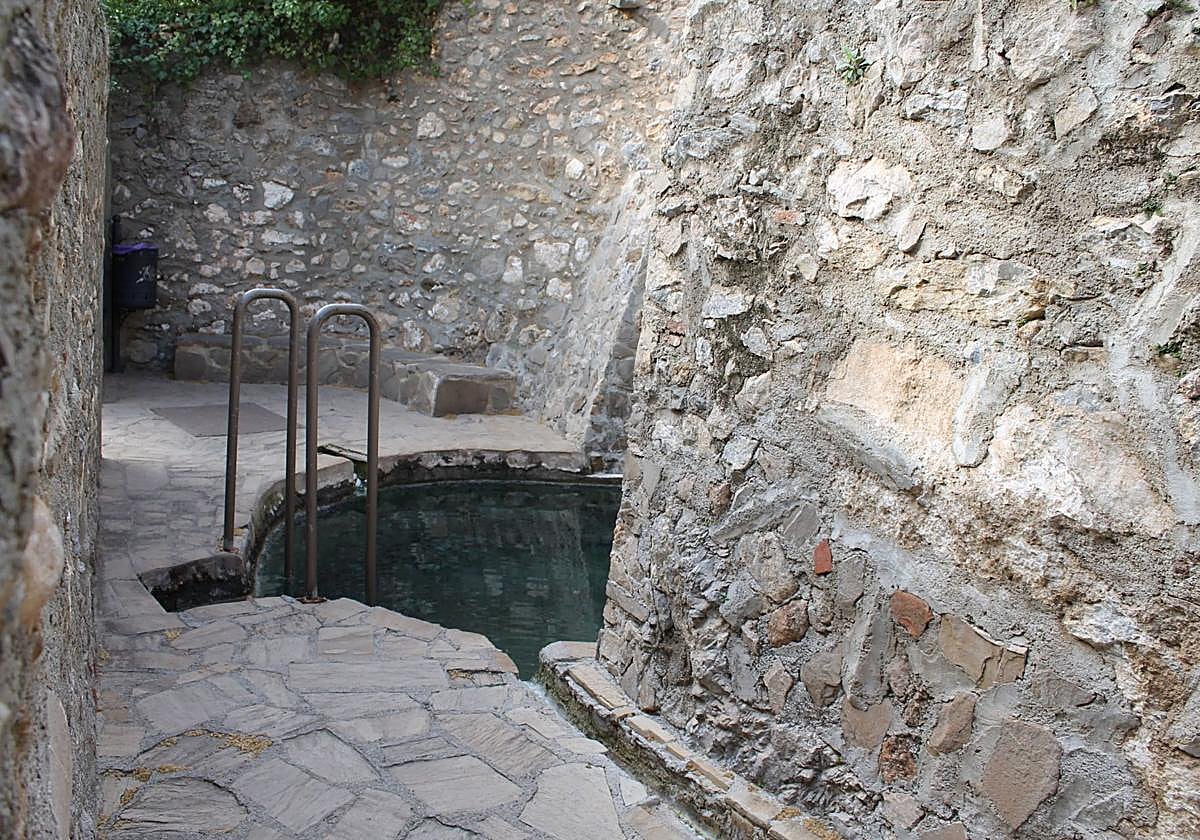
The small spa of sulphurous waters is open to the public.
(J. A.)
There is even a second part to the story. At the end of one of the general's visits, Carteles went to see him off with a song. Narváez helped him financially once again, though this time he issued a warning with considerable political undertones: today he could sing his praises because he was in power, but those very same songs could turn into satire should he ever fall from grace.
These are stories that have been passed down and recorded long after the events took place and, as such, should be understood as part of local tradition rather than as fully verified accounts. Nevertheless, they help us to understand the extent to which Narváez's visits became ingrained in the history of Los Baños de Vilo.
According to Pascual, another story has come to light in which Narváez would frequently ride out on horseback from los Baños de Vilo to Colmenar, visits which, according to local legend, were attributed to his interest in a young woman from the area. On one of these alleged night-time outings, he and his companion are said to have been ambushed by a group of bandits and forced to flee.
More than a century and a half later, the site of the Baños de Vilo is still open to visitors, although it bears little resemblance to that nineteenth-century site. Today it still features a small pool of sulphurous waters, which is freely accessible and alongside the site there are rural accommodation options and the El Balneario restaurant, which opened at the end of 2025 and specialises in traditional cuisine and local produce.
A note on cookies
Newshunt uses essential cookies to keep you signed in and to remember your language and country, so the site works the way you expect. With your permission, we'd also like to use analytics cookies to understand how people use Newshunt and improve it over time.
Accepting only affects analytics. To learn more, view our Privacy Policy or Terms & Conditions.
(0)Comments