


Florida has lost nearly 21 percent of its citrus farms in the last year, says federal report
Category: Financial
Share
Archive
Like
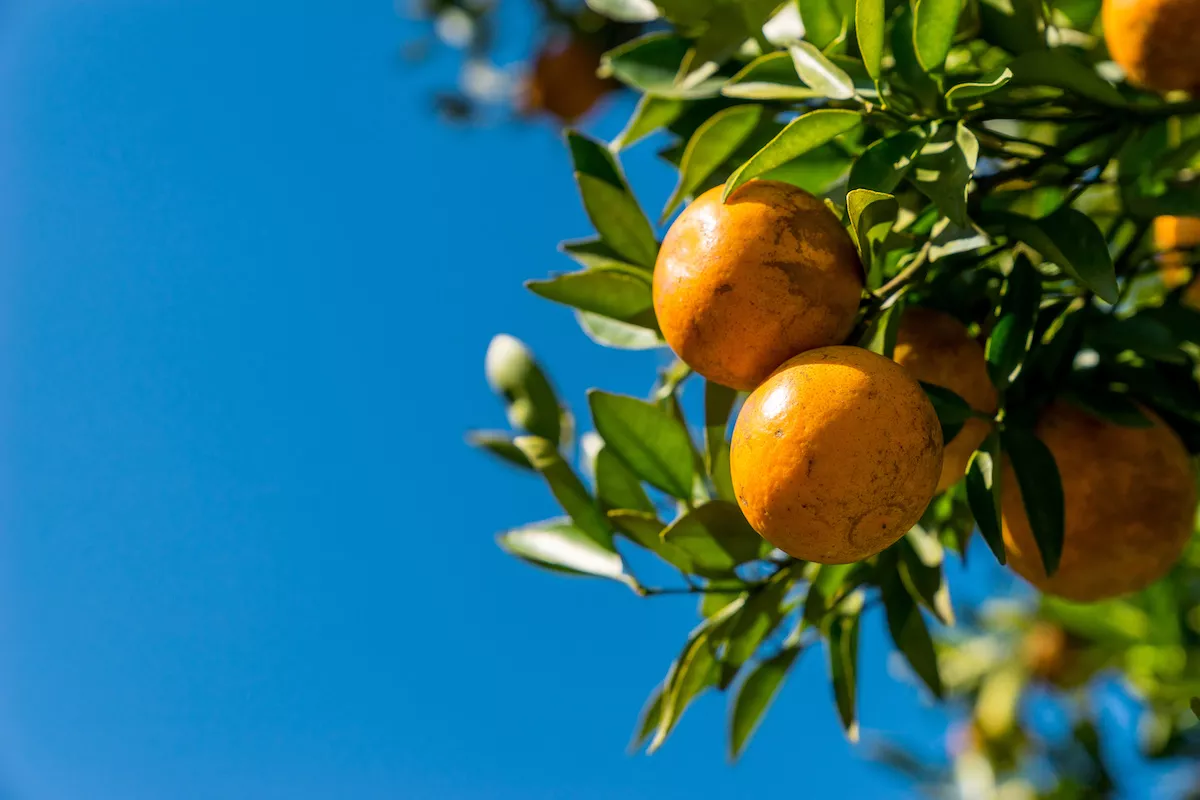
Credit: Photo via jumlongch/Adobe
Citrus land keeps vanishing from Florida's landscape, down nearly 21 percent over the past year, according to a federal report.
As the 2026-2027 growing season gets underway, there are 165,359 acres across 23 Florida counties in use for producing oranges, grapefruit and specialty fruits, the U.S. Department of Agriculture's preliminary Commercial Citrus Inventory report states.
That's down 65 percent from the 480,121 acres growers were working with in 2016 and down 73 percent from the 621,373 acres the industry used in 2006.
'Polk County lost the most acreage, down 10,944 acres from the previous season,' the report states. 'Polk County, however, still leads in citrus acreage with 37,529 total acres, followed by Highlands County at 34,671 total acres.'
Two decades ago, when the report looked at citrus production in nearly 30 counties, Polk County used more than 86,000 acres to grow the state's signature crop and other citrus varieties. Highlands County at the time was third with nearly 63,000 acres behind Hendry County's almost 80,000 acres of citrus fields. With a little more than 9,000 acres dedicated to citrus, Hendry is now sixth in terms of acres by county.
While the industry produced a slight increase in its overall 2025-2026 harvest from the prior season, individual growers have been weighed down over the past two decades by hurricanes, winter freezes, changing drinking habits, a citrus greening disease and development pressures.
As an example, large landowner Alico, Inc. has decided to end its citrus operations in Southwest Florida and focus on more profitable uses of its land.
'As part of the Company's strategic transformation, the Company has made the decision to wind down its citrus operations and focus on land sales, land leasing, and land development activities,' Alico President and Chief Executive Officer John Kiernan advised in its quarterly financial report released Aug. 10.
Alico announced in January 2025 it would not spend additional money on citrus operations after the 2024-2025 crop was harvested, with another 3,460 acres of its citrus land managed by other operators through 2026.
Statewide, orange production is now at 143,650 acres, with grapefruit at nearly 11,500 acres and specialty fruits using just over 10,000 acres.
Last year, growers had 183,860 acres and produced enough oranges to fill 12.95 million industry-standard 90-pound boxes, 1.35 million boxes of grapefruit, 460,000 boxes of tangerines and tangelos and 900,000 boxes of lemons, according to revised numbers posted by the USDA on Aug. 27.
Twenty years earlier, with growers rebounding from several severe hurricanes, the 2005-2026 harvest produced 147.9 million boxes of oranges, 19.3 million boxes of grapefruit and 7.6 million boxes of specialty fruits.
State officials say they haven't given up on the industry.
The budget for the current fiscal year, which began July 1, included $160 million for citrus research and field trials, $20 million for citrus nursery and packing equipment grants and $15 million for marketing efforts by the Department of Citrus.
The prior year budget included $124.5 million for the citrus industry. That includes $100 million for new disease-resistant trees, grove management, therapeutic tools and rehabilitating existing trees.
When the budget was approved by the Legislature on May 29, Senate President Ben Albritton, a citrus grower from Wauchula, reiterated that 'Florida citrus is not going down on my watch.'
'Florida citrus is making a comeback, one tree at a time,' Albritton stated. 'This heritage industry is not only vital to our state's economy, but it is truly a part of our DNA.'
Sen. Jason Brodeur, a Sanford Republican and chairman of the Appropriations Committee on Agriculture, Environment and General Government, declared at the same time that previous investments in research have already yielded significant results.
'Growers today have a better understanding of how to fight greening, bringing hope to the entire industry,' Brodeur said. 'We will leave no stone unturned. With the information gathered from the field trials made possible by this funding, growers will have better outcomes, and we can save Florida's signature crop.'
The first federal forecast for the 2026-2027 season will be made in October after inspectors check the fields.
Pitch in to help make the Tampa Bay Journalism Project a success.
Subscribe to Creative Loafing newsletters.
Follow us: Google News | NewsBreak | Reddit | Instagram | Facebook | BlueSky
This article appears in August 27 – September 02, 2026.
A note on cookies
Newshunt uses essential cookies to keep you signed in and to remember your language and country, so the site works the way you expect. With your permission, we'd also like to use analytics cookies to understand how people use Newshunt and improve it over time.
Accepting only affects analytics. To learn more, view our Privacy Policy or Terms & Conditions.
(0)Comments