


Public works spending revives Mexico's fixed investment
Category: Financial
Share
Archive
Like
Mexico's gross fixed investment recorded in June its third consecutive month of growth, driven by a rebound in public construction, after a streak of 19 months of declines, according to the National Institute of Statistics and Geography (Inegi).
The indicator rose 1.3% month-on-month and accelerated its annual rate to 5.9% in real seasonally adjusted figures, with construction as the main support: this component grew 3.5% month-on-month and 8.8% year-on-year, while investment in machinery and equipment fell 1.1% month-on-month and increased 2.5% year-on-year.
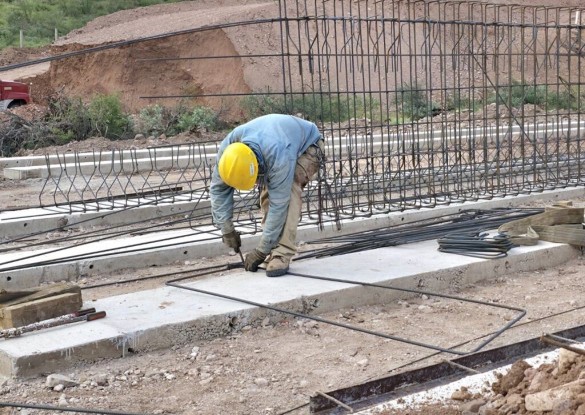
For infrastructure, the original figures show a particularly strong boost in public investment. Construction rose 9.2% year-on-year in June, with 25.8% growth in the public component, compared with 5.9% in the private one. In the January–June cumulative period, public construction increased 14.0%, while private construction grew 1.8%.
Public works engine
Gabriela Siller, director of economic analysis at Banco Base, indicated that June's growth was driven by residential construction, although she also observed greater expansion in construction associated with public sector infrastructure projects.
"The above confirms that there is a recovery in gross fixed investment compared to the first half of the year, but this recovery is concentrated in construction, particularly in the public sector," Siller noted.
The economist added that the greater dynamism of public infrastructure projects could become more pronounced during the second half of the year, increasing their potential to boost economic activity compared with the first half.
The rebound in June, however, may also have been supported by expenses associated with the FIFA World Cup, whose matches in Mexico were concentrated during that month. Siller believes that this effect should be distinguished from the progress of public infrastructure projects, given that spending related to the tournament would be temporary.
Brake on machinery
The performance of construction contrasts with the weakness of investment in machinery and equipment. In June, this component fell 1.1% month-on-month, while on an annual basis it rose 2.5%, according to seasonally adjusted figures from Inegi.
The weakness is concentrated particularly in the domestic component. Investment in machinery and equipment of Mexican origin fell 0.1% month-on-month and 3.4% year-on-year, with an annual drop of 6.0% in machinery, equipment, and other goods.
"In contrast, investment in machinery and equipment continues to show weakness, with a monthly contraction of 1.09%," said Siller.
National investment in other goods fell 2.11% month-on-month, while imported machinery and equipment decreased 1.59%.
The transportation equipment category showed a more favorable performance: national investment increased 2.2% month-on-month, while imported investment rose 8.7%. In annual terms, imported transportation equipment grew 15.7%, which helped partially offset the weakness in other segments.
Six-month balance
In original figures, the IFB posted annual growth of 0.8% between January and June, after a contraction of 6.62% in the same period of 2025, according to calculations by Banco Base using seasonally adjusted series.
Construction accumulated growth of 3.7% in the first half of the year, with increases of 2.88% in the residential segment and 4.72% in the non-residential segment. In contrast, investment in machinery and equipment recorded a contraction of 2.20%.
The greatest deterioration is seen in domestically produced machinery and equipment, which accumulated a decline of 8.57% in the semester. Siller pointed out that this is its largest drop for a similar period since 2020, when the contraction was 21.27%.
The original figures from Inegi also show a divergence between the public and private sectors: public GFCF rose 18.1% year-on-year in June, compared with 6.0% for private GFCF. In construction, the gap was even larger, with increases of 25.8% and 5.9%, respectively.
Economic outlook
The rebound in investment is occurring in a context of weak economic activity. The coincident indicator of the System of Cyclical Indicators rose 0.06 points in June, but remains below its long-term trend, while the leading indicator, with information up to July, reached 100.81 points and has recorded 16 consecutive months of increases.
"The coincident indicator, which remains below the long-term trend, suggests that the Mexican economy is in a recessionary phase of the economic cycle," Siller said.
In his view, the upward trajectory of the leading indicator points to a possible increase in dynamism in the coming months, although the risk remains that the economy will grow below its potential level.
For the third quarter, Banco Base anticipates a decline in economic activity due to the dissipation of spending associated with the FIFA World Cup, which is believed to have temporarily boosted construction, consumption, and services during the second quarter.
"The latter, as it is spending associated with an event and not with a positive structural change," explained Siller.
(The original version of this content was written in Spanish)
—
A note on cookies
Newshunt uses essential cookies to keep you signed in and to remember your language and country, so the site works the way you expect. With your permission, we'd also like to use analytics cookies to understand how people use Newshunt and improve it over time.
Accepting only affects analytics. To learn more, view our Privacy Policy or Terms & Conditions.
(0)Comments