


Visa-free entry does not mean a free pass to trade, CS Kinyanjui tells foreigners
Category: Politics
Share
Archive
Like
Audio By Vocalize
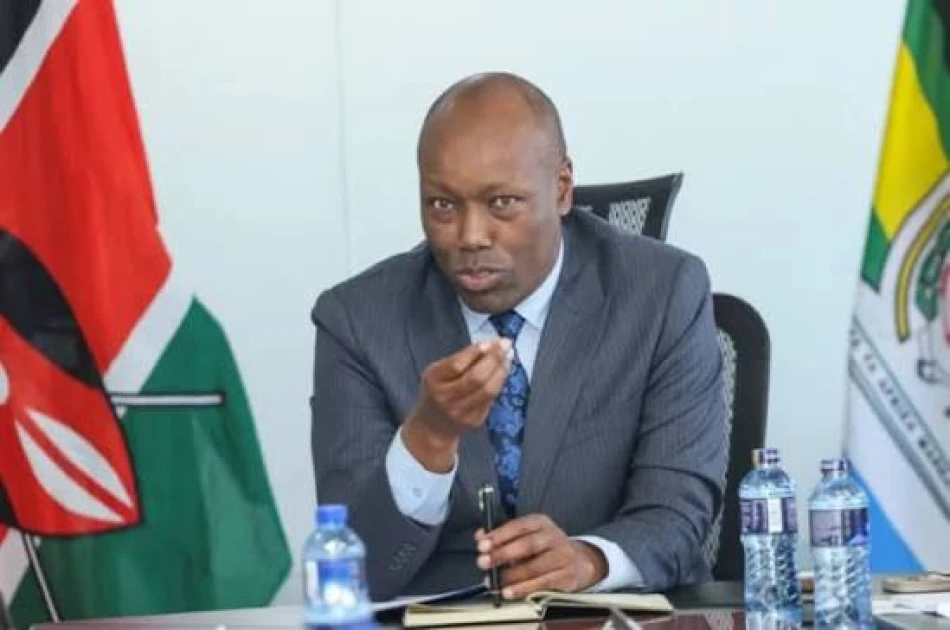
Trade Cabinet Secretary Lee Kinyanjui has condemned any form of attack on foreigners in the country, warning Kenyans against taking the law into their own hands as the government moves to enforce its crackdown on foreign hawkers and small-scale traders.
The CS also cautioned foreign nationals against exploiting Kenya's visa-free entry regime to engage in work and trade without the required permits and legal documents, saying the government's directive is not a licence for citizens to mete out mob justice.
"Any citizen taking the law in their hands should be ready for retaliation. We do not want any panic or sensationalisation or politicisation of a good directive, because when a President is petitioned by his own citizens that they are being rendered irrelevant in their own country by people who would sell to them, he cannot ignore such a plea," Kinyanjui said.
President William Ruto issued the directive at State House Nairobi last week, ordering foreign nationals operating small businesses and hawking in the country to shut down.
"Isitokee ati mtu anatoka Uchina na wapi na wapi anakuja kuwa hawker ama anakuja kuuza kwa duka kidogo hapo, iyo hapana. While we wait for the law to be in place, Monday muamkie hii biashara, hawa wachuuzi wote wanaofanya hii biashara ndogo ndogo wafunge, na wasipofunga..." Ruto said.
The directive has sparked mixed reactions across the country, and with the Monday deadline having lapsed, several foreign nationals flocked to their embassies in a desperate search for travel documents, fearing for their safety.
Clarifying the President's directive, Kinyanjui said the government will apply a different framework in handling nationals from East African Community member states compared to other foreign nationals.
"What the President stated categorically is that my ministry works with Parliament to ensure there are clear provisions to put a safety net along certain work categories that would be clearly designated for locals. It is to do with the low retail level. East African countries would be treated differently, but I want to say the Africans who are not in the EAC, there is a regime to get your papers right, and that is why I am insisting that the public has no role," he said.
Kenya is a signatory to the East African Community Common Market Protocol, which provides for visa-free entry of citizens of EAC Partner States and guarantees free movement of goods, persons and workers, as well as the right of residence and engagement in economic activities.
Kinyanjui, however, clarified that visa-free entry does not grant an automatic right to work or trade in Kenya without the requisite permits and regulatory approvals.
"If you want to come, there are clear work regime requirements. In the implementation of this directive, there are clear government agencies that have a role," he said.
The directive is also tied to the Local Content Bill 2025, currently before Parliament, which, if passed, will compel foreign companies to source at least 60 percent of their goods and services locally, and 100 percent of agricultural raw materials from Kenyan farmers. On employment, the Bill demands that 80 percent of all workers in a foreign company be Kenyan. Any company found in breach faces a fine of not less than Sh100 million, while its chief executive risks at least one year in jail.
President Ruto defended the directive, saying it was never meant to open the door to informal traders and hawkers.
"Hatujajenga investor confidence ati ndio hawkers wakuje Kenya, hapana. Ile confidence tumejenga ni ya investors, siyo traders na hawkers," Ruto said.
Kinyanjui echoed the President's position, saying the issue was purely about work mobility rather than any hostility toward foreign nationals.
"We do not have any issue. It is just that work mobility, we do not have an agreement on people to come and work here. It is just going by what our visa requirements require, and we are going by the law," he said. The government now finds itself walking a tightrope, balancing the urgent need to protect Kenyan traders from unfair competition against the risk of breaching laws that protect EAC regional integration and straining ties with its neighbours.
A note on cookies
Newshunt uses essential cookies to keep you signed in and to remember your language and country, so the site works the way you expect. With your permission, we'd also like to use analytics cookies to understand how people use Newshunt and improve it over time.
Accepting only affects analytics. To learn more, view our Privacy Policy or Terms & Conditions.
(0)Comments