


Vaca Muerta: As fracking climbs, focus sharpens on diesel substitution
Category: Business
Share
Archive
Like
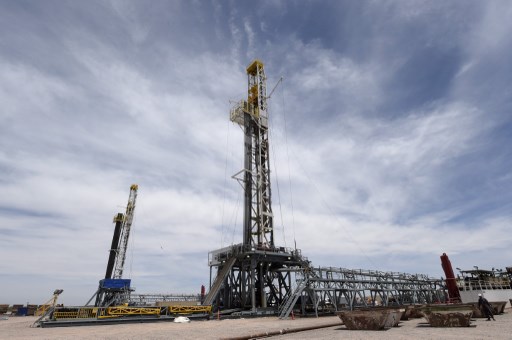
Companies in Argentina's Vaca Muerta formation are increasingly substituting diesel with natural gas as a cheaper fuel for fracking operations.
During a frac stage, which typically takes around 85 minutes, around 12,000 liters of diesel is consumed by traditional pumps. For units that use a combination of both, diesel consumption drops to 5,000 liters, with the balance replaced by around 100,000m³ of gas.
"We're going to see this more and more," said Luciano Fucello, president of industry body Fundación Contactos Energéticos, a collaborative space for regional energy specialists.
"There's increasingly more equipment," he added, citing the cost benefits of lower diesel consumption.
If around 60% of diesel is substituted, that would result in savings–in terms of fuel costs–of roughly 40%, Fucello said during a webinar hosted by Argentine natural gas trading platform Megsa.
For a typical frac set, that could translate into annual fuel-cost savings of roughly US$10 million-15 million (mn).
Savings are considerable, said Fucello.
Around 72% of fuel used in Vaca Muerta is diesel, "and this is going to change," he said.
The US began transitioning to gas around a decade ago.
In terms of service companies, in February, there were both types of units, according to data on Fucello's frac monitor platform. Halliburton had diesel (2) and bi-fuel (3) sets, with SLB (4) diesel-only, Calfrac diesel (1) and bi-fuel (1), Tenaris diesel (2) and bi-fuel (1), and SPI diesel (1).
Both locally obtained gas–and compressed gas transported by so-called jumbo truck, which is currently loaded via a single plant–can be used at frac sites.
Half of an electric, or e-frac, set–which requires 20MW of installed capacity to power the electric pumps–has been deployed in Argentina but as of early September was not operational. Higher penetration of such units would require associated infrastructure developed in parallel, or grid connections.
The number of monthly shale frac stages in Vaca Muerta exceeds 2,000. June saw a record number of frac stages, with activity expected to remain robust through 2030, driven particularly by oil and LNG exporters.
The top five shale operators by frac stages in August were YPF (with around 50% of the market), Vista Energy, Pluspetrol, Pan American Energy and Tecpetrol.
Typically, Halliburton and SLB together control over 70% of the fracking market, according to data on Fucello's frac monitor platform.
15 frac sets are in Argentina, but around 30% of capacity is idle.
What's coming?
For full-year 2026, around 28,000 frac stages are expected. For next year, the tally is expected to climb to about 39,000.
In terms of drilling rigs, the number is due to climb to around 52 in 2027, from about 42 currently.
Increased activity will drive down the percentage of idle capacity while ramping up demand for financing, identified as a potential bottleneck.
An associated challenge with scaling up is not simply deploying more equipment but ensuring that there is sufficient coordination, the event heard.
"It's not enough just to add pumps," a presentation said. "Scale is achieved when the whole system can repeat a stage in a safe, continuous and competitive manner."
In terms of oil, production at Vaca Muerta is expected to hit or surpass the 1Mb/d mark by 2030, up from around 695,000b/d currently.
LNG-exporting projects are expected to drive up demand for Vaca Muerta natural gas, currently produced at a rate of around 100Mm³/d.
A note on cookies
Newshunt uses essential cookies to keep you signed in and to remember your language and country, so the site works the way you expect. With your permission, we'd also like to use analytics cookies to understand how people use Newshunt and improve it over time.
Accepting only affects analytics. To learn more, view our Privacy Policy or Terms & Conditions.
(0)Comments