


England's Model Should Have Been Merseyrail
Category: Business
Share
Archive
Like
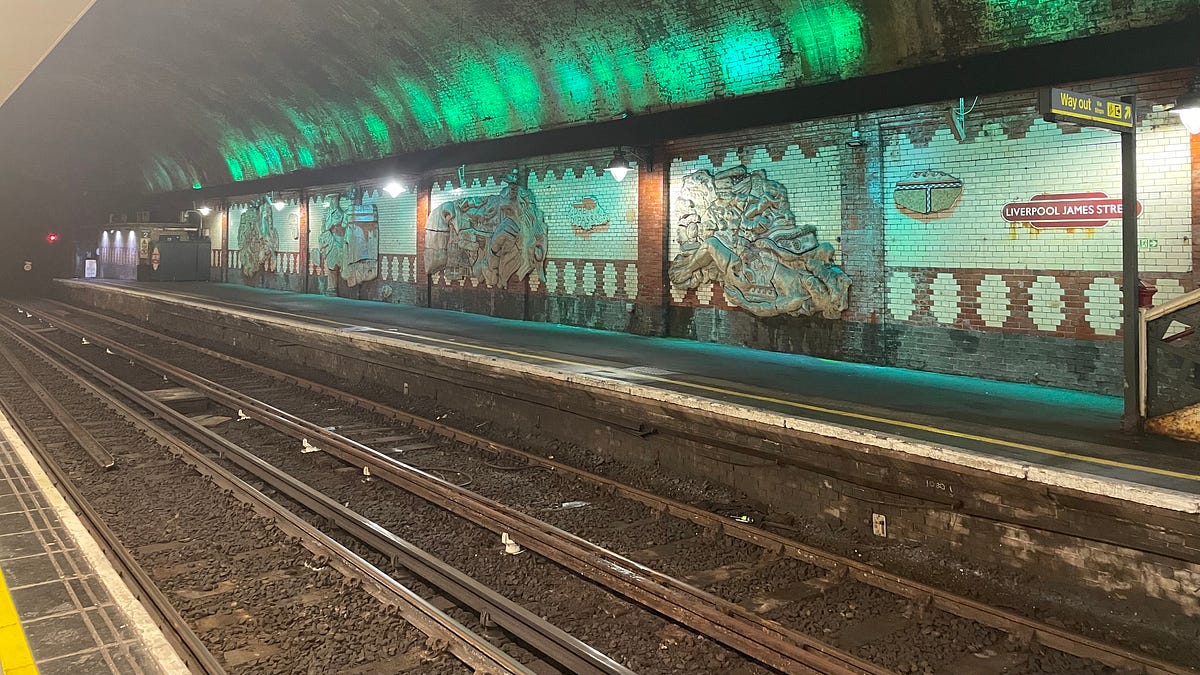
Liverpool was once one of the great cities of the world. Its mighty port carried cargoes from across the world, and its importance is visible in the 'Three Graces' towers along its legendary waterfront skyline. In the 1880s, it built one of the earliest underwater tunnels to connect to Birkenhead across the Mersey. The tunnel line was one of the first electrified railways in the world, and its stations were the earliest deep underground metro-style stations.
Like many English cities that boomed in the 19thcentury, Liverpool had a remarkable rail network, including the earliest intercity railway in the world, which connected it to Manchester. Rail lines radiated out of big terminals in the city centre, linking the city to suburbs and nearby towns. But by the 1960s, Britain was suffering from the first-mover disadvantage. Its rail lines were older than anywhere else, and they were deteriorating badly. To make matters worse, the UK was struggling with debts and perpetual balance of payments problems since its once-vast stock of overseas assets had been liquidated to pay for the war against Nazi Germany. Richard Beeching was charged with shrinking the railway to what was seen as a more manageable scale. In the process of the 'Beeching Axe,' several supposedly duplicative railways were abandoned. Hardest hit were the many lines radiating out of cities like Liverpool. As intercity lines, they duplicated other parallel routes. But as local services, they had the potential to effectively serve different parts of the urban area.
Liverpool in the 60s retained its sense of importance and its leaders believed that it needed a transit system that befitted a great city. In a move of impressive creativity, they decided that using these threatened railway corridors might be a more efficient means of accomplishing this than building a whole new metro. The city and the new Merseyside Passenger Transport Executive developed a plan that would modernize the fragmented rail network, electrifying and integrating it into a service that worked both for bringing people to the city centre and for serving cross-city journeys. They took the existing lines from the north and south, both of which ended at a separate terminal, and linked them together with a cross-city tunnel. People could then get on a train in the northern suburbs and ride right through the city centre to the southern suburbs. The tunnel line from Birkenhead was built out into a loop around the city centre, connecting all the old terminals.
They also electrified the lines and modernized them. One of the most important but often-ignored improvements was combining them into a single network on maps and in terms of fares, also including some more traditional commuter lines still running into the city's main rail terminal at Lime Street. Suddenly Liverpool looked like it had an integrated metro network, rather than disconnected railway lines. And, critically, they made the trains run frequently, all day every day.
Alas, Liverpool's prospects were not as bright as civic leaders had hoped. The advent of containerization devastated port employment and shifted much traffic to the southeast. Music didn't make up for it, and the city's growth flatlined. Employment in the city centre cratered as the once-great shipping lines like Cunard faded away. Nevertheless, Merseyrail carries around 30 million passengers every year. This isn't far short of the 46 million carried by Manchester's Metrolink tram network, which is the most extensive in the country and serves a much larger and more prosperous region. Birmingham and the West Midlands, also much larger than Liverpool, has a tram network that carries fewer than 9 million.
Merseyrail is effective because it offers very rapid trip times and covers the entire conurbation, along with adjacent cities like Chester. Importantly, it required comparatively little new infrastructure, taking advantage of a legacy of railway lines over a century old. And millions ride it, even in a city that struggled for years after it opened.
But despite its clear success, the Merseyrail model was not copied across the country. Though England is blessed with an extraordinarily extensive rail network running into its cities, it generally remains fragmented both physically and between operating companies. In the 80s, British Rail lost interest in developing ambitious urban schemes. Local authorities instead pursued tram projects that they could control themselves, rather than needing to partner with the national government's railway operators.
The one exception, of course, is London. Starting in the 1990s, London began rebuilding its existing rail networks to create cross-city links and produce an integrated network. First, the Thameslink 2000 project rebuilt a lightly-used route running north-south across the city into a major regional through-route that allows people to ride directly from northern points like Cambridge to destinations south of the city like Gatwick Airport, all via stations in the heart of the city. Next, historic routes circling the city were modernized into a relatively coherent London Overground network. And, most recently, the Crossrail project produced the Elizabeth Line, a long tunnel with multiple stops across Central London connecting rail lines on either side of the city.
Subscribe for free, for infrastories from around the world.
Subscribe now
In the rest of England, however, rail networks remain fragmented and well below their potential.Birmingham, cradle of the industrial revolution, unsurprisingly has an impressive local rail network, including the Snow Hill lines and lines running through New Street station. But the Snow Hill line still isn't even electrified, and where the two lines cross, just east of the city centre, there isn't even a station.Both need significant debottlenecking upgrades and resignalling to provide more capacity, but more consistent operations could help to boost capacity significantly. Most importantly, it all needs to be presented to the public as a single integrated network rather than disconnected lines.
Manchester came close to building its own Merseyrail. Only a few years after Liverpool, it drew up the Picc-Vic tunnel scheme to link the northern and southern suburban lines through the city. It was cancelled in the late 70s and the city instead built connections that allowed, at limited capacity, trains to run through the city centre on a meandering route. While useful, this is far less than a true regional rail system could have been.
Leeds has been planning to build a tram for decades, but I will later write about how a Merseyrail-style scheme might deliver more benefits for the same, or less, money.
Scotland has notably followed a different path. Glasgow restored the cross-city Argyle line in 1979, and Scotrail has been aggressively electrifying its network in recent years. Still, Glasgow could benefit from further investment to help better link up disconnected parts of the network.
Liverpool itself is discussing Merseyrail expansion projects, including a new station serving a fast-growing neighbourhood and even the partial reopening of a long-disused tunnel for an additional link.
The biggest barrier to these projects is usually not infrastructure. It's much more of aphone call problem. It would need close cooperation between local authorities and the national government, which controls the rail network, potentially along with reorganization of fragmented franchise operators. It would also require close fare and schedule integration between national rail services and local bus operators. These aren't insurmountable or enormously expensive engineering problems. But they do require people to cooperate when they are often not accustomed to it.
Merseyrail was an amazing model that, had it been applied across the UK and combined with strong connecting bus services, could have given the country a much better collection of urban transit systems. Fortunately, the failure to adopt this model is not an irreversible mistake. Many of the old rail lines are still there, waiting for the electrification, resignalling, integration, new stations, and sometimes short new connecting tunnels that can weave them into networks any city could be proud of.
Infrastory is a reader-supported publication. To receive new posts and support our work, consider becoming a free or paid subscriber.
A note on cookies
Newshunt uses essential cookies to keep you signed in and to remember your language and country, so the site works the way you expect. With your permission, we'd also like to use analytics cookies to understand how people use Newshunt and improve it over time.
Accepting only affects analytics. To learn more, view our Privacy Policy or Terms & Conditions.
(0)Comments