


Caribbean Programme Trains Next-Gen Surgical Robotics and Healthcare AI Researchers
Category: SciTech
Share
Archive
Like
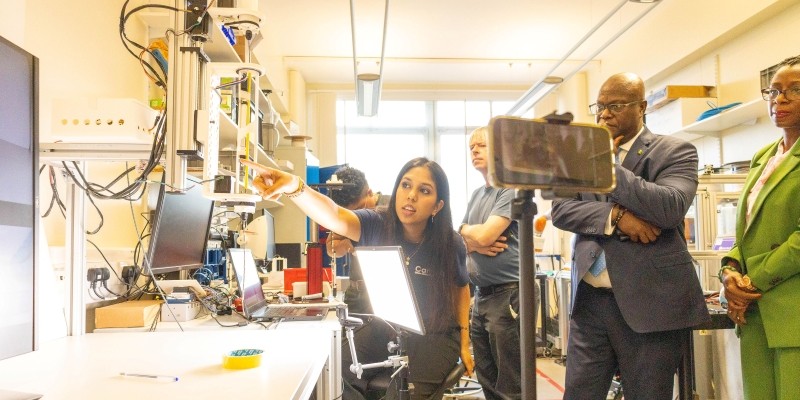
A Caribbean-led initiative dedicated to training the region's next generation of surgical robotics and healthcare AI researchers has completed its largest operational milestone to date, drawing international acclaim for its rigorous technical curriculum. As enterprise adoption scales across clinical engineering frameworks in this September 2026 production cycle, the programme stands as a vital blueprint for distributed deep-tech research and localized machine learning pipelines.
Under-the-Hood Architecture and Latency Demands
Surgical robotics and healthcare AI applications demand deterministic execution pipelines. A millisecond of latency in an automated haptic feedback loop or an AI-assisted diagnostic segmentation model can result in catastrophic system failure. The Caribbean robotics initiative addresses these hardware constraints by training researchers to optimize embedded systems directly on edge hardware, bypassing the inherent network bottlenecks of cloud-dependent architectures.
According to project disclosures, the curriculum emphasizes high-performance computing (HPC) principles, utilizing containerized environments managed via Kubernetes to ensure reproducible research builds across disparate lab nodes. Developers working on medical-grade hardware understand that continuous integration pipelines must maintain strict SOC 2 compliance and end-to-end encryption to protect sensitive biometric datasets. When deploying computer vision algorithms for robotic-assisted surgery, optimizing inference times requires leveraging specialized NPUs (Neural Processing Units) alongside traditional multi-core architectures.
View this post on Instagram about caribbean programme trains next, Caribbean Robotics Programme healthcare AI From Instagram — related to caribbean programme trains next, Caribbean Robotics Programme healthcare AI
# Example cURL request for fetching model telemetry in a local cluster curl -X POST "https://api.local-robotics-node.internal/v1/telemetry/inference" -H "Authorization: Bearer ${BEARER_TOKEN}" -H "Content-Type: application/json" --data '{"node_id": "carib-bot-04", "metric": "latency_ms", "threshold": 12.5}'
Organizations scaling similar robotics or AI workloads frequently encounter infrastructure bottlenecks. Addressing these enterprise IT challenges often requires consulting specialized teams such as [Relevant Tech Firm/Service] to audit network topologies, harden Kubernetes clusters, and verify secure continuous deployment pipelines.
A note on cookies
Newshunt uses essential cookies to keep you signed in and to remember your language and country, so the site works the way you expect. With your permission, we'd also like to use analytics cookies to understand how people use Newshunt and improve it over time.
Accepting only affects analytics. To learn more, view our Privacy Policy or Terms & Conditions.
(0)Comments