


Anti-AfD Protests Sweep Germany Amid Rising Far-Right Support
Category: Politics
Share
Archive
Like
Thousands of demonstrators gathered in Berlin and cities across Germany to protest the far-right Alternative für Deutschland (AfD) following its watershed state election victory, with organizers and security officials reporting starkly different turnout figures as public anxiety mounts over upcoming regional polls, according to police and event organizers.
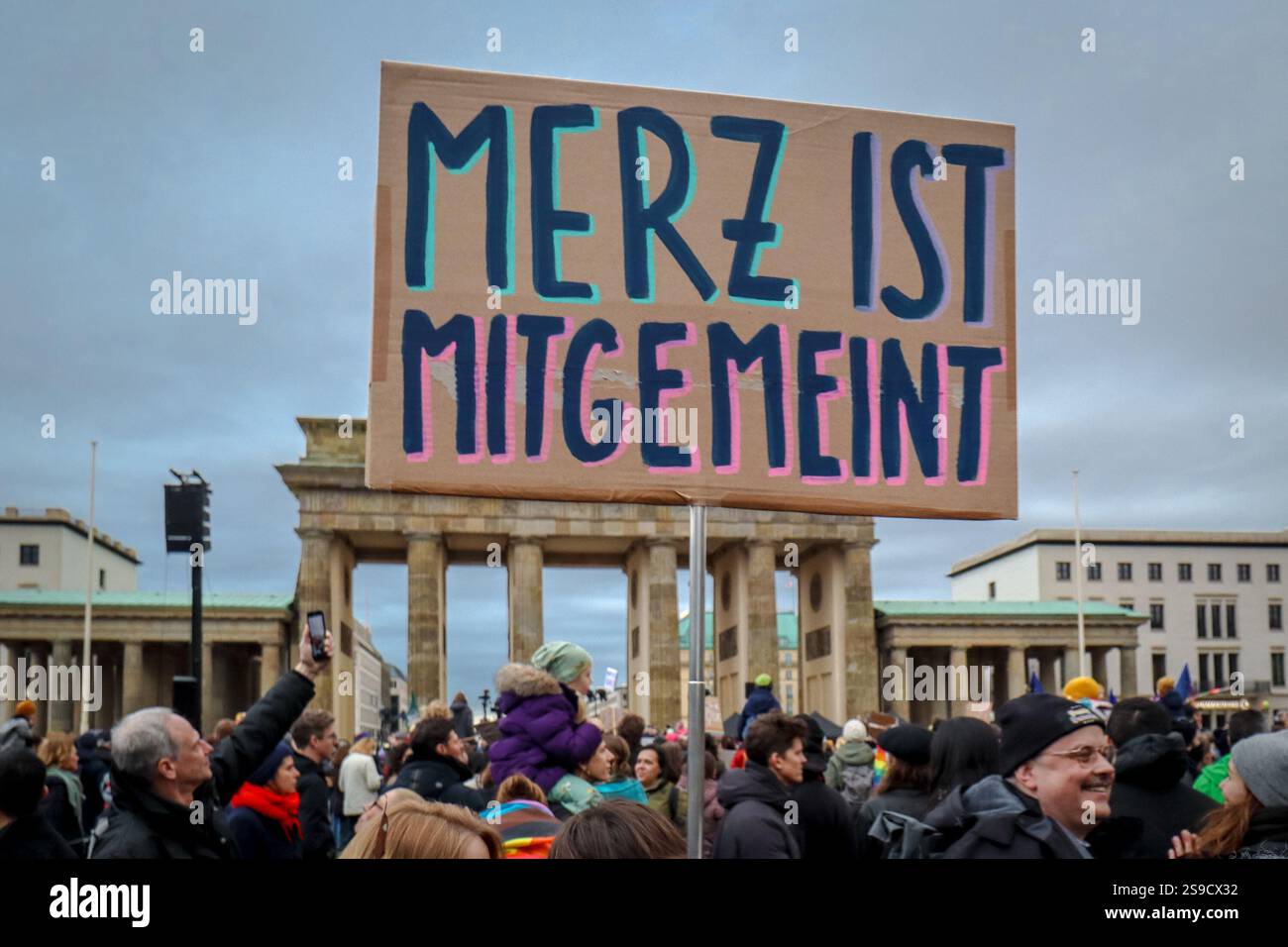
The protests erupted after the AfD captured nearly 44% of the vote in the former communist eastern state of Saxony-Anhalt, marking the best result for a nativist party since the Nazi period, according to Jens-Christian Wagner, the director of the memorial at the former Nazi concentration camp Buchenwald. Demonstrators at Berlin's Brandenburg Gate held a peaceful pro-democracy rally denouncing the anti-immigrant, pro-Russian party, which has called for mass deportations of asylum seekers and a rollback of state support for renewable energy and public broadcasting, local reports show.
Protests Erupt at Brandenburg Gate Following Saxony-Anhalt Vote
Police reported 5,000 protesters at the Berlin rally, while organizers estimated turnout exceeded 14,000 people. Activists marched under banners reading 'Fascism is no alternative,' 'Stop the Nazi AfD: end racism and cuts to social services' and 'History has its eyes on us,' according to eyewitness accounts.
With less than two weeks until regional elections in the capital and Mecklenburg-Western Pomerania on 20 September, speakers warned against resignation. Wagner described the AfD's electoral breakthrough as a 'disgrace that makes you furious and stunned' from the stage at the Brandenburg Gate, adding that the party is on the brink of taking power in Saxony-Anhalt—a first for the far right since the second world war—which 'should not be accepted in silence.'
Did you know? Germany's domestic intelligence agency has listed the state chapter of the AfD as a rightwing extremist organization since 2023, citing threats to democratic norms.
Political Stakes Rise Ahead of September 20 Regional Elections
Momentum from the Saxony-Anhalt vote poses a direct threat in two more polls scheduled for later this month, according to political analysts. Max Schneller, a 17-year-old member of the far-left Linke from Saxony-Anhalt, told the Berlin crowd that local activists will fight any attempts by an AfD government to target minorities. 'We will not start categorising our neighbours according to their origin, religion or skin colour – we are too humane to hate,' he said to loud applause.
The AfD remains three votes short of the majority needed to form a government under its candidate, Ulrich Siegmund, who hopes to secure support from dissenters willing to play kingmaker, according to regional media reporting. Meanwhile, hundreds of anti-AfD protesters also gathered in Potsdam, Münster, Göttingen, Dresden, Aachen, Bamberg, Darmstadt, and Halberstadt, where the AfD captured nearly half the votes.
National Coalition Pressured by Surging Far-Right Support
In Halle, the region's second-largest city, leftist groups and civil society organizations have maintained a protest camp since election day, local media reported. The AfD is currently leading voter intent polls in Mecklenburg-Western Pomerania with about 35%, though the centre-left Social Democratic Party (SPD) of state premier Manuela Schwesig has mounted a comeback to score above 30% over the summer.
In Berlin, the political landscape remains fractured among multiple parties. Chancellor Friedrich Merz's conservative Christian Democrats (CDU) hold a narrow lead in the capital at roughly 20%, followed closely by the Linke, the AfD, and the SPD and Greens polling in the mid-teens, according to recent polling data.
Frequently Asked Questions
What triggered the recent protests in Germany?
The protests were triggered by the AfD's watershed victory in Saxony-Anhalt, where the far-right party secured nearly 44% of the vote, sparking concerns ahead of upcoming regional elections on September 20.
People protest at Berlin Brandenburg Gate as far-right AfD wins Saxony-Anhalt state elections
How many people attended the Berlin demonstration?
Police reported 5,000 protesters at the Brandenburg Gate rally, while event organizers estimated attendance exceeded 14,000 people.
What is the official classification of the AfD's state chapter?
Germany's domestic intelligence agency has classified the state chapter of the AfD as rightwing extremist since 2023, stating it poses a threat to democratic norms.
When are the next regional elections in Germany?
Regional elections are scheduled for September 20 in the capital and in Mecklenburg-Western Pomerania.
What is your take on the shifting political landscape in Germany? Share your thoughts in the comments below, explore our latest European politics coverage, or subscribe to our daily newsletter for instant updates.
A note on cookies
Newshunt uses essential cookies to keep you signed in and to remember your language and country, so the site works the way you expect. With your permission, we'd also like to use analytics cookies to understand how people use Newshunt and improve it over time.
Accepting only affects analytics. To learn more, view our Privacy Policy or Terms & Conditions.
(0)Comments