


Panama Canal May Restrict Ship Traffic as El Niño Worsens : The Tico Times
Category: Business
Share
Archive
Like
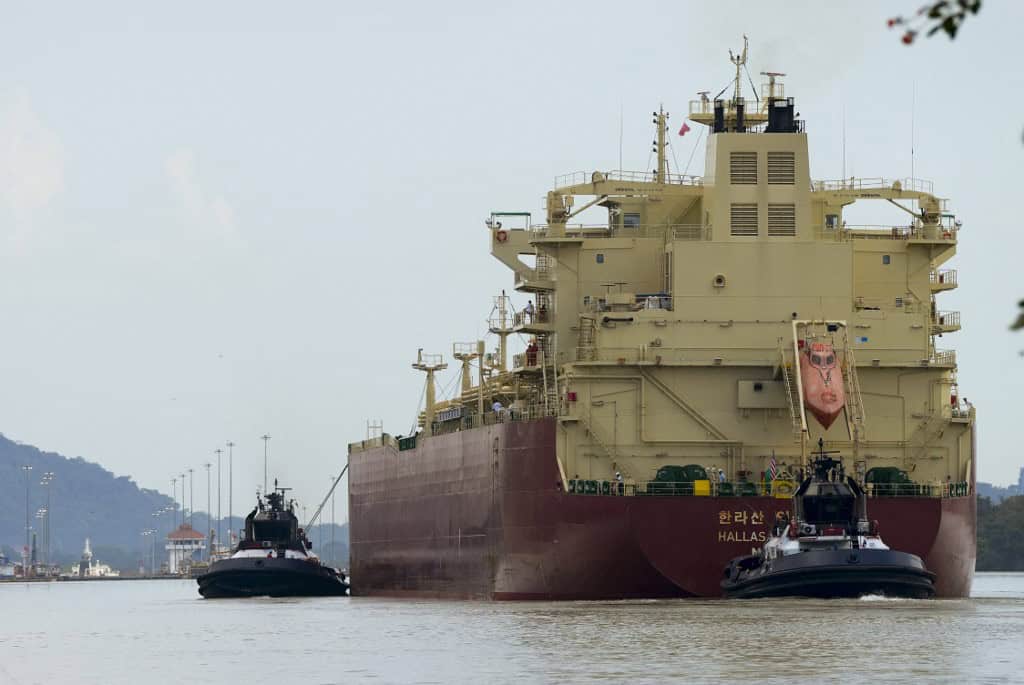
The Panama Canal has not ruled out further restrictions on ship traffic because of a drought worsened by the El Niño climate phenomenon, its new administrator, Ilya Espino de Marotta, said in an interview. The waterway, which connects the Atlantic and Pacific oceans and handles 5% of global maritime trade, has begun gradually reducing daily transits from 36 to 32 as of September 15.
The 80-kilometer (50-mile) Panama Canal operates primarily with rainwater stored in the artificial Gatun and Alhajuela lakes. Their levels have fallen because of a drought that is shaping up to be the most severe ever recorded. Between 2023 and 2024, restrictions caused by El Niño, whose effects are intensified by climate change, resulted in 2,700 fewer ship transits.
Espino de Marotta, a 64-year-old engineer and the first woman to run the canal, which the United States built in 1914, hopes to avoid measures that restrictive. But she stressed the need for a new reservoir to support operations at the canal, where she has worked for about four decades.
Q: What are the canal's main challenges?
A: Climate change is one, and that is why the Rio Indio reservoir project is our No. 1 priority. We see what is happening in 2026 and would like to finish this project to ease the impact on customers. We want (…) to expand. We are going to build a gas pipeline and two ports.
Q: What is El Niño's impact?
A: We have to reduce the permitted draft of ships, which means they must carry less cargo. In 2023–2024, we had to reduce the number of transits to avoid affecting the population's water supply. Fewer transits mean less revenue.
Q: Could there be restrictions similar to those in 2023–2024?
A: We think not (…) but we cannot rule out having to reduce transits in February or March, probably not to 24 a day, but to 29 or something close to that. That could have an impact.
Q: Does this affect international trade?
A: Shipping can adapt by using vessels as large as our permitted draft allows. With fewer transits but more cargo, they achieve economies of scale, and we do not need to use more water.
Q: Analysts say the United States, the canal's main user, could be affected.
A: If it lasts less than a year, there will be no significant consequences for the economy. If it lasted five or seven years, I would say yes (…) Limiting the number of ships for four or five months will not necessarily have a lasting impact.
Q: Is there a risk that shipping companies will leave?
A: We experienced that in 2024. Bulk carriers had practically disappeared, but they returned because the canal route offers major advantages (…). That is why the Rio Indio reservoir project is so crucial (…). We are going to store enough water to live with El Niño without affecting the number of transits or the population.
Q: But this new reservoir will not be ready before 2031?
A: I cannot shorten the construction period. We will probably include a clause in the tender stating that if the contractor delivers ahead of the contractual deadline, there will be an incentive. The tender is expected to be launched in 2027.
Q: How do you envision relations with the United States?
A: I hope we will have a cordial relationship, as we have for the past 25 years.
A note on cookies
Newshunt uses essential cookies to keep you signed in and to remember your language and country, so the site works the way you expect. With your permission, we'd also like to use analytics cookies to understand how people use Newshunt and improve it over time.
Accepting only affects analytics. To learn more, view our Privacy Policy or Terms & Conditions.
(0)Comments